The Salkantay Trek is one of the most spectacular trekking routes in Peru and one of the most popular alternatives for travelers who want to reach Machu Picchu on foot. The journey combines high-altitude mountain scenery, glacial landscapes, turquoise lagoons, remote Andean valleys, cloud forests, and tropical vegetation before arriving at the famous Inca citadel.
Unlike the classic Inca Trail, the Salkantay route focuses more strongly on dramatic natural landscapes. Trekkers travel beneath the enormous Salkantay Mountain, cross a high mountain pass, descend through changing ecological zones, and eventually reach the warmer surroundings of Machu Picchu.
The most popular version is the Salkantay Trek 5 days, although shorter and longer variations are also available. For travelers comparing hiking options in Cusco, understanding the route, difficulty, altitude, accommodation, weather, preparation, and the differences between the Salkantay Trek vs Inca Trail is essential.
What Is the Salkantay Trek?
The Salkantay Trek is a multi-day hiking route through the mountains of the Cusco region that connects the high Andes with the Machu Picchu area. The name comes from Salkantay Mountain, one of the most prominent peaks of the Vilcabamba mountain range.
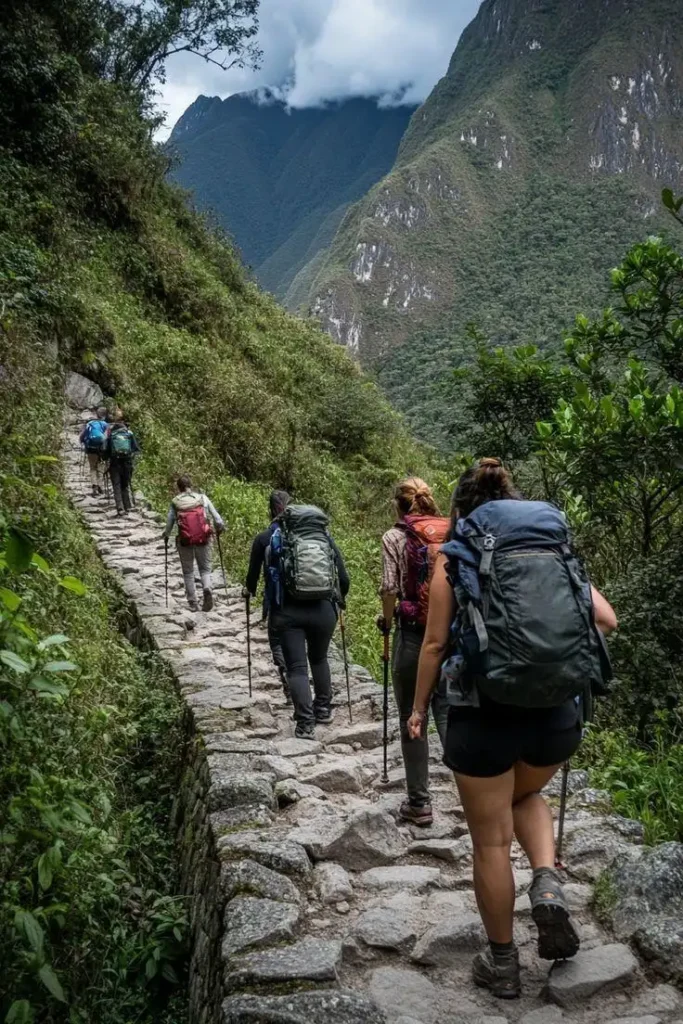
The route is famous because of its extraordinary change in scenery. A typical trek begins in the highlands around Mollepata and Soraypampa, where enormous mountains and glacial landscapes dominate the horizon. From there, hikers climb toward the Salkantay Pass before descending gradually into greener valleys and cloud forest environments.
The route eventually reaches the Machu Picchu area, with many itineraries passing through or near Aguas Calientes before the final visit to the archaeological sanctuary.
The Salkantay Trek is particularly attractive to travelers who want a physically challenging adventure while experiencing several different landscapes during the same journey.
Why Is the Salkantay Trek So Popular?
The popularity of the route comes from the combination of adventure, scenery, and access to Machu Picchu.
Some of its main attractions include:
- Salkantay Mountain
- Humantay Lake
- Salkantay Pass
- High-altitude Andean landscapes
- Glacial mountain views
- Remote valleys
- Cloud forests
- Tropical vegetation
- Coffee and agricultural areas
- Aguas Calientes
- Machu Picchu
The route also provides a sense of changing climates and ecosystems. Travelers can begin a day surrounded by cold mountain scenery and later descend into significantly warmer environments.
Salkantay Trek to Machu Picchu
The Salkantay Trek to Machu Picchu is designed for travelers who want to combine a demanding mountain hike with a visit to one of Peru’s most important archaeological destinations.
The journey is not simply a walk toward Machu Picchu. One of the main attractions is the transformation of the landscape along the way. The first sections emphasize the Andes and high mountains, while later sections become increasingly green and humid.
Machu Picchu itself stands at approximately 2,430 meters above sea level in a tropical mountain environment. This is considerably lower than the highest sections of the Salkantay route, which explains why the vegetation changes dramatically during the trek.
Typical Salkantay Trek Route
Although exact itineraries vary between operators, the classic five-day journey commonly follows a sequence similar to:
- Cusco
- Mollepata or the surrounding area
- Soraypampa
- Humantay Lake
- Salkantay Pass
- High Andean valleys
- Cloud forest
- Santa Teresa or nearby areas
- Aguas Calientes
- Machu Picchu
The exact overnight locations can differ depending on the itinerary, season, transportation arrangements, and accommodation selected.
Mollepata and the Beginning of the Trek
Mollepata is one of the traditional access points for the Salkantay region. It lies southwest of Cusco and provides the transition from the city and surrounding valleys toward the higher mountain environment.
The journey from Cusco to the trekking area is normally made by road. As the elevation increases, the landscape becomes increasingly mountainous.
Mollepata is also associated with the lower sections of the route, where agricultural landscapes contrast with the massive peaks visible farther ahead.
Soraypampa
Soraypampa is one of the most recognizable locations on the Salkantay Trek. It sits in a dramatic high-altitude landscape beneath the mountains.
Many itineraries use Soraypampa as an important camping or overnight area. The surrounding scenery provides some of the most memorable mountain views of the entire trek.
Because of the altitude, temperatures can fall substantially at night. Travelers should be prepared for cold conditions even when daytime hiking feels comfortable.
Humantay Lake
Humantay Lake is one of the most photographed attractions associated with the Salkantay Trek.
The lake sits beneath the Humantay Mountain and is known for its turquoise or blue-green appearance. Reaching the lake requires a steep hike, making the visit physically demanding, especially because of the altitude.
The climb is relatively short compared with the entire Salkantay Trek, but altitude can make it feel much harder than the distance suggests.
Why Visit Humantay Lake?
Humantay Lake offers:
- Dramatic mountain scenery
- A high-altitude glacial environment
- Turquoise-colored water
- Excellent photography opportunities
- A memorable first major challenge of the trek
The lake is also an important reason why many travelers choose the Salkantay route. It adds a distinctive natural attraction before the trek reaches the highest mountain sections.
Salkantay Pass
The Salkantay Pass is generally considered the physical high point of the classic trek.
Hikers climb to an altitude of approximately 4,600 meters above sea level, depending on the exact route and point measured. This makes acclimatization extremely important.
The landscape at the pass is dramatically different from the warmer areas encountered later. Mountains, rocky slopes, glaciers, and sparse vegetation create an impressive high-altitude environment.
Reaching the pass is often one of the most rewarding moments of the trek because it represents the culmination of the major uphill section.
How Difficult Is the Salkantay Pass?
The Salkantay Pass is challenging primarily because of elevation rather than technical climbing.
The most important difficulties include:
- High altitude
- Long hiking hours
- Steep ascents
- Cold temperatures
- Thin air
- Changing weather
- Physical fatigue
A person who regularly hikes at sea level may find the route substantially more difficult than expected. Altitude affects people differently, so physical fitness alone does not eliminate the challenges associated with high elevation.
Salkantay Trek 5 Days
The Salkantay Trek 5 days is the most recognized version of the route to Machu Picchu. It provides enough time to experience the major landscapes without requiring travelers to spend a full week on the trail.
A typical five-day itinerary can be summarized as follows.
Salkantay Trek Day 1: Cusco to Soraypampa and Humantay Lake
The first day usually begins early in Cusco. Transportation takes hikers toward the Mollepata and Soraypampa region.
Depending on the itinerary, travelers may hike toward Humantay Lake before continuing toward the overnight location.
This first day introduces hikers to the high-altitude environment. Although the walking distance may not be the longest of the trek, the elevation can make the day demanding.
The landscape is dominated by mountains, valleys, and highland vegetation.
What to Expect on Day 1
Travelers should be prepared for:
- Early departure
- Mountain roads
- Gradual altitude changes
- A hike to Humantay Lake
- Cold evening temperatures
- A high-altitude overnight stay
Salkantay Trek Day 2: Salkantay Pass
For many hikers, Day 2 is the most demanding day.
The trail climbs toward the Salkantay Pass, reaching approximately 4,600 meters above sea level. The combination of steep terrain and altitude requires a slow and consistent pace.
After reaching the highest point, the trail begins descending toward lower and warmer environments.
This transition is one of the defining characteristics of the Salkantay route. The scenery gradually changes from rocky mountain terrain to valleys with more vegetation.
The Importance of Hiking Slowly
There is no advantage to rushing toward the pass. A steady pace allows the body to conserve energy and gives hikers more time to adapt to the thin air.
Guides generally encourage travelers to maintain a comfortable rhythm, drink water regularly, and take short breaks when necessary.
Salkantay Trek Day 3: Into the Cloud Forest
After crossing the highest point, the route continues downward.
The temperature normally becomes warmer as the altitude decreases, while vegetation becomes increasingly abundant. The landscape can change from rocky mountain terrain to green valleys and cloud forest.
This is one of the most interesting aspects of the trek because the environment changes significantly within only a few days.
Depending on the itinerary, the overnight stay may be in a small settlement, campsite, lodge, or another accommodation in the lower valleys.
Salkantay Trek Day 4: Toward Aguas Calientes
The fourth day generally continues through warmer and greener environments.
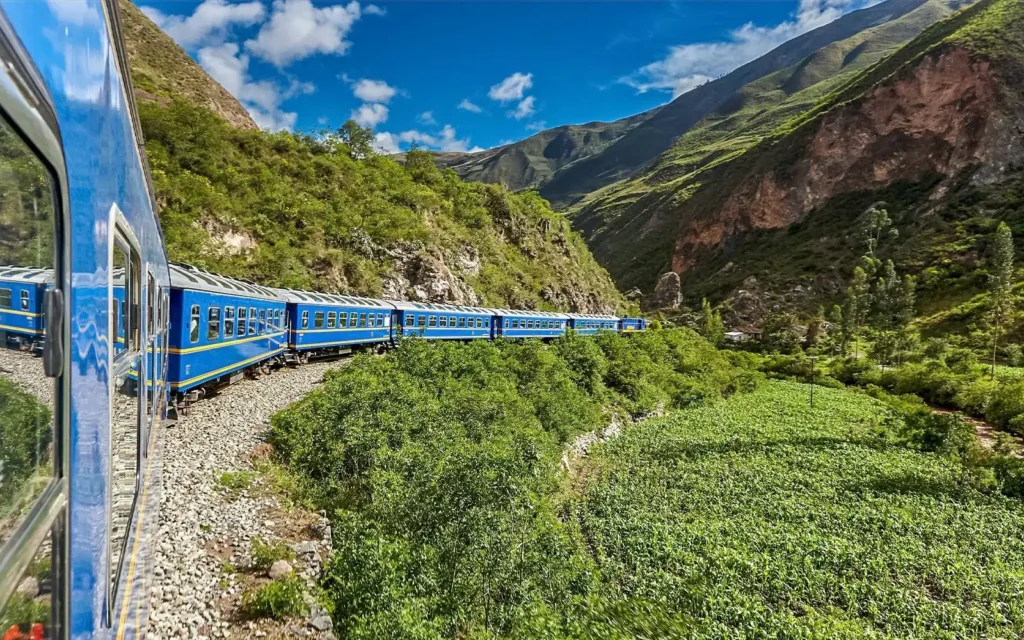
Depending on the route, transportation or sections of hiking may be used as the trail approaches the Machu Picchu area. Some itineraries include sections near the railway or the Urubamba River.
Aguas Calientes, also known as Machu Picchu Pueblo, is the main town below Machu Picchu and serves as the gateway to the archaeological sanctuary.
For many hikers, arriving in Aguas Calientes feels like the transition between the trekking adventure and the Machu Picchu experience.
Salkantay Trek Day 5: Machu Picchu
The final day focuses on Machu Picchu.
Travelers normally enter the archaeological sanctuary according to their assigned entrance arrangements and explore the site with a guide or independently depending on the travel package.
The experience is especially meaningful after several days of walking through the Andes.
Machu Picchu itself combines monumental stone architecture with a spectacular mountain setting. Its agricultural terraces, temples, plazas, and stone structures reflect the sophistication of Inca engineering.
After visiting Machu Picchu, travelers normally return to Aguas Calientes and then continue by train and road toward Cusco, depending on the arrangements of their tour.
Salkantay Trek Difficulty
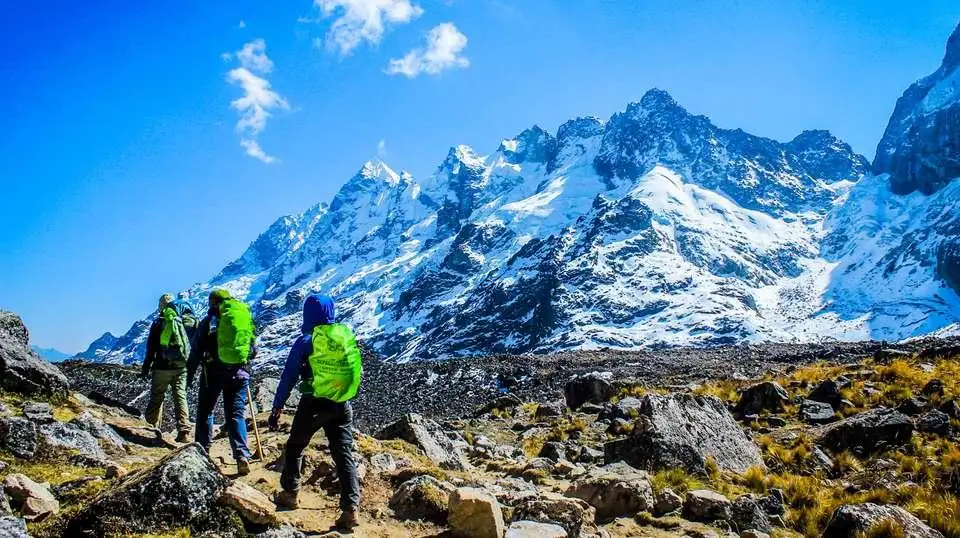
The Salkantay Trek is generally considered a challenging trek. The main reason is the combination of elevation, long hiking days, uneven terrain, and the substantial ascent toward the Salkantay Pass.
It is not necessary to be an experienced mountaineer, but good preparation is highly recommended.
Physical Preparation for the Salkantay Trek
Preparing several weeks before the trip can make a significant difference.
Useful preparation includes:
- Long-distance walking
- Hiking on hills
- Stair climbing
- Cardiovascular exercise
- Leg-strengthening exercises
- Training with a backpack
- Weekend hikes
- Practicing walking several consecutive days
The most useful training is usually hiking because it prepares the body for the combination of walking, elevation changes, and uneven terrain.
Acclimatization in Cusco
Acclimatization is one of the most important considerations before starting the Salkantay Trek.
Cusco itself is located at high altitude, so spending several days there before trekking can give the body time to adjust.
Travelers should avoid arriving in Cusco and immediately beginning an intense multi-day trek whenever their schedule allows additional acclimatization time.
What to Pack for the Salkantay Trek
Packing correctly is particularly important because the trek crosses several different climate zones.
A practical packing list includes:
- Waterproof hiking jacket
- Warm fleece or insulated jacket
- Thermal layers
- Hiking pants
- Comfortable hiking socks
- Waterproof shoes or boots
- Hat and gloves
- Sun hat
- Sunglasses
- Sunscreen
- Insect repellent
- Reusable water bottle
- Small daypack
- Headlamp
- Personal medications
- Basic first-aid supplies
- Personal toiletries
- Passport
- Camera or phone
- Extra batteries or power bank
- Rain protection
What Clothes Should You Bring?
The best strategy is layering.
Temperatures can vary considerably between the cold highlands and warmer lower valleys. Instead of carrying one extremely heavy jacket, hikers can combine thermal clothing, fleece, and an outer waterproof layer.
A waterproof jacket is particularly useful because mountain weather can change quickly.
Best Time for the Salkantay Trek
The Salkantay Trek can be undertaken during much of the year, but weather conditions vary significantly between seasons.
The dry season is generally associated with more stable conditions and is popular for trekking. The rainy season can bring cloud, rain, mud, and less predictable mountain conditions.
The months around the dry season can offer an appealing balance between trekking conditions and visitor numbers, although weather in the Andes is never completely predictable.
Salkantay Trek During the Dry Season
During the drier months, hikers can often experience clearer mountain views.
Advantages can include:
- Better visibility
- Lower probability of prolonged rain
- Drier trails
- Excellent mountain photography
- More comfortable camping conditions
However, nights at high altitude can be very cold.
Salkantay Trek During the Rainy Season
Rainy-season trekking can still be possible, but travelers should expect greater variability.
Potential conditions include:
- Rain
- Muddy trails
- Cloud-covered mountains
- Wet camping conditions
- Slippery sections
- Rapid weather changes
The advantage is that landscapes can become particularly green and atmospheric.
Salkantay Trek Accommodation
Accommodation depends on the specific tour.
Traditional itineraries may use campsites, mountain camps, basic lodges, or small local accommodations. More comfortable versions can include upgraded camping arrangements or hotels during the lower-altitude sections.
Some travelers prefer camping because it creates a stronger connection with the mountain environment. Others choose upgraded accommodation because comfortable beds and hot showers can be valuable after long hiking days.
Camping on the Salkantay Trek
Camping is part of the classic trekking experience.
At high altitude, nighttime temperatures can be extremely low, making a quality sleeping bag and suitable insulation important.
Some organized tours provide tents, mattresses, sleeping bags, meals, and other camping equipment.
Travelers should confirm exactly what is included before departure because equipment policies vary between tour operators.
Food During the Salkantay Trek
Meals are normally an important part of organized Salkantay trekking packages.
A typical trekking menu may include:
- Breakfast
- Lunch
- Dinner
- Soups
- Rice
- Potatoes
- Pasta
- Vegetables
- Meat or vegetarian alternatives
- Fruit
- Hot drinks
Travelers with dietary restrictions should communicate their requirements before beginning the trek.
Because hiking requires significant energy expenditure, eating regularly and maintaining hydration are particularly important.
Salkantay Trek vs Inca Trail
One of the most common questions among travelers planning Machu Picchu is the Salkantay Trek vs Inca Trail comparison.
Both routes provide a multi-day hiking experience connected with Machu Picchu, but they are fundamentally different trekking experiences.
The Inca Trail follows an ancient Inca road system and places greater emphasis on archaeological sites and historical pathways. The Salkantay route places greater emphasis on dramatic mountain scenery, high-altitude landscapes, and ecological transitions.
Salkantay Trek vs Inca Trail: Main Differences
| Feature | Salkantay Trek | Inca Trail |
|---|---|---|
| Main attraction | Mountains and landscapes | Inca roads and archaeology |
| Typical duration | 5 days | Commonly 4 days |
| Highest point | About 4,600 m | About 4,200 m on the classic route |
| Major scenery | Glaciers, lakes, mountains, cloud forest | Mountains, cloud forest, archaeological sites |
| Machu Picchu access | Arrives through the Machu Picchu region | Enters through the historic trail toward Machu Picchu |
| Permits | Different regulations from the Inca Trail | Controlled permits required |
| Hiking style | More wilderness-oriented | More archaeological and historical |
| Accommodation | Camping/lodges depending on itinerary | Designated campsites on the route |
| Landscape diversity | Extremely high | Very high |
| Physical challenge | High | High |
The choice therefore depends largely on what type of trekking experience a traveler wants.
Salkantay Trek for Mountain Lovers
Travelers who prioritize huge mountains, glacial landscapes, turquoise lakes, and changing ecosystems may find the Salkantay experience particularly appealing.
The presence of Salkantay Mountain gives the trek a powerful high-altitude character.
The route feels more like a mountain expedition before gradually transitioning toward the tropical environment around Machu Picchu.
Inca Trail for History and Archaeology
The Inca Trail has a different character.
Its main attraction is the ancient road itself and the archaeological sites encountered during the journey. Hikers follow sections of the historic Inca road system and pass through archaeological landscapes before approaching Machu Picchu.
The final approach also has a strong historical character.
Therefore, the two treks should not simply be considered different versions of the same hike. They offer different ways of experiencing the Andes and Machu Picchu.
Is the Salkantay Trek Better Than the Inca Trail?
Rather than treating one route as universally better, travelers should compare the characteristics that matter most to them.
The Salkantay Trek may be particularly suitable for someone looking for:
- High mountains
- Dramatic natural landscapes
- Humantay Lake
- Salkantay Mountain
- A challenging high-altitude experience
- Greater ecological variation
- A five-day adventure
The Inca Trail may be particularly suited to travelers interested in:
- Ancient Inca roads
- Archaeological sites
- Historical routes
- Traditional Inca landscapes
- The classic approach toward Machu Picchu
Both routes provide a physically active way to experience the region.
Salkantay Trek vs Inca Trail: Altitude
Altitude is an important difference.
The Salkantay route reaches approximately 4,600 meters at its highest point, while the classic Inca Trail reaches approximately 4,200 meters at Dead Woman’s Pass.
This does not mean that one is automatically easier for every traveler. Difficulty depends on the daily distances, terrain, altitude profile, weather, acclimatization, and individual response to elevation.
The Salkantay Trek’s high point is particularly significant because the route then descends through dramatically different environments.
Salkantay Trek vs Inca Trail: Scenery
The scenery is one of the clearest distinctions.
The Salkantay Trek is famous for enormous mountain views and the transition from high Andes to cloud forest.
The Inca Trail combines mountain scenery with archaeological structures, stone pathways, terraces, tunnels, and other remnants of the Inca road network.
Travelers interested primarily in nature may place greater emphasis on Salkantay’s landscapes, while travelers fascinated by archaeology may prioritize the Inca Trail.
Salkantay Trek vs Inca Trail: Availability and Planning
Planning requirements also differ.
The classic Inca Trail is regulated, with controlled access and limited spaces. This means travelers generally need to organize their trek well in advance, particularly during periods of high demand.
Salkantay has historically offered greater flexibility because it is not subject to the same classic Inca Trail permit system.
However, travelers should still organize transportation, accommodation, entrance arrangements, guides, meals, and Machu Picchu tickets in advance.
Salkantay Trek Safety
Safety begins with preparation.
The most important consideration is altitude. Travelers should take symptoms such as severe headache, dizziness, unusual weakness, nausea, or breathing difficulties seriously and inform their guide.
Weather is another major consideration. Conditions can change rapidly in mountain environments.
Hikers should:
- Follow their guide’s instructions
- Maintain a reasonable pace
- Drink enough water
- Protect themselves from the sun
- Carry rain protection
- Keep warm at high altitude
- Avoid unnecessary risks
- Stay with the group
- Inform guides about health problems or symptoms
The route passes through remote environments, so preparation and responsible decision-making are essential.
Responsible Travel on the Salkantay Trek
The Salkantay region is an environmentally sensitive mountain landscape. Responsible trekking helps protect the trail for local communities, wildlife, and future visitors.
Travelers should:
- Carry waste until appropriate disposal points
- Avoid leaving plastic along the trail
- Stay on established paths
- Avoid damaging vegetation
- Respect local communities
- Avoid disturbing animals
- Use water responsibly
- Follow camping regulations
- Minimize unnecessary environmental impact
Supporting local guides, muleteers, cooks, accommodation providers, and community businesses can also help distribute tourism benefits throughout the region.
Who Should Do the Salkantay Trek?
The Salkantay Trek is appropriate for travelers who enjoy outdoor adventure and are prepared for several consecutive days of hiking.
It can be suitable for:
- Experienced hikers
- Active travelers
- Couples
- Friends traveling together
- Adventure travelers
- Families with older teenagers who are accustomed to hiking
- Travelers looking for an alternative to the Inca Trail
However, people with little hiking experience should prepare carefully rather than assuming that the trek will be easy.
How to Prepare for the Salkantay Trek to Machu Picchu
Preparation should include both physical conditioning and logistical planning.
Several weeks before departure, travelers can gradually increase walking distances and include hills or stairs in their training.
It is also useful to practice hiking with the footwear and backpack that will be used during the trek.
Before departure, confirm:
- Trekking dates
- Accommodation
- Transportation
- Machu Picchu entrance arrangements
- Meals
- Camping equipment
- Luggage limits
- Emergency procedures
- Guide services
- Return transportation
Good preparation allows hikers to concentrate on the landscape rather than logistical problems.
Final Thoughts on the Salkantay Trek
The Salkantay Trek is much more than an alternative route to Machu Picchu. It is a complete mountain journey that crosses several dramatic environments, beginning among the high Andes and descending gradually toward the warmer landscapes surrounding the Machu Picchu region.
The Salkantay Trek to Machu Picchu is particularly memorable because of the contrast between Humantay Lake, Salkantay Mountain, the high mountain pass, cloud forests, and the final arrival at the ancient Inca sanctuary.
For many travelers, the Salkantay Trek 5 days provides a balanced itinerary that combines challenging hiking with enough time to experience the major landscapes along the route.
When comparing the Salkantay Trek vs Inca Trail, the most important distinction is the type of experience each route provides. Salkantay emphasizes dramatic mountain scenery, altitude, nature, and ecological transitions, while the Inca Trail emphasizes ancient Inca roads and archaeological heritage.
Whichever route a traveler chooses, preparation is essential. Proper acclimatization, suitable equipment, physical conditioning, responsible hiking, and advance planning can make the journey considerably more comfortable.
The Salkantay Trek ultimately offers one of the most impressive ways to experience the Andes on the journey toward Machu Picchu, combining physical adventure with some of the most spectacular mountain landscapes in southern Peru.