The hikes near Machu Picchu offer far more variety than simply walking around the famous Inca citadel. Travelers can choose from demanding multi-day treks through the Andes, historic Inca pathways, short mountain hikes, forest trails, and walks from Aguas Calientes toward the Machu Picchu entrance. Each option provides a different perspective of the landscape surrounding one of Peru’s most famous archaeological sites.
Some travelers want a challenging adventure such as the Inca Trail or Salkantay Trek, while others are searching for the shortest hike to Machu Picchu or a simple walk near Aguas Calientes. There are also mountain routes inside the sanctuary, including Huayna Picchu and Machu Picchu Mountain, which are separate from the classic treks that approach the site.
Understanding the different Machu Picchu hike options is important because the distances, elevations, difficulty levels, permits, tickets, and starting points vary considerably. A hike that takes several days should not be confused with a short walk from Aguas Calientes, and hiking up a mountain inside the sanctuary is different from hiking to Machu Picchu itself.
This guide explores the best hikes near Machu Picchu, including the Inca Trail, Salkantay, short routes, forest hikes, trails near Aguas Calientes, and options for travelers looking for a more accessible walking experience.
Hikes Near Machu Picchu: Understanding the Main Options
There is no single trail called “the Machu Picchu hike.” Instead, several different hiking experiences can be associated with a visit to the sanctuary.
The most famous is the Machu Picchu hike Inca Trail, a multi-day journey through ancient Inca pathways. The Machu Picchu hike Salkantay is another major trekking option, taking travelers through dramatic mountain landscapes before reaching the Machu Picchu area.
Other routes are much shorter. Visitors can hike from Aguas Calientes toward Machu Picchu, explore trails around the town, or choose one of the mountain routes within the archaeological sanctuary.
Main Hiking Options
Travelers can generally consider these categories:
- Classic Inca Trail.
- Salkantay Trek.
- Short Inca Trail.
- Lares Trek.
- Hikes inside the Machu Picchu sanctuary.
- Huayna Picchu.
- Machu Picchu Mountain.
- Putucusi Mountain.
- Trails and walks near Aguas Calientes.
- Short forest walks.
- Combination trekking and train itineraries.
Each has a different purpose. Multi-day treks are journeys in their own right, while short hikes can be added to a conventional Machu Picchu visit.
Best Hikes Near Machu Picchu
The best hikes near Machu Picchu depend on the traveler’s priorities. Someone looking for history may prefer the Inca Trail, while a traveler interested primarily in mountain landscapes may prefer Salkantay. Someone with only one day may want a shorter route.
Rather than selecting one route as universally best, it is more useful to understand what makes each option distinctive.
| Hiking experience | Main attraction | Typical commitment |
|---|---|---|
| Classic Inca Trail | Ancient Inca road and archaeological sites | Multi-day |
| Salkantay Trek | High mountains and diverse landscapes | Multi-day |
| Short Inca Trail | Shorter historic Inca Trail experience | 1–2 days |
| Huayna Picchu | Steep mountain and Machu Picchu views | Several hours |
| Machu Picchu Mountain | High panoramic viewpoint | Several hours |
| Putucusi | Mountain scenery near Aguas Calientes | Variable |
| Aguas Calientes walk | Shorter local hiking experience | Hours |
| Forest walks | Vegetation and nature | Short |
The best route is therefore determined by time, fitness, interests, and the kind of scenery the traveler wants to experience.
Machu Picchu Hike Inca Trail
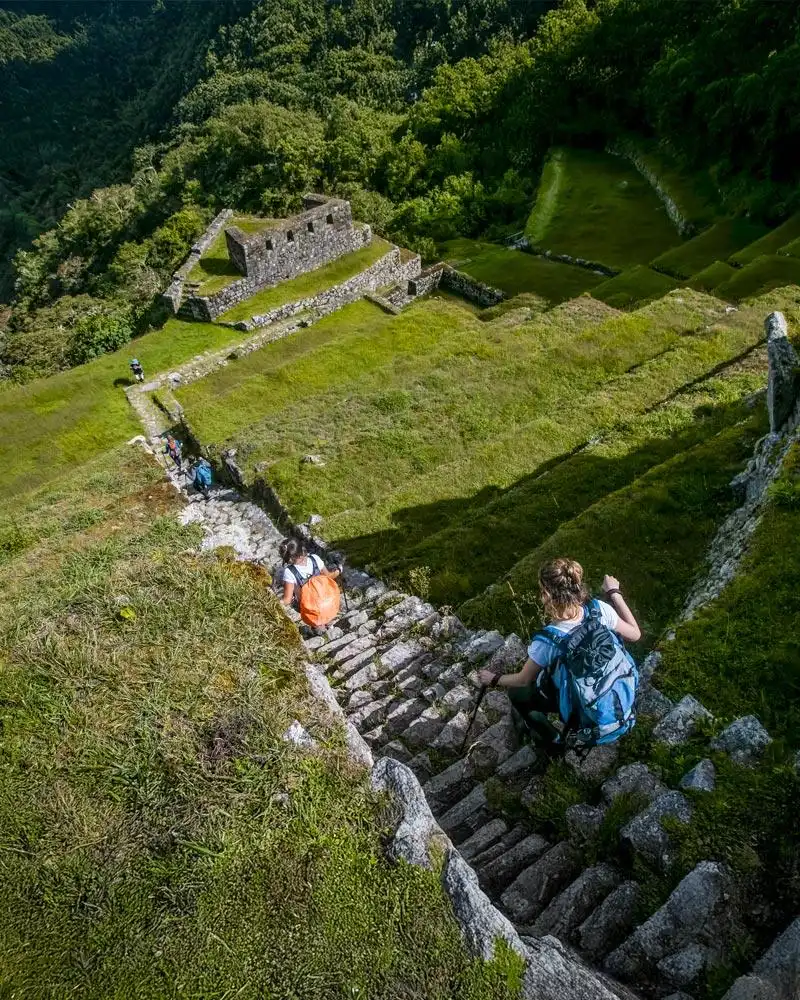
The Machu Picchu hike Inca Trail is the most famous trekking route associated with the sanctuary. It follows an ancient network of pathways through the Andes and combines mountain scenery with archaeological sites, stone stairways, cloud forest, and traditional landscapes.
The classic version is generally organized as a four-day, three-night trek, although shorter versions are also available.
Unlike a simple day hike, the Inca Trail is an immersive journey. Travelers spend multiple days walking through changing elevations and environments before arriving at Machu Picchu.
What Makes the Inca Trail Different?
The primary attraction is its historical character.
The trail passes through archaeological locations and sections of original Inca construction. Hikers therefore experience the approach to Machu Picchu as part of a much larger cultural landscape.
Highlights can include:
- Ancient stone paths.
- Inca archaeological sites.
- Mountain passes.
- Cloud forest.
- High-altitude landscapes.
- Stone stairways.
- Waterfalls and streams.
- The final approach toward Machu Picchu.
Classic Inca Trail Difficulty
The Inca Trail is physically demanding because of repeated ascents and descents, altitude, stairs, and several consecutive days of hiking.
The second day is traditionally considered one of the most challenging because the route climbs toward high mountain elevations before descending.
Good preparation should include regular walking, stair climbing, uphill exercise, and longer weekend hikes.
Machu Picchu Hike Salkantay
The Machu Picchu hike Salkantay is one of the principal alternatives to the classic Inca Trail.
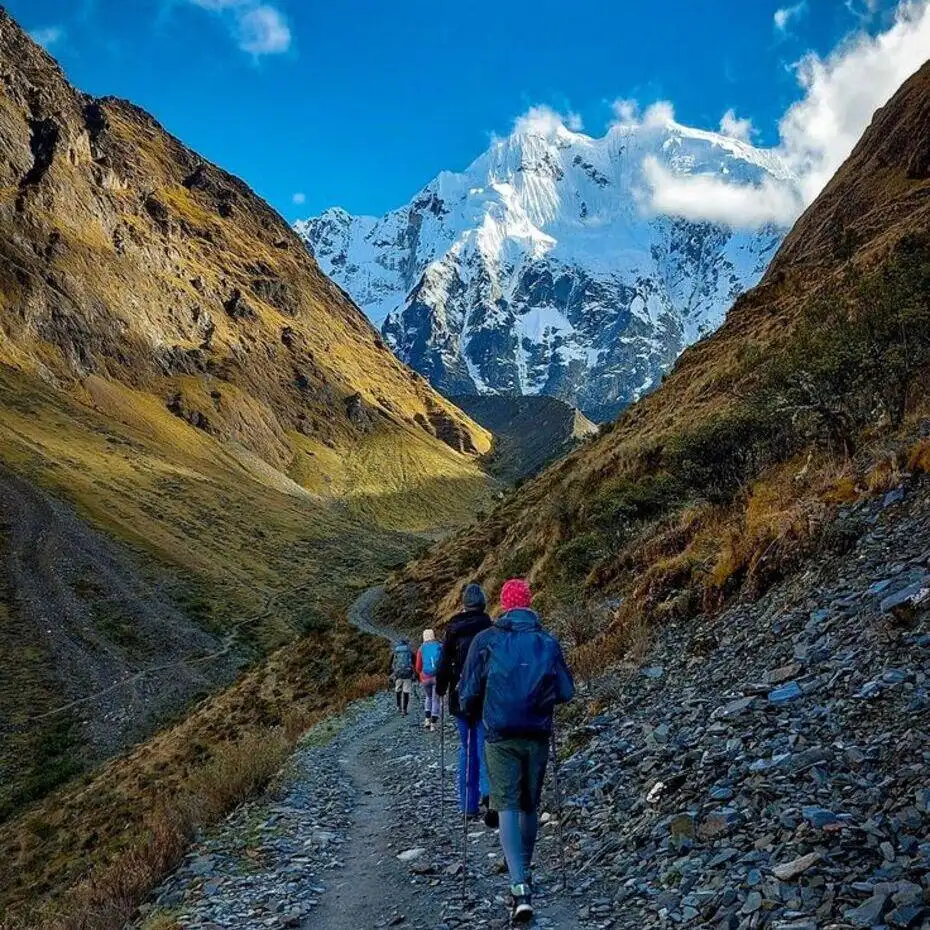
Salkantay is known for dramatic mountain scenery and ecological transitions. The trek typically begins in high-altitude terrain before descending through increasingly warmer and greener environments toward the Machu Picchu region.
The route appeals particularly to travelers who prioritize wilderness, mountains, and changing landscapes.
Salkantay Trek Highlights
Depending on the itinerary, travelers can experience:
- High Andean mountains.
- Snow-covered peaks.
- Salkantay Pass.
- Mountain valleys.
- Cloud forest.
- Tropical vegetation.
- Rural communities.
- Coffee and agricultural landscapes.
- The approach toward Machu Picchu.
Salkantay vs Inca Trail
The Inca Trail is strongly associated with archaeology and the historic route into Machu Picchu.
Salkantay emphasizes natural landscapes and mountain scenery.
Both can be physically demanding, but the experience is different. Travelers interested in Inca history may prefer the Inca Trail, while those seeking a broader wilderness experience may consider Salkantay.
Machu Picchu Hike Difficulty
Machu Picchu hike difficulty varies enormously depending on which route is being discussed.
A short walk from Aguas Calientes is completely different from a four-day Inca Trail or a demanding Salkantay Trek.
Even hikes inside Machu Picchu vary. Huayna Picchu involves steep stairs and significant climbing, while Machu Picchu Mountain involves a longer sustained ascent.
Factors That Affect Difficulty
The principal factors include:
- Distance.
- Elevation gain.
- Altitude.
- Number of stairs.
- Terrain.
- Weather.
- Length of each hiking day.
- Backpack weight.
- Acclimatization.
- Individual fitness.
A short hike can be difficult if it is very steep, while a longer route can feel manageable if the terrain is relatively gentle.
Preparing for Hiking Near Machu Picchu
A practical preparation program can include:
- Regular walking.
- Stair climbing.
- Uphill hiking.
- Leg-strength exercises.
- Cardiovascular exercise.
- Longer walks on consecutive days.
- Practice carrying a light backpack.
Acclimatization is also important. Spending time in Cusco or the Sacred Valley before a demanding trek can allow travelers to adjust to high altitude.
Shortest Hike to Machu Picchu
Travelers searching for the shortest hike to Machu Picchu are often referring to the walk from Aguas Calientes toward the sanctuary rather than a multi-day trekking route.
The important distinction is that Machu Picchu can also be reached by bus from Aguas Calientes, so hiking is not mandatory.
The walking route follows the road toward the entrance area and involves a substantial uphill section with many stairs. The exact walking time varies according to pace, weather, and starting point.
For travelers who simply want to walk rather than take the bus, this is one of the most accessible ways to incorporate hiking into a Machu Picchu visit.
Is Walking From Aguas Calientes the Same as Trekking to Machu Picchu?
No.
A walk from Aguas Calientes is a relatively short local approach. The Inca Trail and Salkantay are multi-day journeys that begin much farther away.
This distinction is important because online searches often use the phrase “hike to Machu Picchu” to describe completely different experiences.
Hiking From Aguas Calientes
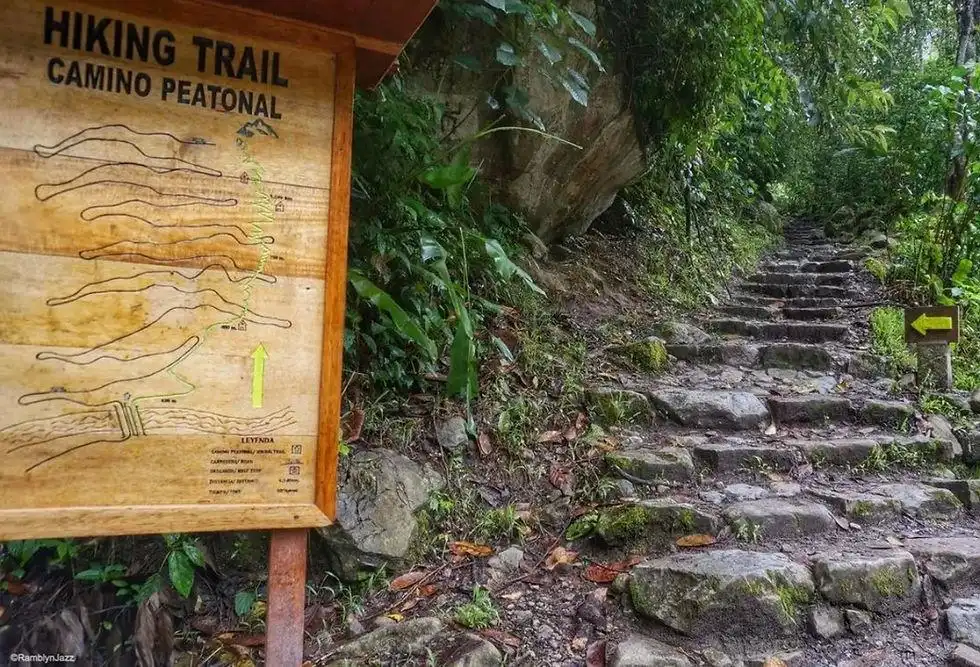
Hikes near Aguas Calientes provide some of the easiest opportunities to add walking to a Machu Picchu itinerary.
Aguas Calientes, also called Machupicchu Pueblo, is the principal town used by visitors traveling to the sanctuary by train. The town is surrounded by steep green mountains, rivers, and cloud-forest vegetation.
Hikes Near Aguas Calientes
Possible walking experiences include:
- Walking toward the Machu Picchu entrance.
- Exploring local trails.
- Walking along the river.
- Exploring the surrounding forest.
- Hiking toward viewpoints where permitted.
- Visiting nearby natural attractions.
The exact availability of individual trails can change because of weather, conservation work, safety conditions, and local regulations.
Hike to Machu Picchu Entrance
The hike to Machu Picchu entrance from Aguas Calientes is one of the most common short walking options.
Instead of taking the shuttle bus, visitors can walk along the uphill route toward the sanctuary entrance.
The route follows a combination of road sections and stone stairs. The ascent is considerably more demanding than the distance alone suggests.
What to Expect
Travelers should expect:
- Uphill walking.
- Numerous stairs.
- Humid forest conditions.
- Changing weather.
- Traffic from buses on some sections of the road.
- A physically active start to the Machu Picchu visit.
Visitors who choose to walk should allow sufficient time to reach the entrance before their assigned entry period.
Who Should Walk Instead of Taking the Bus?
Walking can be attractive to:
- Active travelers.
- Hikers.
- Budget-conscious visitors.
- People who enjoy forest scenery.
- Travelers who want additional physical activity.
Taking the bus can be more appropriate for people who want to conserve energy for exploring Machu Picchu or who have mobility limitations.
How Far Is the Hike to Machu Picchu?
The answer to how far is the hike to Machu Picchu depends entirely on which route is meant.
There is no universal distance because different routes begin in different locations.
Approximate Categories
A useful way to understand the distances is:
- Aguas Calientes to Machu Picchu: Short local approach.
- Short Inca Trail: Approximately a day’s hiking depending on itinerary.
- Classic Inca Trail: Multi-day trekking route.
- Salkantay: Multi-day trekking route.
- Huayna Picchu: Short mountain route inside the sanctuary.
- Machu Picchu Mountain: Short but demanding mountain route.
Therefore, asking “how far is Machu Picchu from the hike?” without identifying the trail can produce misleading information.
How Long Is the Hike to Machu Picchu?
How long is the hike to Machu Picchu? Again, the answer depends on the route.
A short walk from Aguas Calientes can be completed in a few hours, while the classic Inca Trail takes approximately four days.
Salkantay generally requires several days, while mountain hikes inside the sanctuary take only a portion of a day.
Hiking Time by Experience
| Route | General hiking commitment |
|---|---|
| Aguas Calientes to entrance | A few hours |
| Huayna Picchu | Several hours |
| Machu Picchu Mountain | Several hours |
| Short Inca Trail | 1–2 days |
| Classic Inca Trail | About 4 days |
| Salkantay | Several days |
These are planning categories rather than exact completion times. Individual hikers may walk considerably faster or slower.
How Long Does It Take to Hike Up Machu Picchu?
How long does it take to hike up Machu Picchu? This phrase can mean several different things.
If “up Machu Picchu” means walking from Aguas Calientes to the sanctuary entrance, the journey takes considerably less time than a multi-day trek.
If it refers to climbing one of the mountains inside the sanctuary, the time is different again.
For example, Huayna Picchu and Machu Picchu Mountain are mountain hikes that generally take several hours, while walking from the town to the entrance is a shorter experience.
The most important step is identifying whether the traveler means:
- Hiking to Machu Picchu from another region.
- Hiking from Aguas Calientes to the entrance.
- Hiking inside Machu Picchu.
- Climbing Huayna Picchu.
- Climbing Machu Picchu Mountain.
How Long Does It Take to Hike to the Top of Machu Picchu?
The phrase how long does it take to hike to the top of Machu Picchu is sometimes used to describe mountain hikes inside the sanctuary.
However, Machu Picchu itself is not a mountain summit. It is an archaeological complex built on a mountain ridge.
There are separate mountain routes for visitors who want to climb higher:
- Huayna Picchu.
- Machu Picchu Mountain.
The time required depends on the mountain selected, route, pace, and time spent at viewpoints.
This distinction is useful when planning a trip because a standard Machu Picchu visit does not necessarily involve climbing to a summit.
Machu Picchu Trails Map
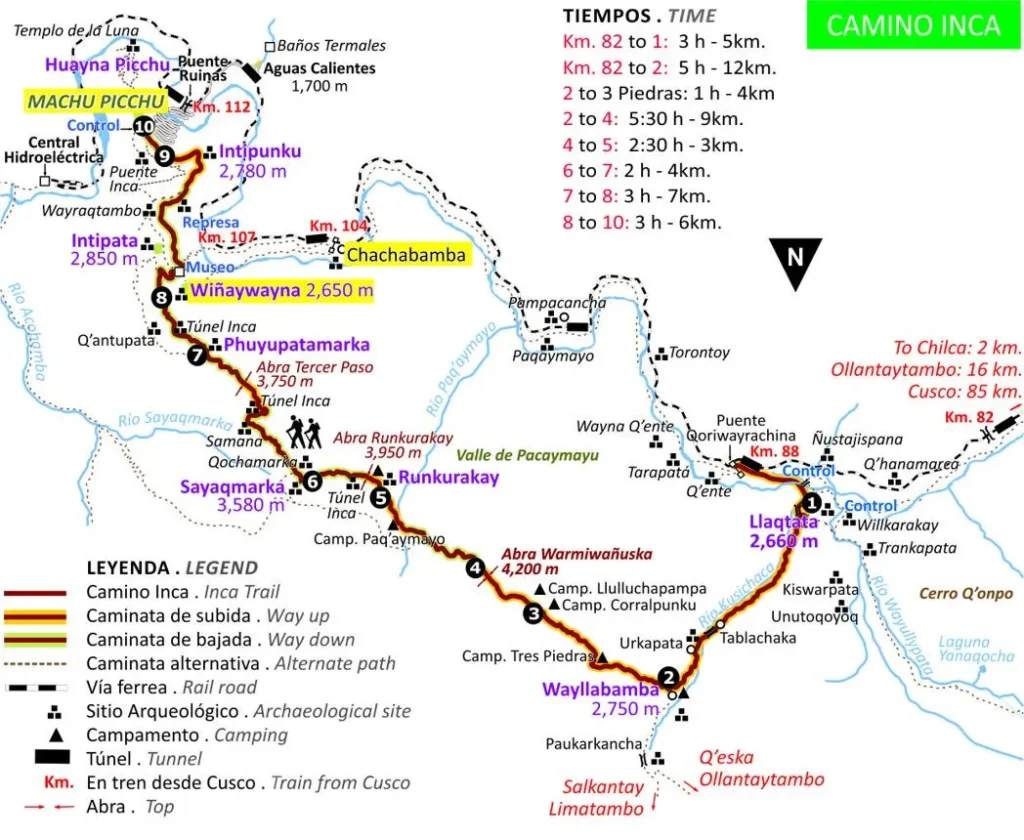
A Machu Picchu trails map can be confusing because there are several different categories of trails.
A simplified map concept looks like this:
Cusco → Sacred Valley / Trailhead → Multi-day trekking route → Machu Picchu area → Aguas Calientes
Inside the sanctuary, the situation is different:
Machu Picchu entrance → Archaeological circuits → Huayna Picchu / Machu Picchu Mountain routes where applicable
The current official visitor system divides Machu Picchu into three principal circuits and ten routes. The mountain routes are incorporated into this system rather than operating as unrestricted hiking trails.
Why Maps Can Be Confusing
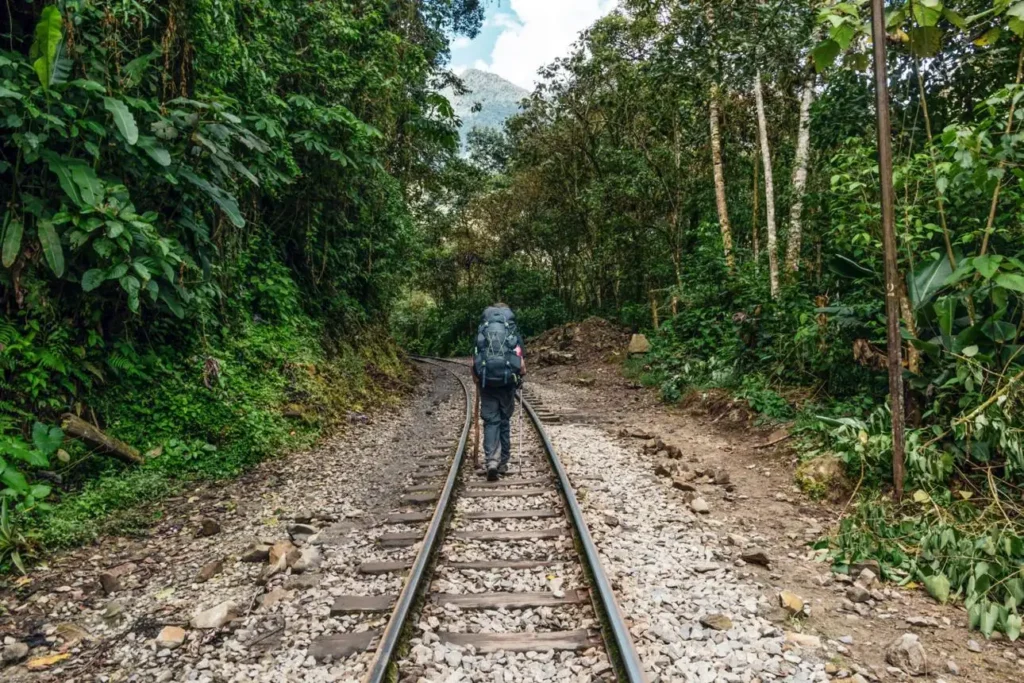
Older maps and travel articles may use different circuit numbers and route names.
Machu Picchu’s visitor management system has changed over time, so travelers should always verify the route associated with their current ticket.
Forest Hikes Near Machu Picchu
The forest hikes near Machu Picchu offer a completely different atmosphere from the exposed mountain trails.
The Machu Picchu region sits within a transition between Andean and Amazonian environments, producing lush vegetation, mist, steep forested mountains, and high biodiversity.
Forest walking can include encounters with:
- Tropical plants.
- Ferns.
- Moss-covered trees.
- Orchids.
- Birds.
- Butterflies.
- Insects.
- Mountain streams.
The cloud forest can be especially beautiful in misty or rainy weather, when vegetation appears intensely green.
Why Choose a Forest Hike?
Forest trails are particularly appealing to travelers interested in nature rather than archaeological monuments alone.
They can provide a quieter experience and a chance to appreciate the ecological environment surrounding Machu Picchu.
Wildlife and Nature
Visitors should not expect guaranteed wildlife sightings, but the region supports a rich variety of species.
Birdwatchers may encounter:
- Hummingbirds.
- Tanagers.
- Mountain birds.
- Butterflies.
- Other forest species.
The forest itself is an important part of the Machu Picchu experience.
Other Hikes Near Machu Picchu
There are several other hikes near Machu Picchu beyond the famous Inca Trail, Salkantay, Huayna Picchu, and Machu Picchu Mountain.
Putucusi Mountain
Putucusi is located near Aguas Calientes and has historically attracted adventurous travelers interested in a more independent mountain experience.
However, trail conditions and access can change, and some sections have been affected by weather, infrastructure changes, and safety concerns.
Travelers should verify current access before planning a hike there.
Lares Trek
The Lares route is another multi-day alternative in the Cusco region.
It is especially associated with Andean landscapes and rural communities.
A Lares itinerary can be combined with transportation toward Machu Picchu, making it an alternative for travelers who want a cultural mountain trekking experience.
Choquequirao Combinations
More ambitious trekkers can consider routes involving Choquequirao and Machu Picchu. These are considerably longer and more physically demanding than conventional Machu Picchu hikes.
Such itineraries are better suited to experienced trekkers with sufficient time.
Hike to Machu Picchu Options
There are many hike to Machu Picchu options, ranging from several-hour walks to multi-day expeditions.
Option 1: Classic Inca Trail
Best for travelers interested in:
- Inca history.
- Archaeology.
- Ancient pathways.
- Multi-day trekking.
Option 2: Salkantay Trek
Best for travelers interested in:
- Mountains.
- High-altitude scenery.
- Wilderness.
- Ecological transitions.
Option 3: Short Inca Trail
Best for:
- Travelers with limited time.
- Visitors wanting part of the historic Inca Trail.
- Travelers who prefer a shorter trek.
Option 4: Aguas Calientes Walk
Best for:
- Travelers who do not want a multi-day trek.
- Active visitors.
- People who want to avoid the bus.
Option 5: Huayna Picchu
Best for:
- Steep hiking.
- Dramatic views.
- Adventure.
- Short mountain experiences.
Option 6: Machu Picchu Mountain
Best for:
- Panoramic views.
- Higher elevations.
- Photography.
- Sustained mountain climbing.
Free Hikes Near Machu Picchu
The search for free hikes near Machu Picchu requires some clarification because not every trail around the sanctuary is free.
The Machu Picchu archaeological sanctuary has controlled access, and mountain routes inside the sanctuary require the corresponding entrance ticket.
However, there can be walks around Aguas Calientes and the surrounding area that do not require the same archaeological entrance ticket.
What Can Be Free?
Potentially free walking experiences can include:
- Walking around Aguas Calientes.
- Exploring public streets and riverfront areas.
- Certain local paths where access is currently permitted.
- Walking rather than taking paid transportation in suitable areas.
However, visitors should not assume that an unofficial-looking trail is legally accessible. Trail access can change due to safety, conservation, weather, or private property.
Free Does Not Always Mean Easy
A free local trail can still involve steep terrain, slippery conditions, or difficult navigation.
Visitors should prioritize legal access and safety rather than choosing a route solely because it has no entrance fee.
Hiking Machu Picchu Perú: Planning Your Experience
Hiking Machu Picchu Perú can be organized around different levels of adventure.
A traveler with limited time might visit Machu Picchu by train and add one mountain hike.
A more adventurous traveler might spend four days on the Inca Trail.
Another visitor might choose Salkantay and spend several days crossing the Andes before reaching the Machu Picchu region.
Consider These Questions Before Choosing
Ask:
- How many days do I have?
- How physically active am I?
- Am I comfortable at high altitude?
- Do I prefer archaeology or nature?
- Do I want a challenging trek?
- Do I want to camp?
- Do I prefer hotels?
- Do I want a short hike?
- Do I want panoramic mountain views?
- Do I want to see cloud forest?
Your answers can quickly narrow the options.
Best Hikes Near Machu Picchu by Traveler Type
For First-Time Visitors
The classic Inca Trail provides the most historically iconic trekking experience.
For Mountain Lovers
Salkantay offers dramatic high-altitude landscapes and changing ecosystems.
For Short Trips
The Short Inca Trail or a mountain hike inside the sanctuary can provide hiking without dedicating several days to trekking.
For Active Day Visitors
Huayna Picchu or Machu Picchu Mountain can add a challenging climb to a standard Machu Picchu visit.
For Nature Lovers
Cloud-forest walks and trails around the Aguas Calientes region provide opportunities to experience the vegetation surrounding the sanctuary.
For Families
A shorter walking experience may be more appropriate than a demanding multi-day trek, depending on the ages and fitness levels of the group.
What to Pack for Hikes Near Machu Picchu
The packing list depends on the length of the hike.
For a day hike, a small backpack is generally sufficient.
Day-Hike Essentials
- Comfortable hiking shoes.
- Water bottle.
- Rain jacket.
- Lightweight clothing layers.
- Sun protection.
- Hat.
- Sunglasses.
- Sunscreen.
- Insect repellent.
- Personal medication.
- Camera or phone.
- Small personal snacks where permitted.
Multi-Day Trek Essentials
Longer treks require additional equipment, which may include:
- Sleeping bag.
- Warm clothing.
- Headlamp.
- Trekking poles where permitted.
- Personal toiletries.
- Additional clothing.
- Personal first-aid supplies.
- Appropriate backpack.
Your trekking company should provide a complete equipment list before departure.
Weather for Hiking Near Machu Picchu
Weather is one of the most important considerations when choosing among hikes near Machu Picchu.
The region experiences significant seasonal rainfall, but mountain weather can change rapidly throughout the year.
Rain can make stone stairs slippery and reduce visibility from mountain viewpoints. On the other hand, clouds and mist can create beautiful scenery in the cloud forest.
Prepare for Changing Conditions
Regardless of season, carry:
- Rain protection.
- Sun protection.
- Layers.
- Comfortable footwear.
- Sufficient water.
A sunny morning does not guarantee sunny conditions later in the day.
Safety Tips for Hikes Near Machu Picchu
Different routes have different hazards, but basic mountain safety principles apply across the region.
Important Guidelines
- Follow designated trails.
- Respect entrance restrictions.
- Stay behind barriers.
- Do not take unnecessary risks for photographs.
- Watch your footing on wet stones.
- Carry enough water.
- Protect yourself from the sun.
- Allow sufficient time.
- Avoid rushing.
- Follow guide and staff instructions.
On multi-day treks, altitude and weather require additional preparation.
Altitude
Altitude affects travelers differently.
Fitness does not guarantee immunity from altitude-related symptoms, which is why acclimatization should be considered before demanding hikes.
Spending several days in Cusco or the Sacred Valley before beginning a strenuous trek can be helpful.
Frequently Asked Questions About Hikes Near Machu Picchu
What are the best hikes near Machu Picchu?
Popular choices include the Classic Inca Trail, Salkantay Trek, Short Inca Trail, Huayna Picchu, Machu Picchu Mountain, and selected walks around Aguas Calientes.
What is the shortest hike to Machu Picchu?
The walk from Aguas Calientes toward the Machu Picchu entrance is among the shortest ways to incorporate hiking into a Machu Picchu visit. It is much shorter than the Inca Trail or Salkantay.
How far is the hike to Machu Picchu?
There is no single distance. The answer depends on whether you mean the Aguas Calientes approach, Inca Trail, Salkantay, or a mountain route inside the sanctuary.
How long is the hike to Machu Picchu?
It can take anywhere from several hours to several days depending on the selected route.
How long does it take to hike up Machu Picchu?
Walking from Aguas Calientes to the entrance takes a few hours, while climbing Huayna Picchu or Machu Picchu Mountain takes several hours. Multi-day treks require several days.
Are there free hikes near Machu Picchu?
Some walks around Aguas Calientes may not require a Machu Picchu entrance ticket, but mountain routes and archaeological areas have controlled access. Current trail conditions and access rules should always be checked.
Is the Inca Trail the only way to hike to Machu Picchu?
No. Salkantay, the Short Inca Trail, Lares combinations, and other routes can provide trekking experiences that reach the Machu Picchu region.
Is hiking required to visit Machu Picchu?
No. Travelers can reach the sanctuary using transportation from Aguas Calientes. Hiking is an optional part of the experience.
Final Guide to Hikes Near Machu Picchu
The variety of hikes near Machu Picchu means that almost every type of traveler can find an appropriate walking experience. The key is understanding the difference between the major routes.
The Machu Picchu hike Inca Trail is the classic choice for travelers interested in history, archaeology, and the experience of following an ancient route through the Andes. The Machu Picchu hike Salkantay provides a different adventure, emphasizing dramatic mountain landscapes and ecological transitions.
For visitors with less time, the shortest hike to Machu Picchu can be the walk from Aguas Calientes toward the sanctuary entrance. Travelers looking for a more challenging day hike can choose Huayna Picchu or Machu Picchu Mountain, both of which provide spectacular perspectives over the archaeological complex.
The Machu Picchu hike difficulty varies enormously between these experiences. A short walk may be relatively manageable, while the Inca Trail and Salkantay require several days of physical effort. Mountain routes inside Machu Picchu can also be strenuous despite their relatively short distances because of steep stairs and elevation gain.
For travelers researching how long is the hike to Machu Picchu, the most important thing is to identify the route first. There is no universal “Machu Picchu hike” with one fixed distance or duration.
Likewise, the question of how far is the hike to Machu Picchu cannot be answered accurately without knowing the starting point. Cusco, an Inca Trail trailhead, a Salkantay trailhead, Aguas Calientes, Huayna Picchu, and Machu Picchu Mountain all represent different hiking experiences.
Ultimately, hiking Machu Picchu Perú can be as simple or adventurous as you want it to be. You can walk for a few hours around Aguas Calientes, climb a mountain inside the sanctuary, or spend several days crossing the Andes on an iconic trekking route. The right choice depends on your available time, physical preparation, interest in history or nature, and the type of landscape you want to experience.