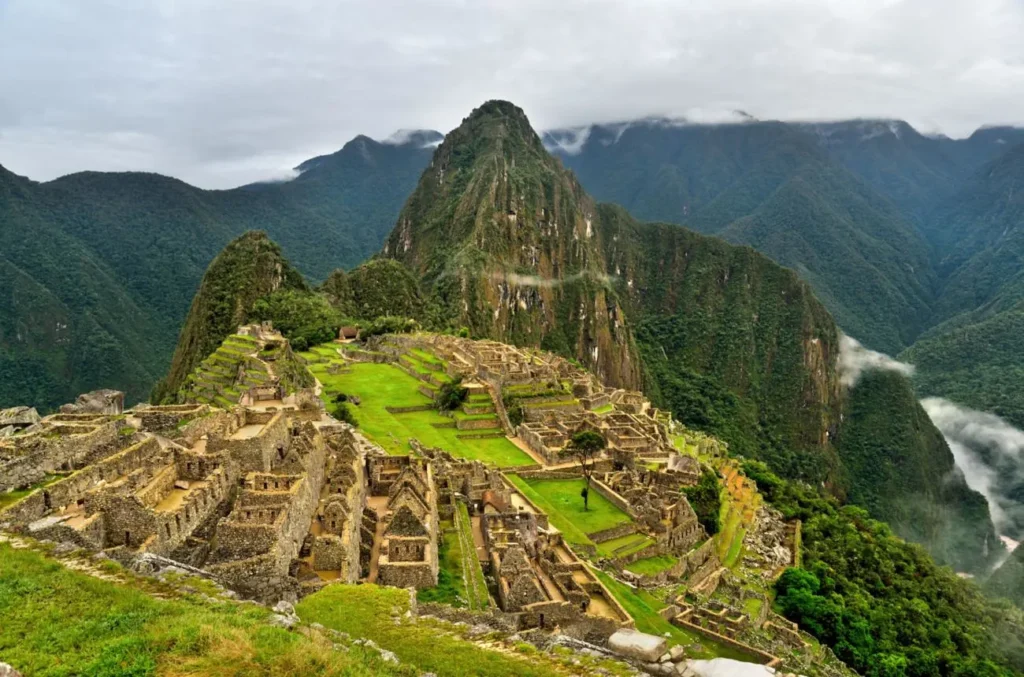
Machu Picchu is one of the most remarkable archaeological destinations in South America and one of the most memorable places to visit in Peru. Located high in the eastern Andes, the ancient Inka city combines monumental stone architecture, agricultural terraces, steep green mountains, and dramatic cloud-forest scenery. Planning a trip, however, requires more than simply arriving in Cusco and buying a ticket. Visitors need to consider their route, entrance ticket, circuit, travel time, accommodation, transportation, hiking options, and whether they want a professional guide.
This Machu Picchu travel guide 2026 explains the essential information you need to plan your visit, from organizing a one-day or two-day trip to understanding the current circuits and deciding whether a guide is worthwhile. The official visitor system currently organizes Machupicchu into three main circuits containing ten routes, so choosing the correct ticket route is an important part of planning.
For 2026, visitor capacity and ticket management continue to be regulated by Peru’s Ministry of Culture. A maximum capacity of 5,600 visitors per day applies on specified high-demand dates, including January 1, April 2–5, June 19–November 2, and December 30–31, 2026.
Whether you are traveling independently, joining a guided tour, or arranging a complete Machu Picchu travel package, the best experience begins with understanding how the destination works.
Planning Your Machu Picchu Trip
Planning your Machu Picchu trip starts with deciding how much time you have and what kind of experience you want. A traveler with limited time may visit Machu Picchu as a long day trip from Cusco, while travelers who prefer a slower experience can spend a night in Machu Picchu Pueblo, also known as Aguas Calientes, and visit the archaeological site early the following day. A longer itinerary can also include the Sacred Valley, especially Ollantaytambo, before continuing by train toward Machu Picchu.
One of the most important decisions is your entrance route. The official system currently includes Circuit 1, known as the Panoramic Circuit; Circuit 2, the Classic Machupicchu Circuit; and Circuit 3, the Royalty Circuit. These circuits are divided into specific routes, including Machupicchu Mountain, Upper Terrace, the Classic routes, Huayna Picchu Mountain, the Great Cavern, and Huchuypicchu.
What to Decide Before Booking
Before making reservations, consider:
- How many days you have in Cusco and the Sacred Valley
- Whether you want a one-day or two-day Machu Picchu itinerary
- Whether you prefer train travel or a trekking route
- Which Machu Picchu circuit matches your interests
- Whether you want a private or group guide
- Whether you want to climb Huayna Picchu or Machu Picchu Mountain
- Whether you prefer to stay overnight in Aguas Calientes
- Whether your trip includes the Sacred Valley
- How much walking and climbing you are comfortable doing
Book Your Machu Picchu Ticket Carefully
Machu Picchu tickets are not simply general admission passes that allow visitors to wander anywhere inside the archaeological site. The official ticket platform asks visitors to select a circuit, route, date, and entrance time.
The Ministry of Culture provides online ticket sales through the official TuBoleto platform. There is also a limited in-person ticket allocation in Machu Picchu Pueblo; the official site states that up to 1,000 tickets are sold daily through the local ticket office, subject to availability, and these tickets provide access for the following day.
For popular travel dates, planning ahead is therefore important. Do not book your train, hotel, and other non-refundable services before checking that the Machu Picchu entrance route you want is available.
How to Get to Machu Picchu from Cusco
For most international visitors, how to get to Machu Picchu from Cusco is one of the most important questions when planning a trip. Machu Picchu does not have a road connection that allows ordinary tourist vehicles to drive directly to the archaeological site. The most common independent route involves traveling from Cusco toward the Sacred Valley or directly toward a train station, taking the train to Machu Picchu Pueblo, and then continuing from the town to the archaeological site.
A popular itinerary begins in Cusco and travels to Ollantaytambo, where visitors board a train to Machu Picchu Pueblo. From there, travelers can take the designated bus service up the mountain or follow an authorized walking route if appropriate for their itinerary and physical condition. Another option is to take a train from a station closer to Cusco, depending on the service and operating schedule available on the chosen date.
Cusco to Ollantaytambo
Ollantaytambo is an important transportation point for Machu Picchu trips. It is also one of the most significant archaeological sites in the Sacred Valley, making it a useful place to visit before taking the train. Travelers can arrange private transportation, a shared transfer, or a Sacred Valley tour that finishes in Ollantaytambo.
Ollantaytambo to Machu Picchu Pueblo
The train journey from Ollantaytambo takes travelers through the dramatic transition from the high Andes into a greener, more humid mountain environment. The route follows the Urubamba River and eventually reaches Machu Picchu Pueblo.
Once you arrive in Machu Picchu Pueblo, the journey is not yet complete. The archaeological site is located above the town, so you must continue by the designated mountain transportation service or by an authorized walking option.
Cusco to Machu Picchu in One Day
A one-day journey from Cusco is possible, but it requires careful coordination. The traveler needs an early departure, a suitable train, an entrance ticket at an appropriate time, transportation between Machu Picchu Pueblo and the archaeological site, and a return train that provides enough time to complete the selected route.
Because the schedule can be tight, a one-day trip works best when all major components are arranged in advance.
1-Day Machu Picchu Itinerary
A 1-day Machu Picchu itinerary is designed for travelers who have limited time and want to return to Cusco on the same day. The basic structure involves leaving Cusco early, traveling to the train station, taking the train to Machu Picchu Pueblo, continuing to the archaeological site, completing the selected circuit, returning to town, and taking the train back toward Cusco.
Suggested One-Day Schedule
- Early morning: Depart from Cusco
- Morning: Travel toward the train station
- Morning or late morning: Train to Machu Picchu Pueblo
- Midday: Continue from Machu Picchu Pueblo to Machu Picchu
- Several hours: Explore the selected circuit
- Afternoon: Return to Machu Picchu Pueblo
- Afternoon or evening: Train toward Cusco
- Evening: Arrive back in Cusco
The exact timetable depends on the train and entrance availability for your travel date. The important point is to coordinate the entrance time with the train schedule rather than selecting each service independently.
A one-day itinerary is convenient for travelers with limited vacation time, but it leaves little room for delays. Travelers who want a more relaxed experience may prefer a two-day itinerary.
2-Day Machu Picchu Itinerary
A 2-day Machu Picchu itinerary provides more flexibility and is often easier to manage. Instead of trying to complete the entire journey from Cusco and return on the same day, travelers can travel to Machu Picchu Pueblo on the first day, spend the night, and visit the archaeological site the following morning.
Day 1: Cusco to Machu Picchu Pueblo
Travel from Cusco toward Ollantaytambo or another appropriate train station. If time permits, you can combine the journey with a visit to the Sacred Valley. Continue by train to Machu Picchu Pueblo and check into your hotel.
The afternoon can be used to rest, explore the town, organize your belongings for the next morning, and confirm your transportation arrangements.
Day 2: Machu Picchu Visit and Return
Wake early and travel up to Machu Picchu according to your entrance time. Complete your selected circuit, return to Machu Picchu Pueblo, have lunch, and take your scheduled train back toward the Sacred Valley or Cusco.
A two-day itinerary reduces the pressure of trying to coordinate every connection on the same day. It can also make the experience more enjoyable because you spend less of the visit watching the clock.
How to Visit Machu Picchu
Knowing how to visit Machu Picchu means understanding that the archaeological site operates through controlled circuits rather than unrestricted exploration. The current official system contains three circuits and ten routes. Circuit 1 includes panoramic options such as Machupicchu Mountain and the Upper Terrace. Circuit 2 focuses on the classic Machupicchu experience, while Circuit 3 includes routes associated with the Royalty sector, including Huayna Picchu and other specialized routes.
Choose Your Circuit Before You Travel
Your circuit determines which areas you can visit. This makes ticket selection particularly important for travelers who have a specific objective, such as climbing Huayna Picchu or obtaining panoramic views from Machupicchu Mountain.
Do not assume that every ticket provides access to every attraction. Check the official route information before purchasing your ticket.
Follow the Assigned Route
Visitors are expected to respect the established circuits and routes. The official rules specifically prohibit visitors from ignoring the designated circuits and routes.
This system exists to manage visitor movement and help protect the archaeological site. For that reason, your Machu Picchu visit should be planned around the route printed on your ticket.
Do You Need a Guide for Machu Picchu?
The question “Do you need a guide for Machu Picchu?” is one of the most common questions travelers ask when planning their visit. A guide can make the experience substantially more informative because the ruins are much easier to understand when someone explains the architectural, religious, agricultural, and cultural significance of what you are seeing.
However, visitors should distinguish between the practical question of entering the site and the benefits of hiring a guide. The exact rules governing guiding services can change, so travelers should check the current official regulations and ticket information for their visit date.
A professional guide can explain why buildings were positioned where they were, how terraces functioned, what researchers believe about different structures, and how the city related to the surrounding mountains and Inka landscape. Without a guide, travelers can still appreciate the spectacular scenery and architecture, but some of the historical context can be easier to miss.
Do You Need a Tour Guide for Machu Picchu?
A tour guide for Machu Picchu is particularly useful for first-time visitors who want more than photographs. A guided visit can organize the experience around the most important archaeological structures and provide context while you move through the designated route.
A private guide can also be useful for families, couples, photographers, and travelers who prefer to ask questions and move at a comfortable pace within the restrictions of their assigned circuit. Group tours can be a practical alternative for travelers who want a lower-cost guided experience.
The choice ultimately depends on the type of visit you want. A traveler primarily interested in scenery and photography may prioritize independence, while someone interested in Inka history and archaeology may place greater value on interpretation.
How to Get a Guide for Machu Picchu
There are several ways to arrange a guide for Machu Picchu. You can book a complete tour package that includes transportation, entrance arrangements, and guiding; arrange a private guide through a reputable local travel agency; or organize a guiding service separately.
When choosing a guide, look for a properly authorized professional and confirm exactly what the service includes. It is useful to establish whether the price covers only guiding or also includes transportation, entrance coordination, and other services.
Questions to Ask Before Hiring a Guide
- Is the guide officially authorized?
- Is the service private or shared?
- How long does the guiding service last?
- Which circuit will the guide accompany you on?
- Is transportation included?
- Is the entrance ticket included?
- Is the guide available in your preferred language?
- Is hotel pickup included?
- What happens if your train schedule changes?
A clear agreement before the trip avoids confusion on the day of your visit.
Machu Picchu Tour Guide Cost
The Machu Picchu tour guide cost depends on several variables, so there is no single price that applies to every traveler. Private guiding generally costs more per person than joining a group because the service is dedicated to a smaller number of visitors. Language, duration, group size, route, season, and whether transportation is included can also affect the final price.
When comparing prices, avoid comparing only the guide fee. A very low price may represent guiding only, while another quote may include transportation or additional services. Always ask for a detailed breakdown.
What Can Affect Guide Cost?
- Private versus group service
- Number of travelers
- Spanish versus another language
- Duration of the visit
- Selected circuit
- Transportation requirements
- Pickup and drop-off arrangements
- Agency services
- Season and availability
For an accurate 2026 price, confirm the current rate with the guide or agency before booking.
Machu Picchu Tourist Attractions
Machu Picchu contains numerous architectural and ceremonial areas, but visitors do not necessarily see every structure on every route. The current circuit system means your ticket determines the areas you can visit.
The most famous attractions include the Temple of the Sun, Sacred Rock, Temple of the Three Windows, agricultural terraces, ceremonial structures, and the surrounding mountains. The experience is not only about individual buildings. The relationship between architecture, mountains, water, agriculture, and astronomical observation is part of what makes the site extraordinary.
Temple of the Sun
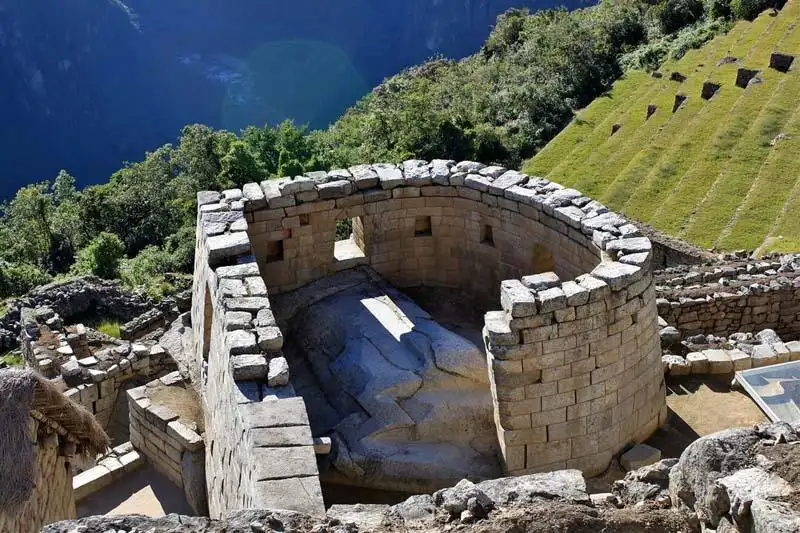
The Temple of the Sun is one of Machu Picchu’s best-known architectural structures. It is a carefully constructed stone building associated with ceremonial and astronomical interpretations. Its curved masonry distinguishes it from many of the rectangular structures elsewhere in the site.
The building is especially interesting because of the precision of its stonework and its relationship to natural light. When visiting, pay attention not only to the structure itself but also to its position within the surrounding urban complex.
Sacred Rock
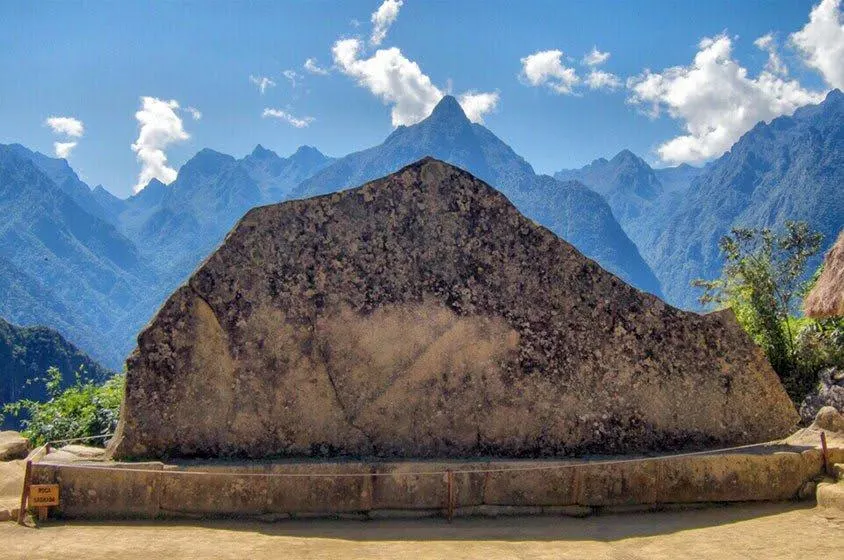
The Sacred Rock is a large natural stone formation positioned within the archaeological site. Its imposing shape and location have led to different interpretations concerning its symbolic and ceremonial significance.
The rock also demonstrates an important characteristic of Machu Picchu: the Inka builders incorporated existing natural formations into the architecture and spatial organization of the settlement rather than treating the natural landscape as separate from the built environment.
Temple of the Three Windows

The Temple of the Three Windows is located in the Sacred Plaza and is recognized for its three trapezoidal openings. The structure is one of the most visually distinctive examples of Inka architectural design within Machu Picchu.
The trapezoidal form appears throughout Inka architecture and contributes to the stability and visual character of the buildings. A guide can provide additional context about the architectural theories associated with this part of the complex.
Machu Picchu Mountain and Huayna Picchu
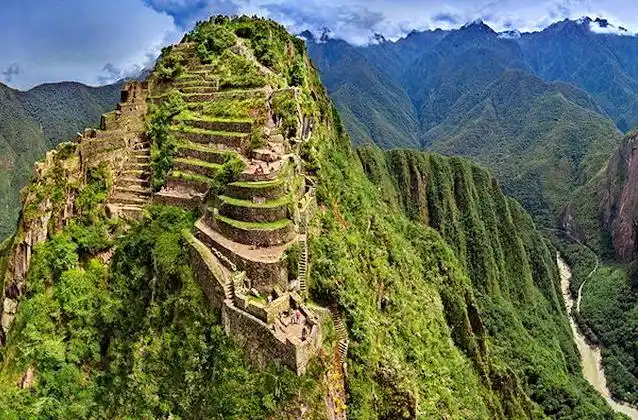
Machu Picchu Mountain and Huayna Picchu are different mountains and should not be confused when selecting tickets. The official circuit system places Machupicchu Mountain under Circuit 1, while Huayna Picchu Mountain is associated with Circuit 3, each through its corresponding route.
Machu Picchu Mountain provides broad elevated views over the archaeological complex and surrounding landscape. Huayna Picchu is the steep mountain rising prominently behind the ruins in many classic photographs. Both require additional planning and should only be selected if the corresponding route and availability match your itinerary.
Because these mountain routes involve additional climbing, travelers should consider their physical condition, weather, footwear, and comfort with steep terrain before booking.
Machu Picchu Travel Packages
Machu Picchu travel packages can simplify the planning process by combining several services into one reservation. Depending on the operator, a package may include transportation from Cusco, train tickets, entrance tickets, hotel accommodation, a guide, meals, and transfers.
Packages are particularly useful for travelers who do not want to coordinate multiple providers. They can also reduce the risk of scheduling incompatible train and entrance times.
What a Machu Picchu Package May Include
- Transportation from Cusco
- Sacred Valley transportation
- Train tickets
- Machu Picchu entrance ticket
- Professional guide
- Bus transportation
- Hotel in Machu Picchu Pueblo
- Meals
- Transfers
- Return transportation
Always confirm exactly what is included before paying for a package. Two packages with similar advertised prices may include very different services.
Private Versus Group Packages
A private Machu Picchu package usually offers greater flexibility in transportation, guiding, and scheduling, while a group package can reduce the cost per traveler. Families and travelers with special timing requirements may prefer private arrangements, whereas solo travelers and budget-conscious visitors may consider shared services.
Is It Easy to Visit Machu Picchu?
For most travelers, is it easy to visit Machu Picchu? The answer depends largely on how well the trip is organized. The archaeological site itself is accessible to visitors with different travel styles, but the complete journey involves multiple stages: reaching the train station, traveling to Machu Picchu Pueblo, getting to the archaeological site, following the assigned circuit, and returning according to your transportation schedule.
The visit can become complicated when travelers leave ticket purchases until the last minute or select a route without understanding what it includes.
What Makes a Machu Picchu Trip Easier?
- Buy the correct entrance ticket in advance.
- Match your train to your entrance time.
- Leave enough connection time between services.
- Stay overnight if you prefer a slower itinerary.
- Carry only what is allowed inside the archaeological site.
- Wear comfortable walking shoes.
- Check the official route before traveling.
- Consider hiring a guide if you want historical interpretation.
Machu Picchu’s official rules prohibit large bags exceeding 40 × 35 × 20 cm, as well as several other items including tripods, umbrellas, walking sticks, drones, food, alcohol, and various photography accessories.
Machu Picchu Travel Guide 2026: Practical Tips
A successful Machu Picchu travel guide 2026 should include practical information, not only attractions. The current system requires visitors to pay attention to their route, entrance time, ticket availability, and site regulations.
Buy Tickets Through Official Channels
The Ministry of Culture operates the official online ticket system through TuBoleto. The official Machupicchu website directs visitors to this platform for online purchases.
Choose the Correct Circuit
Do not buy a ticket based only on the words “Machu Picchu.” Check the circuit and route. The official system currently includes ten routes across three circuits.
If your priority is the classic archaeological experience, examine the available Circuit 2 routes. If you want a mountain hike, check the specific route associated with Machupicchu Mountain or Huayna Picchu.
Pack Light
The site’s rules are strict about what visitors can bring. Backpacks and bags larger than 40 × 35 × 20 cm are prohibited, and visitors cannot enter with food, alcohol, tripods, umbrellas, walking sticks, drones, or several other restricted items.
Wear Appropriate Shoes
Even if you are not completing a major trekking route, Machu Picchu involves uneven surfaces, stairs, stone pathways, and changes in elevation. Comfortable shoes with good grip are more practical than fashionable footwear.
Prepare for Changing Mountain Weather
The weather around Machu Picchu can change quickly. Rain is possible, particularly during the wetter months, while clouds and mist can move across the mountains during the day. A lightweight waterproof layer is useful even when the forecast looks favorable.
Respect the Site
Visitors are expected to remain on established routes and avoid touching, climbing, leaning on, or damaging archaeological structures. Feeding wildlife, making loud noises, smoking, vaping, and flying drones are also prohibited under the official code of conduct.
Frequently Asked Questions About Machu Picchu
How many days do I need for Machu Picchu?
One day can be enough for travelers with limited time, but two days allows a more relaxed schedule. A two-day itinerary lets you travel to Machu Picchu Pueblo on the first day and visit the archaeological site on the second.
Can I visit Machu Picchu from Cusco in one day?
Yes, a same-day trip can be organized, but it requires careful coordination between transportation and your entrance time. An overnight stay in Machu Picchu Pueblo provides more flexibility.
Do I need a guide for Machu Picchu?
A professional guide can provide valuable historical and archaeological context and help explain the site’s major structures. Whether you arrange guiding separately or as part of a package depends on your preferred travel style and the current rules applicable to your visit.
What is the best Machu Picchu circuit?
There is no single circuit that is appropriate for every traveler. The official system offers different routes with different purposes. Circuit 2 provides classic Machupicchu routes, while Circuit 1 includes panoramic options and Circuit 3 includes routes associated with the Royalty sector and mountain experiences.
Can I visit Machu Picchu without hiking?
Yes. Visiting the archaeological site does not require completing the Inca Trail. Travelers can reach Machu Picchu Pueblo by train and continue to the archaeological site using the designated transportation service. Travelers should distinguish a standard Machu Picchu visit from trekking routes such as the Inca Trail.
Is Huayna Picchu the same as Machu Picchu Mountain?
No. They are different mountain routes. The official visitor system places Machupicchu Mountain under Circuit 1 and Huayna Picchu under Circuit 3 through their respective routes.
How much does a Machu Picchu trip cost?
The total cost depends on transportation, entrance route, train service, accommodation, guiding, meals, and whether you book independently or through a package. Because prices and availability can change, travelers should calculate the complete cost rather than looking only at the entrance ticket.
What should I bring to Machu Picchu?
Bring your entrance documentation, identification as required, water according to current rules and arrangements, sun protection, comfortable clothing, and suitable walking shoes. Keep your luggage small because the official regulations prohibit bags larger than 40 × 35 × 20 cm.
Can I take a drone to Machu Picchu?
No. The official code of conduct prohibits drones and other types of unauthorized aerial devices inside the site.
Are Machu Picchu tickets available at the last minute?
Some in-person tickets are made available in Machu Picchu Pueblo, but availability is limited. The official Ministry of Culture information states that up to 1,000 tickets are sold daily through the local ticket office, subject to availability, and these tickets allow entry the following day.
For popular dates, advance planning remains the safer approach.
Final Thoughts on Visiting Machu Picchu in 2026
A successful Machu Picchu trip is mainly about planning the right combination of ticket, circuit, transportation, itinerary, and timing. The destination is much easier to enjoy when you understand the current visitor system before arriving.
For 2026, the official system uses three circuits and ten routes, and visitor capacity is regulated on designated high-demand dates. Choosing your route first allows you to organize the rest of your journey around it.
For travelers with limited time, a carefully organized one-day Machu Picchu itinerary can work well. For a more relaxed experience, a two-day itinerary with an overnight stay in Machu Picchu Pueblo gives you additional flexibility. A professional guide can add historical and cultural context, while independent travelers can focus on photography, scenery, and exploring within their assigned route.