How to Get to Machu Picchu is one of the most important questions to answer before planning a trip to the Inca citadel. Although Machu Picchu is relatively close to Cusco in geographical terms, reaching the archaeological site involves several transportation options and, depending on your route, a combination of train, bus, and walking.
For most travelers, the standard journey is Cusco or the Sacred Valley → Ollantaytambo or another train station → Machu Picchu Pueblo (Aguas Calientes) → bus or walk → Machu Picchu. The official visitor system also divides Machu Picchu into different circuits and routes, so transportation planning should be coordinated with the entrance ticket and selected circuit.
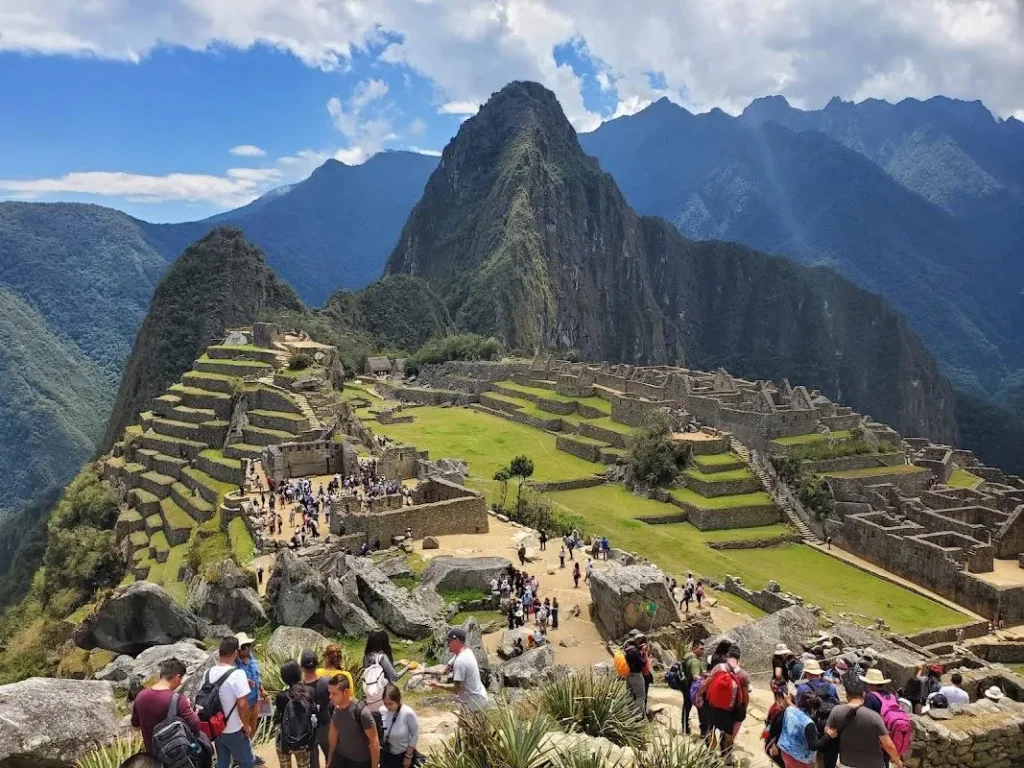
This complete guide explains how to get to Machu Picchu from Cusco, Lima, Ollantaytambo, and Aguas Calientes, how to travel by train, how much walking is involved, approximate journey times, transportation costs to consider, and the differences between traveling by train, bus, or trekking.
How to Get to Machu Picchu: Understanding the Route
Machu Picchu is not accessible by road directly from Cusco. The archaeological site is located high above Machu Picchu Pueblo, the town commonly known as Aguas Calientes. The town is the principal transportation hub immediately below the citadel.
The most important thing to understand is that Machu Picchu Pueblo and Machu Picchu are not the same place. A train arriving from Cusco, Ollantaytambo, or another railway station generally takes you to Machu Picchu Pueblo. From there, you still need to reach the entrance to the archaeological site by bus or on foot.
The standard transportation sequence
For a conventional visit, the journey usually looks like this:
- Lima → Cusco by air or long-distance bus
- Cusco → Ollantaytambo or another railway departure point
- Train → Machu Picchu Pueblo
- Bus or walking → Machu Picchu entrance
- Visit Machu Picchu according to your assigned circuit and entry time
This simple sequence is useful when planning because each stage normally requires separate timing and, in some cases, separate tickets.
How to Get to Machu Picchu from Cusco
For international and domestic travelers who begin their Peru journey in Cusco, the most common way to reach Machu Picchu is to combine road transportation and train travel.
There is no conventional highway connecting Cusco directly with the entrance to Machu Picchu. Instead, travelers normally travel through the Sacred Valley toward a railway station such as Ollantaytambo, board a train, and continue to Machu Picchu Pueblo.
Option 1: Cusco to Ollantaytambo + Train
This is one of the most straightforward combinations.
You can travel from Cusco to Ollantaytambo by:
- Tourist transportation
- Private transfer
- Shared transportation
- Taxi
- Organized tour transportation
From Ollantaytambo, you board a train to Machu Picchu Pueblo.
Ollantaytambo is particularly important because it combines a major archaeological attraction with one of the principal railway departure points for Machu Picchu.
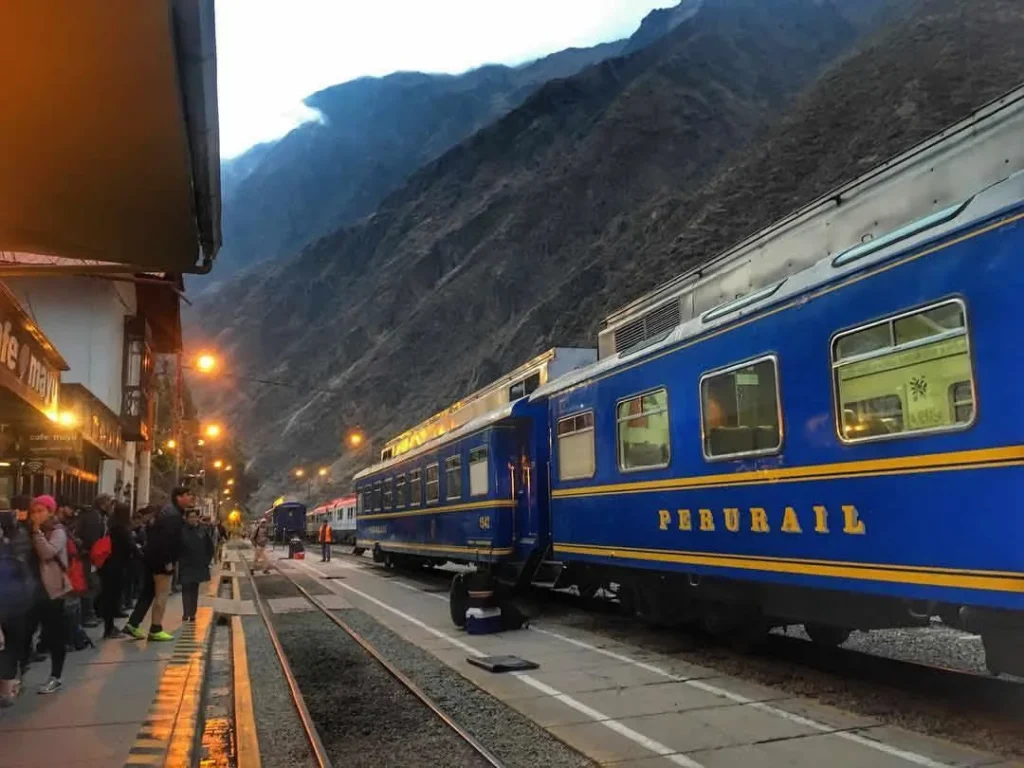
Option 2: Cusco Bimodal Bus + Train
Another convenient alternative is a bimodal service, which combines bus and train in one transportation arrangement.
For example, PeruRail’s published timetables include services departing from Cusco by bus, transferring to a train at locations such as Ollantaytambo or Pachar, and continuing to Machu Picchu Pueblo.
This can be useful for travelers who prefer not to arrange separate transportation from Cusco to the railway station.
Option 3: Cusco + Inca Trail
Adventure travelers can combine transportation from Cusco with the Inca Trail.
The official Machu Picchu website lists several authorized sections of the Inca Trail network, including routes beginning at Piskacucho and Chachabamba. The network extends for more than 300 kilometers and includes numerous archaeological monuments.
How to Get to Machu Picchu from Lima
Travelers coming directly from Lima first need to reach Cusco or the Sacred Valley region, because Lima is not connected to Machu Picchu by direct train.
Lima to Cusco by Air
Flying from Lima to Cusco is the quickest common connection between the two cities. After arriving in Cusco, the journey continues by road and train.
A typical route is:
Lima → Cusco → Ollantaytambo → Machu Picchu Pueblo → Machu Picchu
Lima to Cusco by Bus
Long-distance buses also connect Lima with Cusco. This is a much longer overland journey, so travelers choosing this option should leave enough time before a pre-booked Machu Picchu train.
Lima + Sacred Valley + Machu Picchu
A longer itinerary can combine Lima, Cusco, the Sacred Valley, and Machu Picchu. This approach allows travelers to visit destinations such as Pisac and Ollantaytambo before continuing by train.
It can also reduce unnecessary backtracking because Ollantaytambo itself is an important Sacred Valley destination and railway departure point.
How to Get to Machu Picchu from Ollantaytambo
Ollantaytambo is one of the most convenient departure points for travelers staying in the Sacred Valley.
The basic route is simple:
Ollantaytambo → Train → Machu Picchu Pueblo → Bus or walking → Machu Picchu
Regular railway services operate from Ollantaytambo toward Machu Picchu Pueblo, making the town an important transportation hub for visitors traveling from the Sacred Valley.
Why stay in Ollantaytambo before Machu Picchu?
Staying overnight in Ollantaytambo can make an early Machu Picchu departure easier because you avoid traveling from Cusco to the railway station on the same morning.
It can also be useful for travelers who want to explore the Sacred Valley rather than treating the journey to Machu Picchu simply as transportation.
Ollantaytambo to Machu Picchu by train
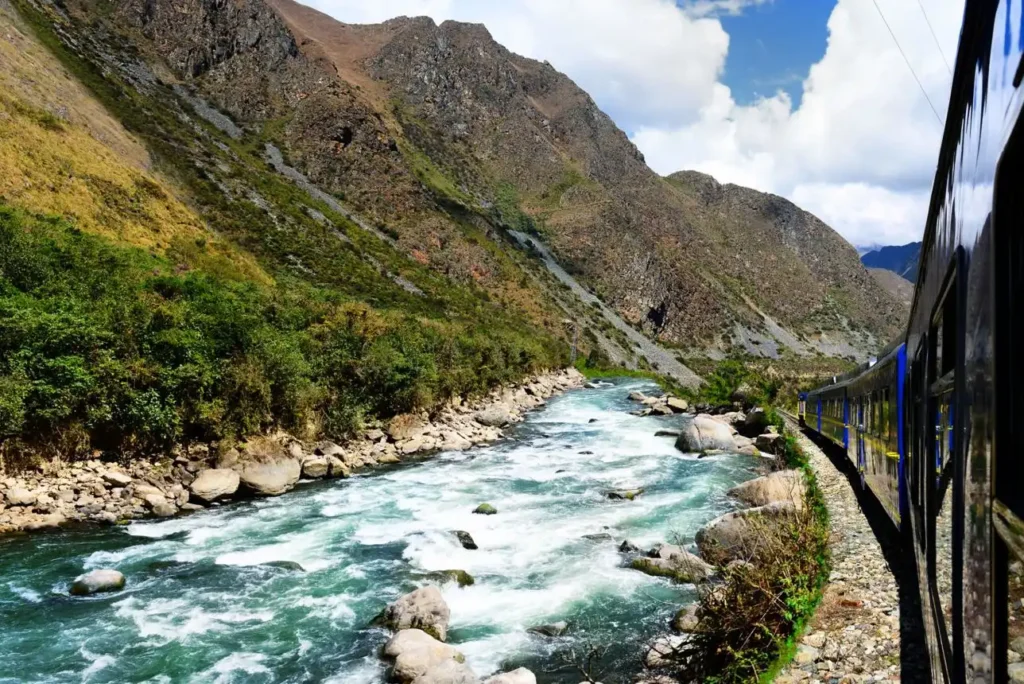
The railway follows the dramatic landscape of the Sacred Valley toward Machu Picchu Pueblo. The journey itself is part of the travel experience, with mountains, vegetation, river scenery, and increasingly tropical landscapes appearing along the route.
How to Get to Machu Picchu by Train
For travelers who do not want a demanding trek, the train is the principal transportation method for reaching Machu Picchu Pueblo.
Two major railway operators serve the route, and services differ in departure stations, schedules, onboard features, and pricing. Train availability can also change according to the season and operational conditions.
Train departure points
Depending on the service and timetable, trains can depart from locations including:
- Ollantaytambo
- Pachar
- Urubamba
- Poroy/Cusco on certain services
- Other designated transfer points
What does the train take you to?
A common misunderstanding is that the train takes passengers directly to the archaeological entrance.
It does not.
The train takes you to Machu Picchu Pueblo, after which you need to continue to the citadel.
Choosing your train
When comparing trains, consider:
- Departure location
- Departure time
- Arrival time
- Return schedule
- Baggage restrictions
- Train category
- Whether the service is direct or bimodal
- Connection time
- Price
- Whether your schedule allows enough time for your Machu Picchu entry
The most important factor is not simply choosing a train with a convenient departure. Your train should work with your Machu Picchu entrance time and circuit.
How to Get to Machu Picchu from Aguas Calientes
Aguas Calientes is the former and widely used name for Machu Picchu Pueblo.
Once you arrive by train, you have two principal ways to continue toward the archaeological site:
- Take the shuttle bus.
- Walk uphill.
For many visitors, the bus is the practical choice because it significantly reduces the physical effort before entering Machu Picchu.
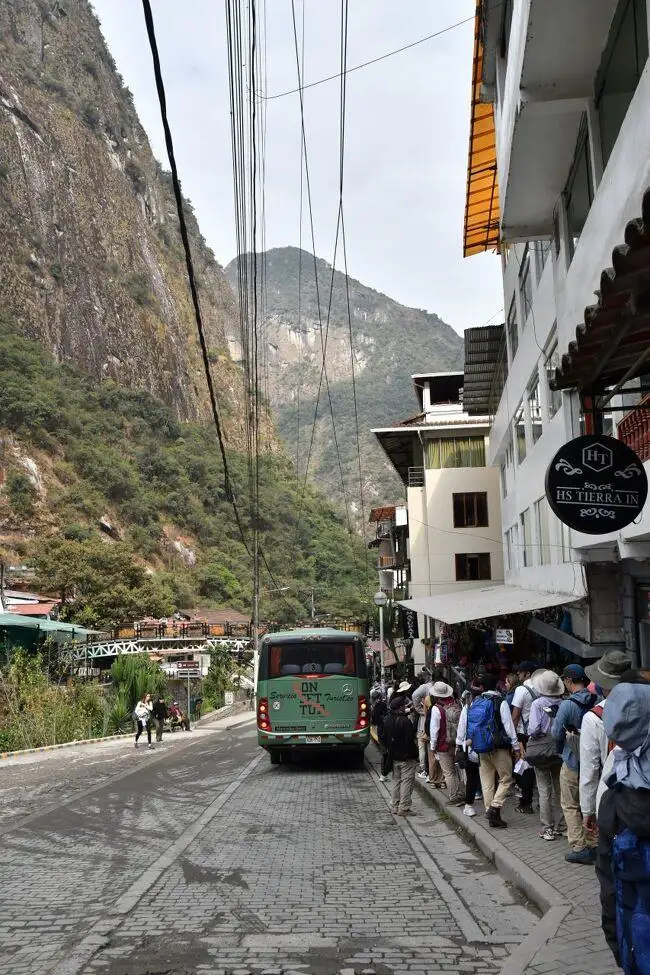
Taking the bus from Machu Picchu Pueblo
The buses travel up the steep switchback road connecting the town with the entrance area.
The bus service is operated separately from the railway, so travelers should plan this stage as part of their overall transportation schedule.
Walking from Aguas Calientes to Machu Picchu
Walking is also possible. The uphill route involves numerous steps and can take around two hours depending on pace and conditions.
This option can be attractive to travelers who want additional physical activity, but it is considerably more demanding than taking the bus.
How to Get to Machu Picchu Without Hiking
You do not need to complete a multi-day trek to visit Machu Picchu.
The simplest non-trekking journey is:
Cusco → Ollantaytambo → Train → Machu Picchu Pueblo → Bus → Machu Picchu
This means the only physical walking required is normal movement around the train station, town, bus area, and archaeological site.
The bus from Machu Picchu Pueblo eliminates the long uphill walk to the citadel.
Is Machu Picchu accessible without a long trek?
Yes. The famous multi-day Inca Trail is an optional trekking experience, not a requirement for a standard visit.
This distinction is important because the phrase “getting to Machu Picchu” can describe two different experiences:
- Transportation-focused visit: train + bus
- Trekking-focused visit: Inca Trail or another hiking route
Travelers should decide which experience they want before booking transportation.
How Much Do You Have to Hike to Get to Machu Picchu?
The amount of hiking depends entirely on the route you select.
If you travel by train and then take the bus, there is no mandatory long hike to reach the entrance.
If you walk from Machu Picchu Pueblo to the citadel, the route is a steep uphill walk involving stairs.
If you choose the Inca Trail, the experience is completely different.
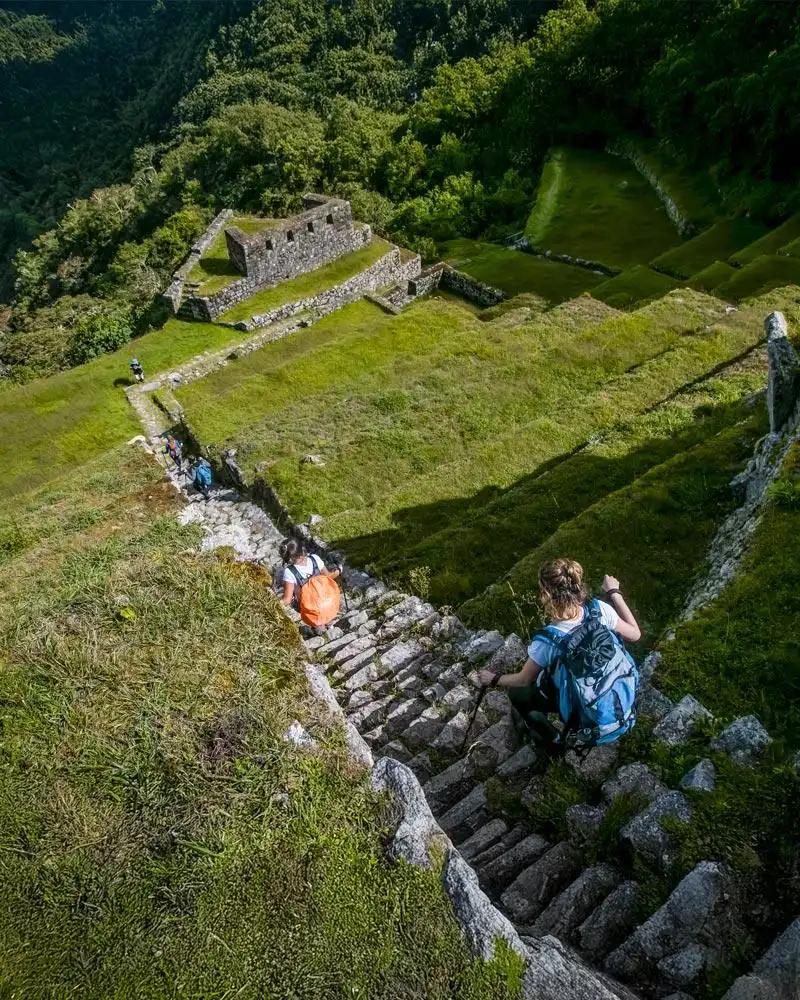
Classic Inca Trail
The traditional Inca Trail is much more demanding than simply walking from Aguas Calientes.
It includes:
- Mountain terrain
- Stone steps
- Significant elevation changes
- High-altitude sections
- Archaeological sites
- Campsites
- Several days of walking
Short Inca Trail
There are also shorter trekking experiences that use the railway corridor and enter the Inca Trail network farther along the route.
The official Machu Picchu website identifies authorized routes including Chachabamba–Wiñaywayna–Machupicchu, giving travelers different trekking possibilities depending on the permitted route and current operating conditions.
Because access conditions can change, travelers should verify the current status of their intended trail before departure.
How Long Does It Take to Get to Machu Picchu?
There is no single travel time because the answer depends on your starting point and transportation method.
Approximate transportation sequence
A typical journey involves:
Cusco → Sacred Valley/railway station → Train → Machu Picchu Pueblo → Bus → Machu Picchu
Travelers should distinguish between transportation time and total trip time. A journey may take several hours once road transfers, waiting time, train travel, bus boarding, and entry procedures are considered.
How Long Does It Take to Get to Machu Picchu from Cusco?
From Cusco, the total journey generally takes several hours, because you must combine road and railway transportation unless you choose a trekking route.
A common route is:
Cusco → Ollantaytambo → Machu Picchu Pueblo → Machu Picchu
A bimodal service can simplify this process by combining the Cusco-to-railway-station transfer with the train journey in a coordinated itinerary.
How Long Does It Take to Get to Machu Picchu from Lima?
From Lima, the total journey is substantially longer because Lima is outside the Cusco and Sacred Valley transportation network.
By air
The basic route is:
Lima → Cusco → Sacred Valley/railway station → Machu Picchu Pueblo → Machu Picchu
The flight itself is relatively short, but the complete trip takes considerably longer once airport transfers, check-in, road transportation, train travel, and the final ascent to Machu Picchu are included.
By bus
The road journey from Lima to Cusco is a substantially longer option. Adding the Cusco-to-Machu Picchu journey makes this an extended travel day.
For that reason, travelers using long-distance buses should build additional time into their itinerary rather than scheduling a Machu Picchu train immediately after arriving in Cusco.
How Much Does It Cost to Get to Machu Picchu?
There is no single fixed “Machu Picchu transportation price” because the total cost depends on your starting point, train category, bus use, entrance ticket, and whether you choose a trekking route.
Think of your budget as several separate components.
Main transportation costs
Your journey may include:
- Lima → Cusco flight or bus
- Cusco → Ollantaytambo transportation
- Train ticket
- Machu Picchu Pueblo → Machu Picchu bus
- Return train
- Return transportation to Cusco
Then add:
- Machu Picchu entrance ticket
- Guide, if desired or required for your chosen arrangement
- Accommodation
- Food
- Optional trekking permits and services
Train prices
Train prices vary according to:
- Operator
- Train category
- Departure station
- Travel date
- Time of day
- Direction
- Availability
Premium panoramic services generally cost more than basic services, while luxury trains can cost considerably more.
For this reason, it is better to think of train transportation as a range of products rather than one standard price.
Machu Picchu bus
The bus between Machu Picchu Pueblo and the citadel is a separate transportation expense from most regular train tickets.
Entrance ticket
The Machu Picchu entrance ticket is also separate from ordinary transportation.
The Ministry of Culture currently organizes visits through three circuits containing ten routes, including panoramic, classic Machupicchu, and royal routes.
Therefore, when calculating your total budget, do not assume that buying a train ticket automatically gives you admission to the archaeological site.
How Difficult Is It to Get to Machu Picchu?
For travelers using the train and bus, getting to Machu Picchu is generally a matter of coordinating several transportation stages rather than completing a difficult physical expedition.
The difficulty changes substantially depending on your route.
Train + bus
Physical difficulty:
- Relatively low
- Limited walking required
- No multi-day trekking
- Suitable for travelers who prefer conventional transportation
Train + walking from Aguas Calientes
Physical difficulty:
- Moderate
- Long uphill walk
- Numerous stairs
- More demanding than taking the bus
Classic Inca Trail
Physical difficulty:
- Much higher
- Several days of walking
- Mountain terrain
- High-altitude sections
- Camping
- Considerable preparation required
Is It Easy to Get to Machu Picchu?
For a traveler using the standard train + bus option, the journey is relatively straightforward once the tickets are organized.
The main challenge is not finding a road to Machu Picchu but coordinating multiple reservations and schedules.
A well-organized journey normally requires you to coordinate:
- Transportation from Cusco or your starting point
- Train departure
- Machu Picchu entrance ticket
- Circuit and route
- Bus from Machu Picchu Pueblo
- Return train
- Return transportation
The official system currently has three circuits and ten routes.
What makes the journey easier?
Planning becomes easier if you:
- Book your train before your trip
- Secure the appropriate Machu Picchu entrance ticket
- Match your train arrival with your entry time
- Leave enough time for transfers
- Check your train’s departure station carefully
- Allow additional time for delays
- Confirm current bus operations
- Keep your passport or identification document available
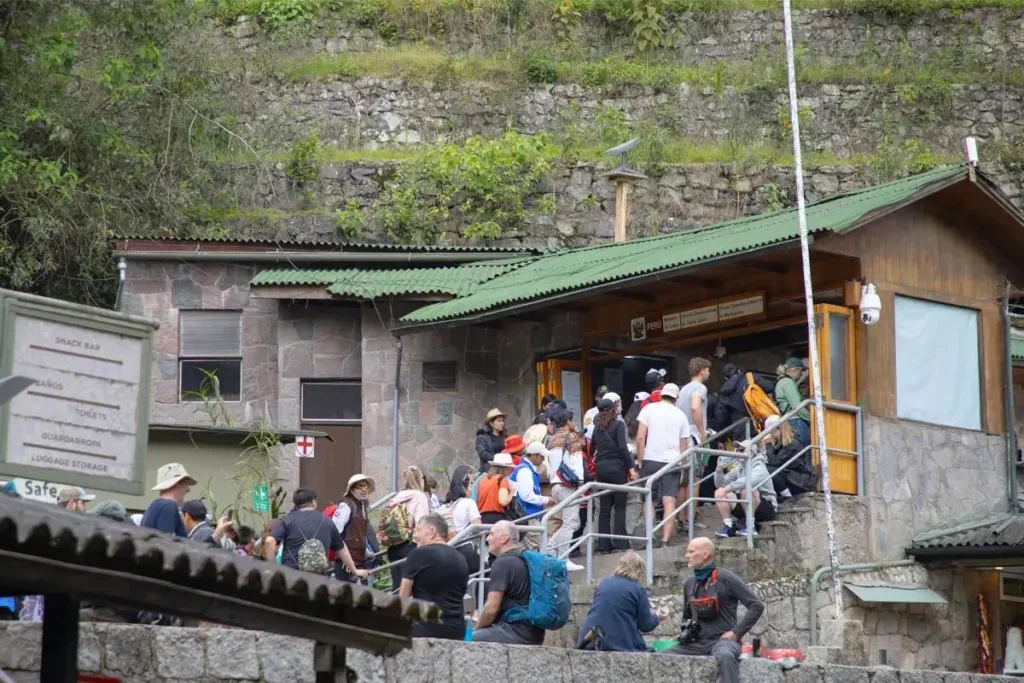
Machu Picchu Transportation: Train, Bus and Walking Options
There are three main transportation concepts to understand when planning your trip.
Train
The train is the most common way to travel from the Sacred Valley or Cusco-area railway network to Machu Picchu Pueblo.
Advantages:
- Faster than a multi-day trek
- Comfortable
- Scenic
- Multiple service categories
- Suitable for travelers who do not want strenuous hiking
Important: the train takes you to Machu Picchu Pueblo, not directly to the archaeological entrance.
Bus
The bus is used to travel between Machu Picchu Pueblo and the entrance area of the citadel.
Advantages:
- Avoids the steep uphill walk
- Saves physical energy
- Convenient for early visits
- Practical for travelers with limited hiking ability
Walking
Walking can refer to several completely different experiences.
Short uphill walk from Aguas Calientes
This is the direct walking option from the town toward the citadel.
Short trekking routes
Routes connected with the Inca Trail network provide a more immersive experience combining walking, archaeological sites, and mountain scenery.
Classic Inca Trail
The classic route is a multi-day trekking experience through the Historic Sanctuary of Machu Picchu. The official site describes the Inca Trail network as a protected heritage route requiring compliance with conservation regulations.
How to Plan Your Machu Picchu Transportation Step by Step
Step 1: Decide where your journey begins
Determine whether your trip starts in:
- Lima
- Cusco
- Sacred Valley
- Ollantaytambo
- Another destination in Peru
This immediately determines which transportation combination makes the most sense.
Step 2: Decide whether you want to trek
If you do not want a demanding hike, choose the train and bus option.
If the journey itself is part of your adventure, consider the Inca Trail or another authorized trekking route.
Step 3: Choose your Machu Picchu circuit
Your entrance ticket is connected to a particular visitor route. The current system includes three circuits and ten routes.
Step 4: Book the train
Check:
- Departure station
- Departure time
- Arrival time
- Train category
- Baggage rules
- Return schedule
Step 5: Coordinate the bus
If you are using the bus from Machu Picchu Pueblo, allow enough time after arriving by train to walk to the bus area and complete the transfer.
Step 6: Plan your return
Do not schedule the return train too close to your planned exit from Machu Picchu. Allow time for the visit, walking back toward the exit, possible bus queues, and the journey to the railway station.
Tips for a Smooth Journey to Machu Picchu
Book transportation in the correct order
A practical planning sequence is:
- Check Machu Picchu ticket availability.
- Select your circuit and entry time.
- Choose the train that fits that schedule.
- Arrange transportation from Cusco or the Sacred Valley.
- Organize your hotel if staying overnight.
- Plan the return journey.
Avoid unrealistic connections
A train arriving shortly before your Machu Picchu entry time can create unnecessary stress.
Likewise, a return train scheduled immediately after your expected exit can be risky if queues or operational delays occur.
Check official information close to departure
Transportation schedules and trail access can change because of operational, weather, infrastructure, conservation, or other conditions.
The official Machu Picchu website provides current information about circuits, routes, visitor schedules, and the Inca Trail.
Frequently Asked Questions About Getting to Machu Picchu
Can you drive directly to Machu Picchu?
No conventional road reaches the archaeological citadel itself. Travelers generally reach Machu Picchu Pueblo by train and then continue by bus or on foot.
Can you get to Machu Picchu without hiking?
Yes. The standard train-and-bus journey allows visitors to reach the entrance without completing a long trek.
How long is the walk from Aguas Calientes to Machu Picchu?
The uphill walk can take around two hours depending on pace and conditions.
Does the train go directly to Machu Picchu?
No. Regular train services arrive at Machu Picchu Pueblo, formerly known as Aguas Calientes. You then need to travel from the town to the citadel by bus or on foot.
How long is the train from Ollantaytambo to Machu Picchu?
The journey generally takes around two hours, although the exact duration depends on the specific train service and schedule.
How long does it take from Cusco to Machu Picchu?
The total journey is usually several hours because it combines transportation from Cusco to a railway departure point with the train to Machu Picchu Pueblo and then the final bus or walk to the citadel.
How long does it take from Lima to Machu Picchu?
The trip from Lima requires reaching Cusco first, either by air or road, and then continuing through the Sacred Valley and railway network.
Is Ollantaytambo a good place to take the train?
Ollantaytambo is an important railway departure point and is particularly convenient for travelers staying in the Sacred Valley.
Do you need to take the bus from Aguas Calientes?
No. You can walk uphill instead, although this is considerably more physically demanding than taking the bus.
Is the Inca Trail the only way to hike to Machu Picchu?
No. The official Inca Trail network contains multiple authorized routes, including routes associated with Piskacucho, Chachabamba, and other access points.
Do train tickets include Machu Picchu entrance?
Train tickets and Machu Picchu admission should be treated as separate components of your trip. Always verify exactly what is included in your selected transportation service.
Final Guide: Choosing How to Get to Machu Picchu
The easiest way to understand how to get to Machu Picchu is to divide the journey into three stages:
Stage 1: Reach the railway network
Travel from Lima or Cusco toward the Sacred Valley and a railway departure point such as Ollantaytambo.
Stage 2: Travel to Machu Picchu Pueblo
Take a train from the Sacred Valley railway network to Machu Picchu Pueblo, also known as Aguas Calientes.
Stage 3: Reach the citadel
From Machu Picchu Pueblo, take the bus or walk uphill to the entrance.
For travelers who want convenience and minimal hiking, train + bus provides the conventional transportation route. Travelers who want a more physically demanding adventure can choose the Inca Trail or another authorized trekking route.
The important point is that these are fundamentally different travel experiences, so your transportation choice should match your available time, physical preferences, budget, and interest in trekking.
Finally, Machu Picchu transportation should always be planned together with your entrance ticket, circuit, entry time, train schedule, and return journey. The current official system has three circuits and ten routes, while railway and trail conditions can change, so checking the latest information before departure is an essential part of a successful Machu Picchu trip.