A Machu Picchu guided hike is one of the most rewarding ways to experience the mountains, archaeological sites, ancient Inca pathways, and spectacular landscapes surrounding the famous citadel. Depending on the route you choose, a guided hiking experience can range from a relatively short mountain hike to a multi-day trek through the Andes before reaching Machu Picchu.
For travelers comparing Machu Picchu hiking routes, understanding the difference between a guided hike, a self-guided excursion, and a multi-day trekking adventure is essential. The difficulty, duration, altitude, transportation, permits, guide requirements, and price can vary considerably.
This guide explains what a Machu Picchu guided hike is, how difficult the different routes are, how long hiking experiences take, whether you need a guide, what guided tours usually include, and how to choose among the principal Machu Picchu hiking tours and trekking options.
What Is a Machu Picchu Guided Hike?
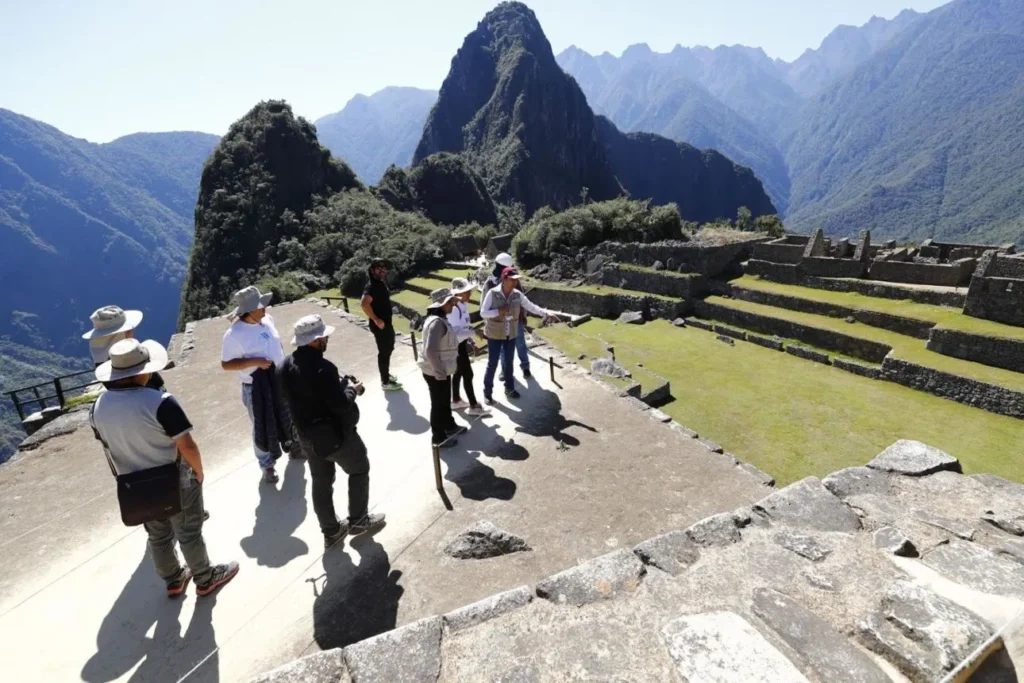
A Machu Picchu guided hike is a walking or trekking experience in which a professional guide accompanies travelers along an authorized hiking route associated with Machu Picchu. The guide may explain the archaeological sites, local history, Andean culture, flora and fauna, geography, and practical aspects of the trail.
The phrase can describe several very different experiences. A guided hike might mean climbing one of the mountains adjacent to Machu Picchu, walking a section of the historic Inca Trail, completing a one-day hiking excursion, or joining a multi-day trek such as the Inca Trail or Salkantay route.
The most important distinction is that hiking to Machu Picchu and hiking inside the Machu Picchu archaeological site are not necessarily the same activity. A traveler can trek for several days before reaching the area and then enter Machu Picchu using a specific authorized visitor route.
A guide can make the experience considerably more informative because the landscape itself contains archaeological and cultural details that are easy to overlook when walking independently.
What Does a Guided Hike Usually Involve?
Depending on the itinerary, a guided hiking experience can involve:
- Transportation from Cusco or another starting point
- Professional trekking or tour guide
- Trail orientation and safety briefing
- Hiking through mountain, cloud forest, or archaeological landscapes
- Visits to archaeological sites
- Historical and cultural explanations
- Machu Picchu entrance arrangements when included
- Accommodation on multi-day treks
- Meals on longer trekking programs
- Porter or support services on certain routes
- Train or bus transportation where applicable
- Assistance during the hike
The exact inclusions depend on the route and tour category, so travelers should always examine the itinerary before booking.
Machu Picchu Hiking Routes
There is no single Machu Picchu hiking route. The area around Machu Picchu contains several different hiking experiences, ranging from demanding multi-day treks to shorter mountain walks.
The most famous options include the Classic Inca Trail, Short Inca Trail, Salkantay Trek, Machu Picchu Mountain, Huayna Picchu, and Huchuypicchu. Each provides a different combination of scenery, physical challenge, archaeology, and time commitment.
It is therefore important to distinguish between a trek to Machu Picchu and a route inside Machu Picchu.
Classic Inca Trail to Machu Picchu
The Inca Trail is the most famous trekking route associated with Machu Picchu. It follows ancient pathways through high mountain landscapes, cloud forest, archaeological sites, stone stairways, and dramatic valleys.
The classic trek traditionally takes several days and culminates at Machu Picchu, with hikers entering through the historic Sun Gate area on the appropriate itinerary.
A guided Inca Trail is particularly attractive for travelers who want the journey itself to be an important part of their Machu Picchu experience rather than simply reaching the archaeological site.
Short Inca Trail
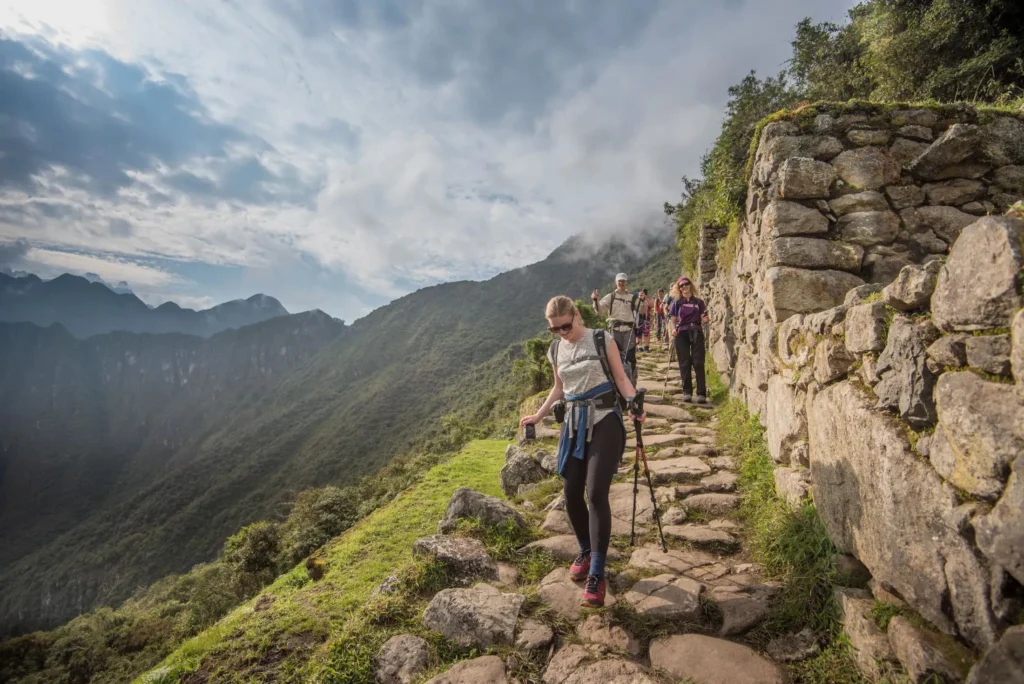
The Short Inca Trail provides a shorter alternative to the classic multi-day Inca Trail. Instead of spending several days trekking from the traditional starting point, travelers begin farther along the route and walk through a shorter section of the ancient trail.
This option can be suitable for travelers who want to experience Inca Trail scenery and archaeology but do not have enough time or physical preparation for a longer trek.
A short guided hike can include archaeological sites, cloud forest landscapes, mountain scenery, and the approach toward Machu Picchu before continuing to Machu Picchu Pueblo.
Salkantay Trek to Machu Picchu
The Salkantay Trek is another major option for travelers looking for a multi-day Machu Picchu hiking experience. It is known for dramatic mountain scenery and contrasts between high-altitude landscapes, valleys, cloud forest, and warmer vegetation.
The Salkantay experience is particularly appealing to hikers who want a longer wilderness adventure rather than a primarily archaeological trek.
Machu Picchu Mountain
Machu Picchu Mountain is a separate hiking experience located within the Machu Picchu visitor area. The route provides elevated views over the archaeological complex and surrounding mountains.
This hike is different from trekking to Machu Picchu from Cusco. Travelers first reach the Machu Picchu area and then undertake the mountain hike according to their ticket and assigned route.
Huayna Picchu Mountain
Huayna Picchu is another famous mountain hike associated with Machu Picchu. Its steep pathways and elevated position make it particularly attractive to travelers seeking dramatic perspectives over the archaeological complex.
Because the trail includes steep sections and exposed mountain terrain, travelers should consider their physical ability before selecting this option.
Huchuypicchu and Other Hiking Routes
Huchuypicchu provides another shorter mountain hiking experience associated with Machu Picchu.
Other hiking experiences can include the Intipunku route and Inka Bridge route, depending on the visitor route and ticket selected.
These shorter experiences can be useful for travelers who want to incorporate additional hiking into a Machu Picchu visit without committing to a multi-day trek.
Machu Picchu Hike Difficulty
Machu Picchu hike difficulty depends heavily on the route selected. There is no single difficulty level that applies to every Machu Picchu hiking experience.
A short mountain hike and a four-day Inca Trail trek are completely different physical challenges. Altitude, elevation gain, trail surface, stairs, weather, distance, and the amount of time spent walking all affect difficulty.
Easy to Moderate Machu Picchu Hikes
Shorter hikes can be appropriate for travelers who are reasonably active but do not regularly participate in long-distance trekking.
The difficulty may still increase because the Andes contain steep sections and numerous stone steps. Even relatively short distances can feel demanding at altitude.
For travelers with limited trekking experience, a shorter guided route can provide a good introduction to the environment without committing to several days of continuous hiking.
Moderate to Difficult Hiking Routes
Longer routes require greater endurance. The Short Inca Trail, for example, involves sustained walking and sections of uneven terrain.
Travelers should be comfortable walking for several hours, climbing stairs, and maintaining a steady pace over changing terrain.
A professional guide can help establish a practical rhythm, organize rest stops, and provide assistance when the trail becomes challenging.
Difficult Multi-Day Treks
The classic Inca Trail and Salkantay Trek can involve substantially greater physical demands.
The classic Inca Trail includes significant elevation changes and high mountain passes.
The Salkantay route can also involve high-altitude mountain environments and significant elevation gain.
Before choosing a multi-day trek, travelers should honestly evaluate their walking experience, fitness, previous exposure to altitude, and ability to hike several consecutive days.
How Long Is the Hike to Machu Picchu?
There is no single answer to how long the hike to Machu Picchu takes, because the duration depends on the route.
A short mountain hike near the archaeological site may take only a few hours, while a multi-day trek can take several days before reaching Machu Picchu.
Typical categories include:
- Short mountain hikes: several hours
- Short Inca Trail: approximately one day of trekking
- Classic Inca Trail: commonly four days
- Salkantay Trek: commonly four to five days depending on the itinerary
- Other alternative treks: approximately two to several days
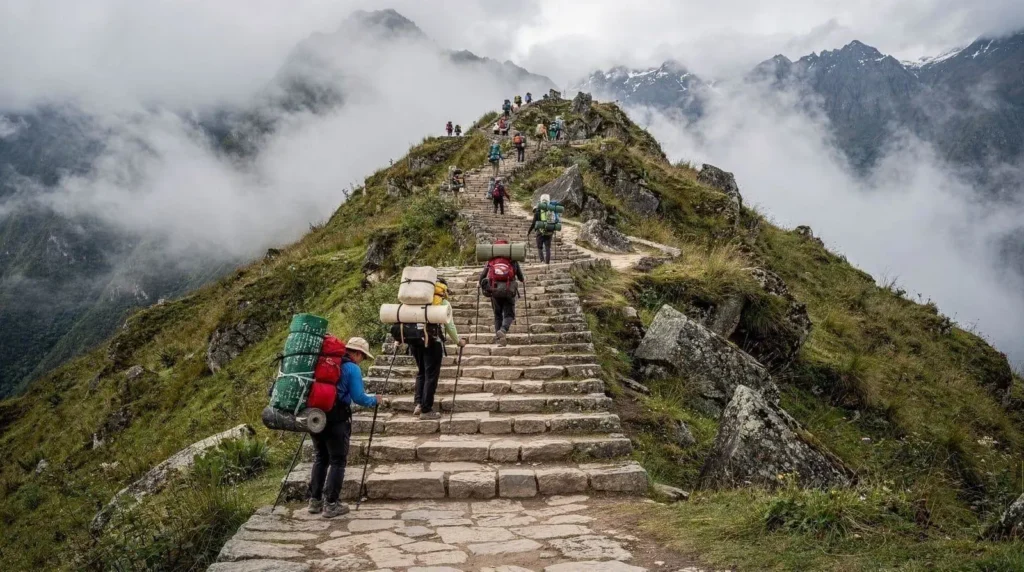
The classic Inca Trail is a multi-day route through mountains, cloud forests, archaeological sites, and changing landscapes.
How Long Is a One-Day Machu Picchu Hiking Experience?
A one-day hiking experience may involve several hours of walking, but the total excursion time can be considerably longer because transportation, entrance procedures, train schedules, and transfers are included.
For example, a traveler staying in Cusco may leave early in the morning, travel to the train station, reach Machu Picchu Pueblo, complete a guided hike or mountain route, visit the archaeological site, and return to Cusco later that day.
Therefore, travelers should distinguish hiking time from total tour duration.
How Long Is a Multi-Day Machu Picchu Trek?
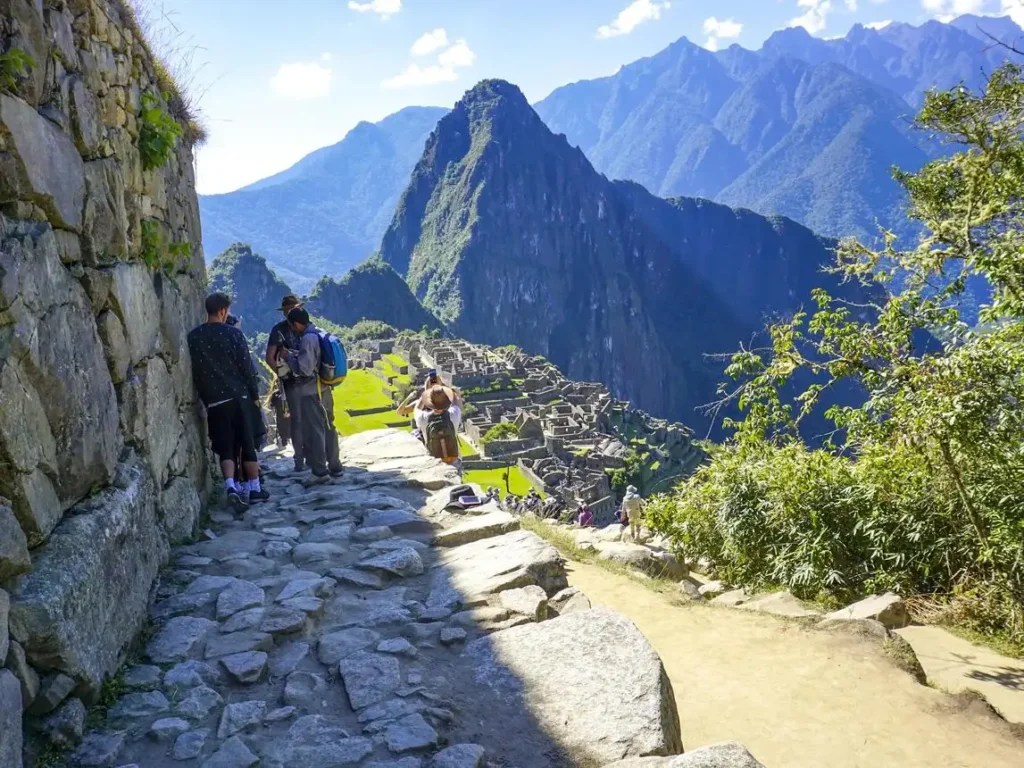
Multi-day treks usually require several days because the route itself is part of the adventure.
A four-day Inca Trail itinerary allows hikers to experience archaeological sites and landscapes progressively rather than arriving at Machu Picchu immediately.
Longer alternative treks can provide additional scenery and cultural experiences before reaching the final destination.
Do You Need a Guide for Machu Picchu?
Whether you need a guide depends on the specific activity.
The question “Do you need a guide for Machu Picchu?” is particularly important because there are several different regulations and practical considerations.
The Inca Trail is a regulated trekking experience, and travelers should use an authorized operator and comply with the applicable access requirements.
For other hiking routes, requirements can differ.
Even when independent hiking is technically possible on a particular route, hiring a guide can provide substantial advantages.
Why Hire a Guide?
A professional guide can help with:
- Navigation
- Trail interpretation
- Archaeological explanations
- Cultural context
- Hiking pace
- Safety awareness
- Transportation coordination
- Entrance arrangements
- Route logistics
- Communication with local staff
- Emergency assistance
The guide also transforms the hike from simply walking through a landscape into a more meaningful cultural experience.
Guided vs. Self-Guided Hike
Comparing a guided vs. self-guided hike is useful for travelers who are deciding how much support they want.
A self-guided experience generally gives travelers greater independence. They can control their pace, take breaks when desired, and potentially reduce some service costs.
However, independent travel also requires more preparation. Travelers must understand transportation schedules, trail access, entrance requirements, route directions, weather conditions, and timing.
A guided hike provides more structure.
Guided Hiking Experience
A guided hike generally offers:
- Professional assistance
- Organized transportation
- Route interpretation
- Greater logistical support
- Local cultural knowledge
- Help with timing
- Assistance in unexpected situations
This can be especially useful for international travelers unfamiliar with the Andes.
Self-Guided Hiking Experience
A self-guided hike may appeal to experienced travelers who enjoy independence and are comfortable organizing logistics themselves.
Potential advantages include:
- Flexible walking pace
- Greater independence
- More control over breaks
- Potentially lower service costs
- Freedom to organize parts of the itinerary independently
The trade-off is that the traveler assumes responsibility for planning and navigating the experience.
For a first visit to Machu Picchu, many travelers prefer guided arrangements because transportation, tickets, hiking routes, and timing can involve several interconnected details.
Machu Picchu Guided Hike Cost
The Machu Picchu guided hike cost varies substantially depending on the route and level of service.
There is no universal price because a short guided mountain hike is fundamentally different from a four-day trekking package.
The main factors affecting price include:
- Type of hiking route
- Number of trekking days
- Private or group service
- Professional guide
- Machu Picchu entrance
- Mountain entrance
- Train tickets
- Bus transportation
- Hotel accommodation
- Camping equipment
- Meals
- Porters
- Transportation from Cusco
- Travel season
- Group size
- Additional activities
Budget Guided Hikes
Budget-oriented options usually focus on essential transportation, entrance arrangements, and group guiding.
These tours can be attractive to travelers who want professional assistance while keeping additional services to a minimum.
Mid-Range Guided Hiking Tours
Mid-range packages may include better transportation, accommodation, smaller groups, more comprehensive meals, or additional services.
These tours are often designed for travelers who want convenience without choosing a luxury itinerary.
Private Machu Picchu Guided Hikes
A private guided hike provides a more personalized experience.
The guide can adapt the pace to the travelers, provide more individual explanations, adjust rest periods, and accommodate specific interests.
Private tours generally cost more than group tours because the guide and transportation costs are distributed among fewer travelers.
What Is Included in a Guided Hiking Tour?
When researching what is included in a guided hiking tour, travelers should examine every part of the itinerary rather than looking only at the headline price.
A guided Machu Picchu hiking package may include some or all of the following.
Guide Services
A professional guide is normally the central component of a guided hiking experience. The guide accompanies the group and explains the history, geography, archaeology, and cultural significance of the route.
For longer treks, the guide also helps manage daily schedules and coordinate logistics.
Machu Picchu Entrance
Depending on the package, the Machu Picchu entrance may be included in the price.
This is particularly important because Machu Picchu operates a defined system of circuits and routes, meaning travelers need to know which route is associated with their ticket.
Transportation
Transportation can include:
- Hotel pickup
- Private or shared vehicle
- Train
- Bus to Machu Picchu
- Return transportation
- Transfers between trekking points
Transportation arrangements can represent a significant portion of the overall tour price.
Accommodation
Multi-day trekking packages may include hotels, campsites, lodges, or other accommodation depending on the route.
One-day hikes generally do not require accommodation, while multi-day trekking packages necessarily include overnight arrangements.
Meals
Longer guided trekking tours often include meals during the hiking days. The number of meals varies by itinerary.
Travelers with vegetarian, vegan, gluten-free, or other dietary requirements should communicate those needs before departure.
Additional Trekking Support
Some multi-day packages include porters or support staff.
These services can make a significant difference on demanding treks because hikers may not need to carry all their equipment themselves.
Machu Picchu Hiking Tours and Trekking Options
There are several categories of Machu Picchu hiking tours and trekking options, making it possible to choose an experience according to available time, physical ability, and travel preferences.
One-Day Hiking Tours
One-day options are designed for travelers with limited time.
They generally combine transportation to Machu Picchu Pueblo, access to a selected hiking route or mountain, and the Machu Picchu visit.
The primary advantage is efficiency.
The disadvantage is that the overall day can be long because transportation and hiking are compressed into a single itinerary.
Two-Day Machu Picchu Hiking Tours
A two-day experience allows travelers to slow down compared with a one-day excursion.
The first day can be used for travel from Cusco and arrival in Machu Picchu Pueblo, followed by an overnight stay. The second day can focus on Machu Picchu and a selected hiking experience.
This format is particularly attractive to travelers who prefer not to rush through the destination.
Short Inca Trail Tours
The Short Inca Trail combines trekking with archaeological exploration.
It is an attractive option for travelers who want an authentic hiking component but cannot dedicate four or five days to a longer trek.
Classic Inca Trail Tours
The classic Inca Trail is a multi-day trekking adventure through the Andes.
The route combines mountain scenery, archaeological sites, ancient stone paths, cloud forest, and the final approach toward Machu Picchu.
It is particularly suited to travelers for whom the journey is as important as the destination.
Salkantay Trekking Tours
Salkantay offers a different character.
Rather than focusing primarily on the historic Inca Trail, it emphasizes dramatic mountain landscapes and ecological transitions.
It is a strong option for travelers who want a longer wilderness experience before reaching Machu Picchu.
Mountain Hiking Tours
Mountain-specific experiences include Machu Picchu Mountain, Huayna Picchu, and Huchuypicchu.
These are generally shorter than multi-day treks but can involve steep climbing and significant physical effort.
Map and Route Information
A Machu Picchu hiking map is useful because several different trails, mountains, archaeological areas, and transportation routes can be confused with one another.
The first distinction to understand is between the route to Machu Picchu and the route inside Machu Picchu.
Understanding the Route to Machu Picchu
A trekking route from Cusco toward Machu Picchu may pass through:
- High Andean valleys
- Mountain passes
- Cloud forests
- Archaeological complexes
- Rural communities
- River valleys
- Machu Picchu Pueblo
- The Machu Picchu archaeological area
The Inca Trail network is considerably larger than the tourist route most visitors know.
Understanding the Routes Inside Machu Picchu
Once travelers reach Machu Picchu, their experience follows the route specified by their admission.
The principal route categories include:
- Panoramic routes
- Machu Picchu Mountain
- Upper Terrace
- Intipunku
- Inka Bridge
- Classic Machu Picchu routes
- Classic visitor routes through the archaeological sector
- Royalty routes
- Huayna Picchu Mountain
- Great Cavern
- Huchuypicchu
- Additional archaeological sectors
Some routes have seasonal availability.
This distinction is essential when booking a Machu Picchu guided hike because purchasing a ticket for one route does not necessarily provide access to every other route.
How to Choose the Right Machu Picchu Guided Hike
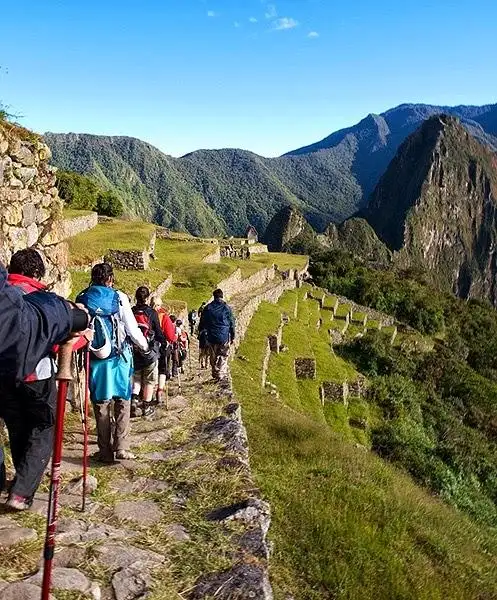
Choosing the right hike starts with your available time and physical ability.
Choose a Short Hike If You:
- Have only one or two days available
- Prefer shorter walking experiences
- Want to combine hiking with a standard Machu Picchu visit
- Do not want to camp
- Prefer hotel accommodation
- Have limited trekking experience
Choose a Multi-Day Trek If You:
- Enjoy long-distance hiking
- Want mountain landscapes
- Have several days available
- Want archaeological sites along the route
- Enjoy camping or trekking accommodation
- Want the journey to be a major part of the trip
Choose a Private Guided Hike If You:
- Prefer personalized service
- Want a flexible walking pace
- Are traveling as a family
- Have specific photography interests
- Want more time with the guide
- Prefer private transportation
Preparing for a Machu Picchu Guided Hike
Good preparation can make a significant difference.
Travelers should consider both physical preparation and practical equipment.
Physical Preparation
If you are planning a multi-day trek, begin walking regularly several weeks before your trip.
Useful preparation can include:
- Long walks
- Stair climbing
- Moderate hiking
- Cardiovascular exercise
- Walking with a light backpack
- Training on uneven terrain
The goal is not necessarily to become an elite athlete but to become comfortable walking for several hours on consecutive days.
What to Pack
A practical hiking list can include:
- Comfortable trekking shoes
- Lightweight rain jacket
- Small backpack
- Water bottle
- Sun protection
- Sunglasses
- Sunscreen
- Hat
- Light layers
- Insect repellent
- Personal medications
- Camera or phone
- Extra socks
- Small personal first-aid kit
- Cash for personal expenses
Weather in the Andes can change quickly, so layers and rain protection are particularly useful.
Guided Hike Safety and Altitude
Altitude is an important consideration when hiking around Cusco and Machu Picchu.
Travelers arriving directly from lower elevations may notice that physical activity feels more demanding at altitude. For this reason, spending some time acclimatizing in Cusco before undertaking a demanding trek can be helpful.
A guide can also monitor the group’s pace and help identify when someone needs a longer rest.
Travelers should not underestimate the combination of altitude, sun exposure, steep stairs, and long walking days.
For multi-day treks, preparation should begin before arrival in Peru.
Why Choose a Machu Picchu Guided Hike?
A guided hike offers more than navigation.
It connects the physical journey with the history and culture of the Andes.
Instead of simply seeing stone walls, terraces, mountain peaks, and archaeological remains, travelers can learn how the landscape relates to the Inca world and how ancient roads connected settlements and ceremonial centers.
A knowledgeable guide can also explain details that might otherwise be missed, from agricultural terraces and ancient construction techniques to local plants and mountain geography.
Final Thoughts on Machu Picchu Guided Hikes
A Machu Picchu guided hike can take many forms, from a short mountain adventure to a demanding multi-day trek through the Andes. The right route depends on the traveler’s available time, hiking experience, desired level of comfort, and interest in archaeology, landscapes, or adventure.
For travelers seeking a shorter experience, mountain routes such as Machu Picchu Mountain, Huayna Picchu, or Huchuypicchu provide opportunities to add hiking to a Machu Picchu visit. For those wanting a longer adventure, the Short Inca Trail, Classic Inca Trail, Salkantay Trek, and other trekking routes provide much more extensive journeys.
The Machu Picchu hike difficulty also varies considerably. A few hours on a mountain route is very different from several days at high altitude. Understanding the difference before booking helps travelers choose an itinerary that matches their abilities.
A guided experience can also simplify the practical side of the trip. Transportation, entrance arrangements, route interpretation, hiking pace, and logistical coordination can all be handled as part of a well-organized tour.
Ultimately, Machu Picchu is not only a destination. For hikers, the surrounding mountains and ancient pathways can become an equally memorable part of the journey. Choosing the right guided hike allows travelers to experience the archaeological sanctuary while also discovering the landscapes, history, and culture that make the journey to Machu Picchu so distinctive.