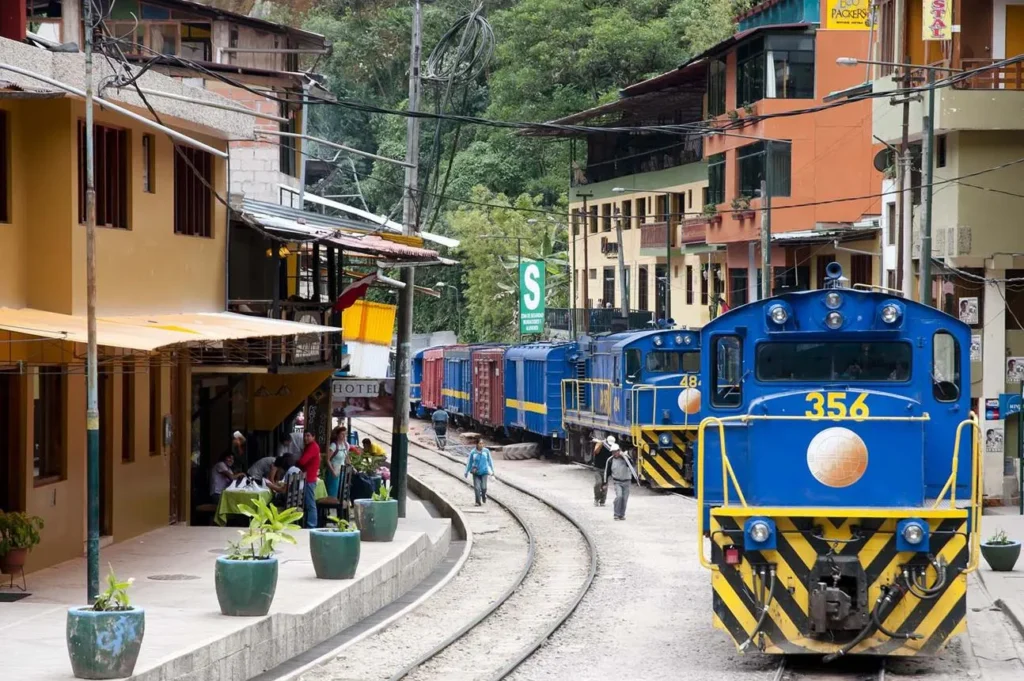
Traveling by Machu Picchu train is one of the most popular and convenient ways to reach the ancient Inca citadel from Cusco and the Sacred Valley. Instead of completing a multi-day trek, travelers can follow the railway through the dramatic landscapes of the Andes and the cloud forest before arriving at Machu Picchu Pueblo, also known as Aguas Calientes, the gateway town below Machu Picchu.
For most visitors, the train journey is an important part of the experience rather than simply transportation. Depending on your budget and preferences, you can choose a practical standard service, a panoramic train with larger windows, or a luxury experience such as the Hiram Bingham, a Belmond train. Routes, departure stations, travel times, fares and services vary considerably, so understanding the options before booking can make your Machu Picchu trip much easier to organize.
This complete Machu Picchu train guide explains how the railway works, where trains depart, how to buy Machu Picchu train tickets, how much the journey can cost, how long the train ride takes, and what to expect once you arrive in Aguas Calientes.
Cusco to Machu Picchu Train
The Cusco to Machu Picchu train is one of the most searched routes by travelers planning a visit to the Inca citadel. However, it is important to understand that a train ticket described as “Cusco to Machu Picchu” does not always mean that the train physically departs from central Cusco. Depending on the service and date, the journey may involve a combination of road transportation and train travel.
PeruRail currently offers both regular train services and bimodal services combining bus and train. Its official 2026 information shows services departing from Cusco-area locations such as Wanchaq, as well as direct railway departures from Ollantaytambo. For example, the current May–December timetable lists several Wanchaq-to-Machu-Picchu bimodal services and Ollantaytambo-to-Machu-Picchu regular train services.
How the Cusco to Machu Picchu Journey Works
For many travelers staying in Cusco, the practical journey looks like this:
- Hotel in Cusco
- Transfer by bus, van or taxi toward the railway departure point
- Train through the Sacred Valley and along the Urubamba River
- Arrival at Machu Picchu Pueblo/Aguas Calientes
- Short onward bus journey to the entrance of Machu Picchu
The exact arrangement depends on your train ticket. Some tickets are for train-only services from a railway station, while others are sold as bimodal bus-and-train services.
Cusco Train Stations and Departure Points
Train departure arrangements can vary by operator and schedule. PeruRail’s current timetable lists Wanchaq for several bimodal services, while Ollantaytambo is one of the principal railway departure points for direct trains to Machu Picchu Pueblo.
For this reason, always check the departure station printed on your Machu Picchu train ticket instead of assuming that every train leaves from the same location.
Ollantaytambo to Machu Picchu Train
The Ollantaytambo to Machu Picchu train route is one of the most commonly used railway connections to Aguas Calientes. Ollantaytambo is located in the Sacred Valley, considerably closer to Machu Picchu than Cusco, making it a practical departure point for travelers who are already visiting the Sacred Valley.
The railway follows the Urubamba River through mountainous scenery, agricultural valleys, narrow river corridors and increasingly lush vegetation. PeruRail’s 2026 timetable shows multiple regular services from Ollantaytambo to Machu Picchu Pueblo. Current examples include an Expedition departure at 05:05 arriving at 06:37, another at 06:10 arriving at 07:40, and additional morning departures.
Why Start the Train in Ollantaytambo?
Starting in Ollantaytambo can reduce the amount of road travel required before boarding the train. It is particularly convenient if your itinerary includes:
- Sacred Valley tours
- Pisac
- Urubamba
- Ollantaytambo archaeological site
- Overnight stays in the Sacred Valley
- Early morning train departures
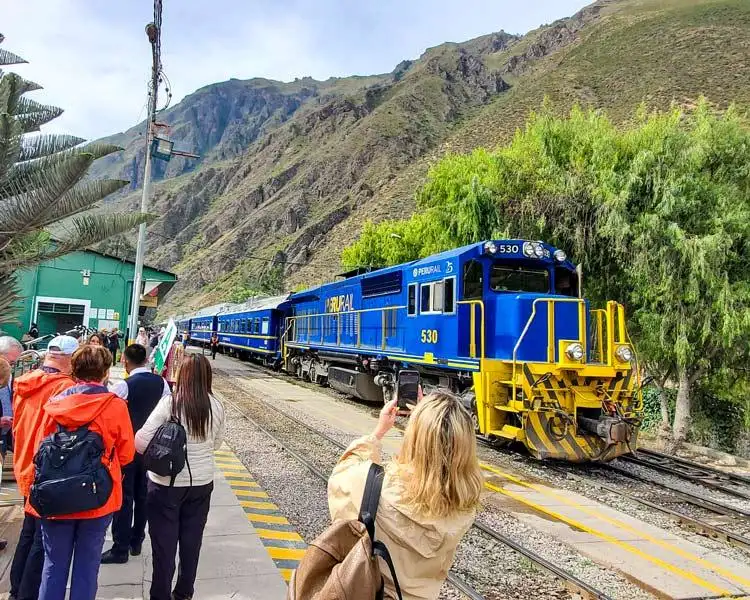
The 2026 PeruRail timetable includes several morning departures from Ollantaytambo, making it possible to reach Machu Picchu Pueblo early enough for a same-day visit.
Ollantaytambo Train Station
The Ollantaytambo station is located near the town and is served by trains operated by the principal railway companies serving Machu Picchu. Because departure times vary, passengers should check their individual ticket and arrive with sufficient time for boarding.
If you are staying overnight in Ollantaytambo, allow enough time to travel from your hotel to the station, locate your platform and complete boarding procedures without rushing.
Machu Picchu Train Tickets
Buying Machu Picchu train tickets is a separate process from purchasing admission to the archaeological site. A train ticket gets you to Machu Picchu Pueblo, but it does not automatically provide entrance to Machu Picchu itself.
This distinction is extremely important. The railway companies sell transportation, while admission to the archaeological site is managed separately. PeruRail’s current information explicitly states that the train ticket does not include the Machu Picchu entrance ticket.
Where to Buy Machu Picchu Train Tickets
Train tickets can be purchased directly through the official websites and sales channels of the railway operators.
The principal services travelers commonly compare include:
- PeruRail
- Inca Rail
- Belmond, for the Hiram Bingham luxury service
When comparing tickets, look beyond the price. Check:
- Departure station
- Departure time
- Arrival time
- Train category
- Baggage allowance
- Whether transportation to the station is included
- Change and cancellation conditions
- Whether the ticket is one-way or round-trip
When Should You Buy Your Train Ticket?
Train availability becomes particularly important during busy travel periods. Because popular departures can sell out, travelers should check availability as soon as their Machu Picchu date and entrance schedule are established.
For popular morning departures, panoramic services and luxury trains, earlier booking can be particularly useful. PeruRail’s current booking information also publishes advance-sale periods for 2026 dates.
Machu Picchu Train Price and Cost
The Machu Picchu train price is not a single fixed amount. The final fare depends on several variables, including:
- Railway company
- Train category
- Departure station
- Travel date
- Departure time
- Availability
- One-way versus round-trip booking
- Special promotions
- Luxury inclusions
Train operators publish fares according to their individual services and booking conditions, so travelers should check the current fare for their exact date rather than relying on an old price found in a travel article.
Why Machu Picchu Train Prices Vary
A basic train service and a luxury train are fundamentally different travel experiences. A standard service is designed primarily to transport passengers comfortably to and from Machu Picchu, while premium services may add panoramic windows, entertainment, meals, personalized service or guided experiences.
For this reason, comparing only the ticket price can be misleading. Compare what each fare includes before booking.
Other Costs to Include in Your Budget
The train is only one part of your total Machu Picchu transportation budget. You may also need to consider:
- Transportation from your Cusco hotel to the railway station
- Transportation from your hotel in the Sacred Valley to Ollantaytambo
- Bus transportation from Aguas Calientes to Machu Picchu
- Machu Picchu entrance ticket
- Guide services
- Accommodation
- Meals
- Transportation back to Cusco
The railway ticket itself should therefore be considered one component of your overall Machu Picchu trip.
Machu Picchu Train Timetable and Travel Time
The Machu Picchu train timetable changes according to the date, season, railway operator and operational conditions. PeruRail’s current 2026 schedules include numerous departures from Ollantaytambo and Cusco-area stations, with both regular train and bimodal bus-and-train services. PeruRail also states that published timetables and frequencies are subject to change.
For example, the current May–December 2026 timetable lists an Ollantaytambo–Machu Picchu Expedition departure at 05:05 arriving at 06:37, while other Expedition and Vistadome services depart later in the morning.
Typical Train Travel Times
As a general guide:
- Ollantaytambo to Machu Picchu: approximately 1.5–2 hours
- Cusco-area bimodal services: approximately 4 hours or more depending on the departure
- Other railway departure points: travel time varies according to the operating schedule
- Luxury services: travel time varies according to the specific itinerary
The exact journey should always be checked on your ticket because the timetable can change according to the season and operating conditions.
Why Timetables Matter
Choosing the right departure time can dramatically affect your Machu Picchu itinerary.
An early train can allow you to arrive in Aguas Calientes with plenty of time for your visit, while a later train may work better for travelers who want a relaxed morning in the Sacred Valley.
If you are visiting Machu Picchu on a specific entrance time, coordinate your train arrival, bus transfer and site-entry schedule carefully.
How Long Is the Machu Picchu Train Ride?
How long is the Machu Picchu train ride? The answer depends primarily on where you board.
From Ollantaytambo, many services take approximately 1.5 hours. Current 2026 PeruRail schedules show individual journeys such as 1 hour 32 minutes from Ollantaytambo to Machu Picchu Pueblo, while other services are around 1 hour 30–1 hour 50 minutes.
Cusco-area bimodal journeys can take considerably longer because part of the journey is completed by road before passengers continue by train. PeruRail currently lists examples of approximately four hours for several Wanchaq-to-Machu-Picchu bimodal services.
The distance is only part of the story. The train travels through terrain where the route follows the Urubamba River and gradually moves from the drier high Andes into the greener cloud forest surrounding Machu Picchu.
What Makes the Journey Special?
The scenery changes noticeably as the train approaches Machu Picchu. Travelers can see:
- High Andean mountains
- Agricultural terraces
- The Sacred Valley
- Urubamba River scenery
- Narrow mountain valleys
- Cloud-forest vegetation
- Steep green slopes
- Waterfalls during wetter periods
The railway is therefore not simply a transfer between two points. For many travelers, it becomes one of the memorable experiences of the entire trip.
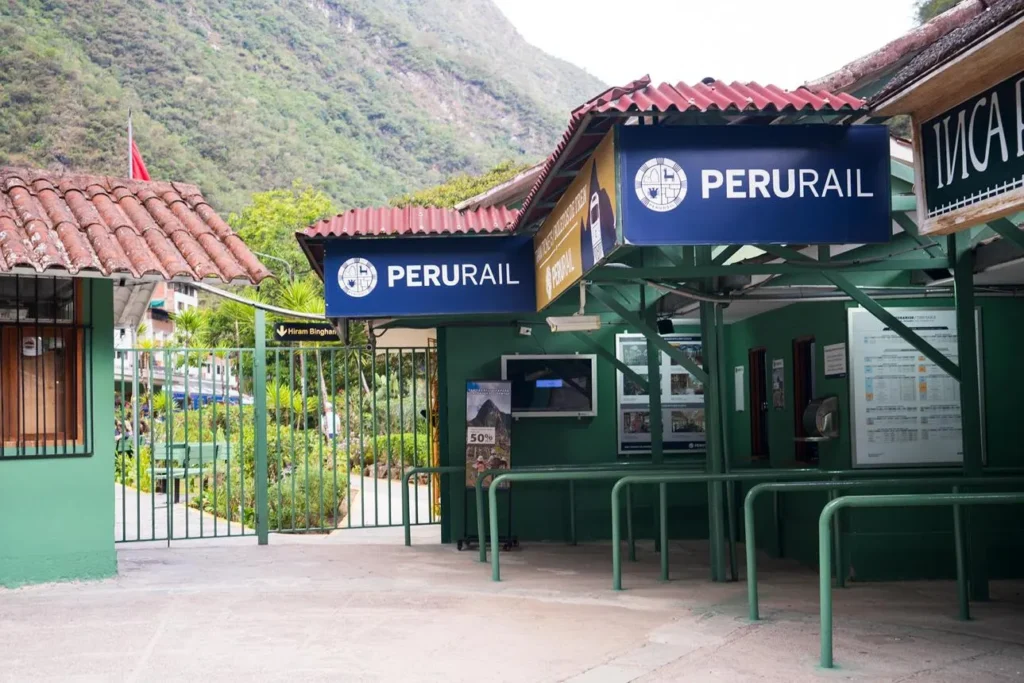
Machu Picchu Train Station
The main Machu Picchu train station is located in Machu Picchu Pueblo, commonly known as Aguas Calientes. This is the final railway destination for most visitors traveling to Machu Picchu by train.
PeruRail’s current timetable identifies Machu Picchu Pueblo/Aguas Calientes as the destination for trains arriving from Ollantaytambo and other departure points.
What Happens After Arriving?
Getting off the train does not mean that you have arrived at the archaeological entrance.
From the station, most visitors continue through Aguas Calientes and take a shuttle bus toward the Machu Picchu entrance. Depending on your itinerary, you may also:
- Store luggage at your hotel
- Have breakfast or lunch
- Explore Aguas Calientes
- Meet your guide
- Take the bus to Machu Picchu
- Return to the station for your afternoon or evening train
Arrive Early at the Station
For train departures, passengers should allow sufficient time before departure to locate the platform and complete boarding procedures.
For first-time travelers, arriving early is worthwhile because stations can become busy, particularly during popular departure periods.
Machu Picchu Train Ride: What to Expect
The Machu Picchu train ride offers a very different experience from traveling by road. Once the train leaves the station, the route gradually follows the river through the Sacred Valley and toward the cloud forest.
The atmosphere depends on the train category. Standard services focus on comfortable transportation, while panoramic services emphasize the scenery.
Standard Train Experience
PeruRail’s Expedition service is designed as a comfortable standard option. It provides a practical railway experience for travelers whose priority is reaching Machu Picchu comfortably while maintaining a lower transportation budget.
This option can be suitable for travelers who want to spend more of their budget on accommodation, guides, activities or the Machu Picchu experience itself.
Panoramic Train Experience
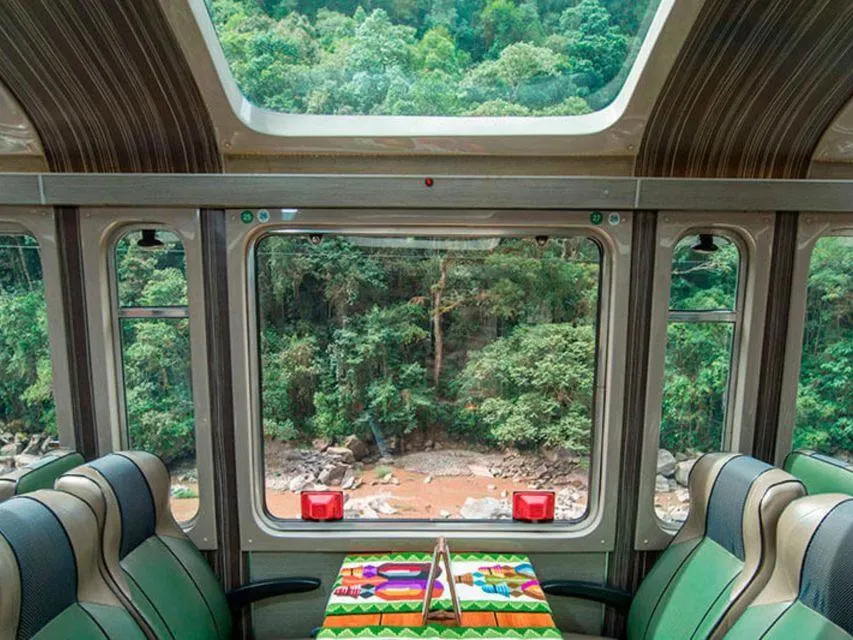
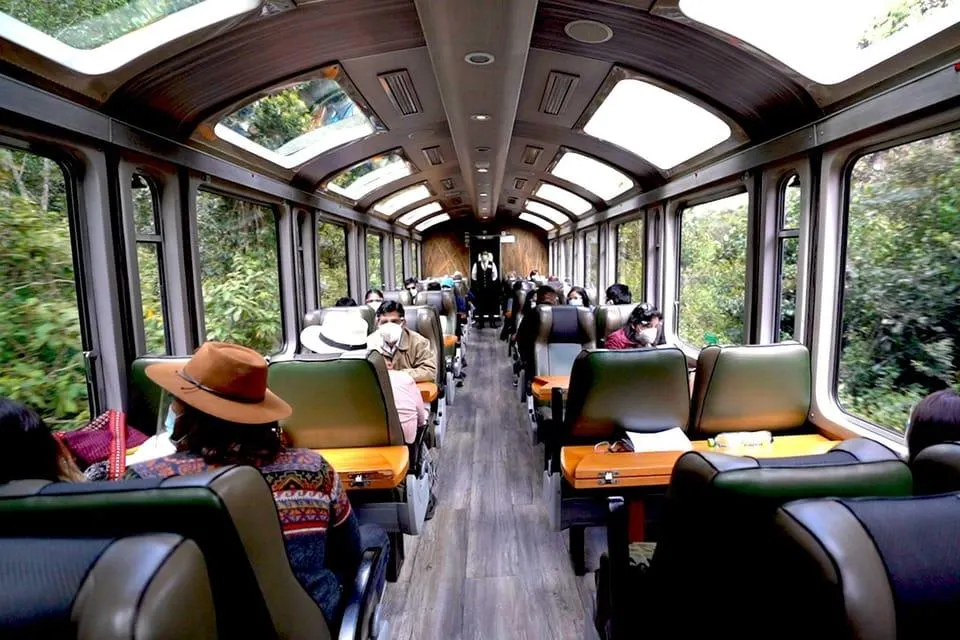
Panoramic services are designed to make the scenery part of the journey. PeruRail’s Vistadome trains feature large panoramic windows, while the Vistadome Observatory provides additional opportunities to view the surrounding landscape.
These trains can be particularly attractive for travelers who enjoy photography and want a stronger visual connection with the Andes.
What Should You Bring?
For a comfortable train journey, consider carrying:
- Passport or valid identification
- Train ticket
- Machu Picchu entrance information
- Light jacket
- Water
- Camera or smartphone
- Small backpack
- Medication if needed
- Sunscreen
- Sunglasses
Remember that baggage policies vary by operator and service. Check the baggage conditions attached to your specific ticket before traveling.
Machu Picchu Train Tours and Packages
A Machu Picchu train tour can combine railway transportation with other services instead of requiring travelers to organize every component independently.
A typical Machu Picchu train package may include:
- Hotel pickup in Cusco
- Transportation to the train station
- Train ticket
- Arrival assistance in Aguas Calientes
- Bus transportation to Machu Picchu
- Machu Picchu entrance ticket
- Professional guide
- Return train
- Transportation back to Cusco
The exact inclusions vary significantly between tour operators.
One-Day Train Tours
A one-day Machu Picchu train tour usually starts early in Cusco or the Sacred Valley. Travelers transfer to the railway station, board the train, arrive in Aguas Calientes, continue to Machu Picchu, visit the citadel with a guide and return by train later the same day.
This option is convenient for travelers with limited time.
Two-Day Machu Picchu Train Packages
A two-day package provides a slower pace. Travelers can arrive in Aguas Calientes on the first day, stay overnight and visit Machu Picchu the following morning.
This arrangement can reduce the pressure of coordinating a long transportation day with a fixed archaeological-site entry time.
Private Machu Picchu Train Tours
Private tours can add flexibility by allowing travelers to customize transfers, guides and hotel arrangements. They can be particularly useful for families, couples, photographers or groups with specific schedules.
Luxury Machu Picchu Train: Hiram Bingham and Belmond
The Luxury Machu Picchu Train: Hiram Bingham and Belmond represents a premium alternative to standard railway transportation.
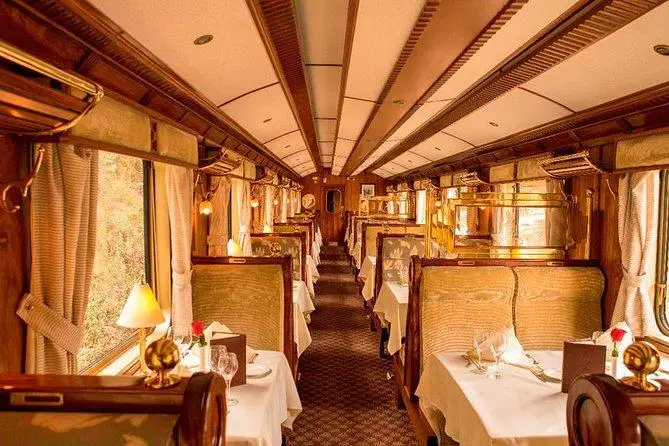
The Hiram Bingham is operated by Belmond and provides a substantially more elaborate experience than a regular train. The service incorporates dining, drinks, entertainment and additional services depending on the itinerary.
Hiram Bingham Experience
The Hiram Bingham is designed for travelers who want the journey itself to be a luxury experience. Rather than simply providing transportation, the service incorporates dining, entertainment, personalized service and guided elements depending on the itinerary.
The interior features a classic luxury-train atmosphere, with dining tables, polished details and traditionally styled furnishings.
Is the Hiram Bingham Ticket the Same as a Machu Picchu Entrance Ticket?
No. This is an important distinction. A luxury train ticket does not automatically mean that the archaeological-site entrance is included under every booking arrangement. Travelers should check the exact inclusions of their reservation and confirm their Machu Picchu entrance arrangements separately.
Lima to Machu Picchu: How to Connect by Train
There is no direct conventional Lima to Machu Picchu train that takes travelers directly from Lima to the archaeological site.
For most international and domestic visitors beginning in Lima, the practical route is:
Lima → Cusco → Sacred Valley/Ollantaytambo → Machu Picchu Pueblo → Machu Picchu
The first part of the journey normally involves flying from Lima to Cusco. From Cusco, travelers can travel by road toward a railway station such as Ollantaytambo and continue by train.
Why You Cannot Simply Take a Train from Lima
The railway system serving Machu Picchu operates from the Cusco/Sacred Valley area rather than functioning as a direct passenger railway from Lima to the archaeological site. Therefore, travelers coming from Lima need to plan a flight or another overland connection to the Cusco region before taking the Machu Picchu train.
For most visitors, flying Lima–Cusco is considerably more practical than attempting to travel entirely overland.
Tips for Taking the Train to Machu Picchu
Taking the train to Machu Picchu is relatively straightforward when you prepare your connections in advance. The biggest mistakes usually involve confusing the train station with the archaeological site, booking a train without checking the departure location, or failing to coordinate the train with the Machu Picchu entrance time.
Book Transportation and Entrance Separately
Remember that the train ticket and Machu Picchu entrance ticket are separate products. Confirm both before finalizing your itinerary.
Check Your Departure Station
Do not assume that “Cusco to Machu Picchu” means you can simply walk from your Cusco hotel to a central train station.
Your booking should clearly identify whether you are departing from:
- San Pedro
- Poroy
- Wanchaq
- Ollantaytambo
- Another designated station or transfer point
Arrive Early
Arriving early gives you time to locate the platform and prepare for boarding.
Keep Your Passport Accessible
Your passport or identification may be required for boarding and should also be readily available for the rest of your Machu Picchu journey.
Pack Light
A large suitcase is generally unnecessary for a short Machu Picchu visit. A small backpack makes moving through the train station, Aguas Calientes and shuttle-bus areas considerably easier.
Check the Weather
The Andes and cloud forest can have rapidly changing conditions. A sunny morning can be followed by rain, particularly during the wet season.
Pack layers rather than relying on a single heavy garment.
Coordinate Your Machu Picchu Entry Time
Your train arrival time should be planned around your assigned Machu Picchu entrance schedule. You still need to travel from Aguas Calientes to the archaeological site after leaving the train.
Consider Staying Overnight
If your schedule permits, staying one night in Aguas Calientes can make the trip more relaxed. Instead of combining a long train journey, a site visit and a return to Cusco in one demanding day, you can divide the experience into two days.
Frequently Asked Questions About the Machu Picchu Train
What is the best train to Machu Picchu?
There is no single train that is ideal for every traveler. Standard services prioritize practical transportation, panoramic trains emphasize scenery, and luxury services such as the Hiram Bingham add dining, entertainment and personalized experiences. Your choice depends on your budget, schedule and preferred travel style.
How much does the Machu Picchu train cost?
There is no universal fixed price. Fares vary according to operator, route, train category, travel date and availability. Check the official booking system for your specific date before budgeting the trip.
How long is the Machu Picchu train ride?
From Ollantaytambo, many services take approximately 1.5 hours. Current 2026 PeruRail schedules show individual journeys such as 1 hour 32 minutes from Ollantaytambo to Machu Picchu Pueblo, with other services taking somewhat longer.
Does the Machu Picchu train go directly to Machu Picchu?
The train takes passengers to Machu Picchu Pueblo, also known as Aguas Calientes. From there, visitors normally take a bus or walk toward the archaeological site. The railway station is not located inside the Machu Picchu ruins.
Can I take a train from Cusco to Machu Picchu?
Yes, but the exact arrangement depends on the service. Some journeys use a train from a Cusco-area railway station, while others use a bimodal bus-and-train service. Always check the departure point on your ticket.
Can I take the train from Ollantaytambo to Machu Picchu?
Yes. Ollantaytambo is one of the principal departure points for trains to Machu Picchu Pueblo and is especially convenient for travelers staying in the Sacred Valley. Current 2026 schedules show numerous Ollantaytambo departures.
Is the Machu Picchu entrance included with the train ticket?
Not automatically. The train ticket and Machu Picchu entrance ticket are separate components of the trip, and travelers should verify the inclusions of any package they purchase.
How early should I arrive at the train station?
Allow sufficient time before departure to locate the platform and complete boarding procedures. Check the operator’s instructions on your ticket because recommended arrival times can vary.
Can I take luggage on the Machu Picchu train?
Yes, but baggage allowances depend on the operator and service. Check the conditions attached to your specific ticket before traveling.
Is there a train from Lima to Machu Picchu?
There is no direct Lima-to-Machu-Picchu passenger train. Travelers normally fly from Lima to Cusco and then continue by road and train toward Machu Picchu.
Is the Hiram Bingham worth considering for a luxury trip?
The Hiram Bingham is designed as a luxury travel experience rather than simply a transportation service. It incorporates premium features such as dining, entertainment and additional services depending on the itinerary.
Can train schedules change?
Yes. Railway schedules are subject to operational changes. PeruRail explicitly states that its published timetables and frequencies are subject to change.
Final Thoughts on Traveling by Train to Machu Picchu
The Machu Picchu train offers one of the easiest ways to combine comfort, scenery and access to one of Peru’s most famous archaeological destinations. For many travelers, the journey begins in Cusco or the Sacred Valley, continues through Ollantaytambo or another railway departure point, follows the Urubamba River and ends at Machu Picchu Pueblo.
The most important step is choosing the right combination of departure station, train category, timetable and Machu Picchu entrance time. Travelers staying in Cusco may prefer a convenient bimodal service, while those exploring the Sacred Valley may find Ollantaytambo to Machu Picchu more practical. Budget-conscious visitors can select a standard train, while travelers looking for panoramic scenery or a premium experience can consider Vistadome or Hiram Bingham services.
Before booking, compare the current timetable, total travel time, baggage conditions and fare for your exact date. Most importantly, remember that your Machu Picchu train ticket is not automatically the same as your Machu Picchu entrance ticket. Once those two elements are coordinated, the train journey becomes a comfortable and scenic gateway to one of the world’s most extraordinary archaeological destinations.