The Huayna Picchu hike is one of the most famous mountain hikes associated with Machu Picchu. Rising dramatically behind the archaeological sanctuary, Huayna Picchu provides a unique perspective over the ancient Inca city, the Urubamba River valley, and the surrounding mountains.
Unlike a multi-day trek such as the Inca Trail or Salkantay Trek, the Machu Picchu Huayna Picchu hike is completed during a visit to the archaeological sanctuary. The trail climbs steeply from the Machu Picchu complex toward the summit of Huayna Picchu, using ancient stone stairs and narrow mountain paths.
The hike is relatively short in distance, but it is physically demanding because of the steep gradient, numerous stairs, altitude, and exposed sections. It is particularly famous for the section popularly known as the Huayna Picchu hike Stairs of Death, although this dramatic name can make the trail sound more dangerous than it actually is when visitors follow the established route and safety rules.
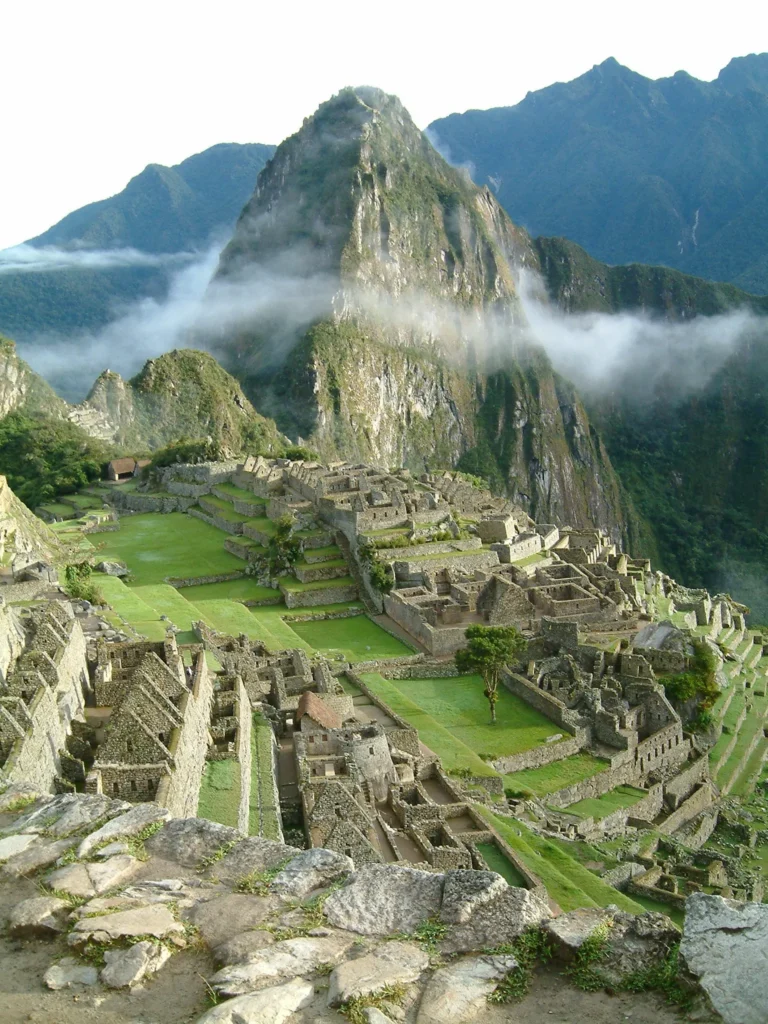
This complete guide explains Huayna Picchu hike difficulty, length, elevation gain, distance, hiking time, tickets, permits, route information, safety, and whether the experience is worth adding to your Machu Picchu visit.
What Is the Huayna Picchu Hike?
The Huayna Picchu hike is the ascent of Huayna Picchu Mountain, the distinctive peak that rises immediately behind Machu Picchu when viewed from the classic perspective of the archaeological city.
The mountain is known in Quechua as Waynapicchu, and the current official visitor system identifies its hiking route as Circuit 3, Route 3-A: Ruta Montaña Waynapicchu. The route forms part of the Circuito de la Realeza, or Royalty Circuit.
The trail combines archaeological features with a steep mountain ascent. Hikers encounter stone stairways, terraces, vegetation, viewpoints, and sections of the historic path as they climb toward the mountain.
Why Is Huayna Picchu So Popular?
The mountain is instantly recognizable in photographs of Machu Picchu, making the climb attractive to visitors who want to experience the landscape from a different perspective.
The hike offers:
- Views toward Machu Picchu.
- Views of the Urubamba River.
- Panoramas of surrounding mountains.
- Ancient Inca stairways.
- A challenging uphill experience.
- Opportunities for mountain photography.
- A different perspective from the standard archaeological visit.
- Access to one of the most recognizable mountains in the Machu Picchu landscape.
The hike is therefore more than simply reaching a viewpoint. The trail itself is part of the experience.
Huayna Picchu Hike Difficulty
The Huayna Picchu hike difficulty comes primarily from its steepness rather than its total distance.
The route is not a technical climbing expedition. Visitors do not normally need ropes, climbing harnesses, or mountaineering equipment. Instead, the challenge comes from climbing numerous stone steps and negotiating steep sections of mountain trail.
The Peruvian Ministry of Culture describes the ascent to Huayna Picchu as an experience with a certain degree of difficulty. Its published route information gives the route a distance of approximately 2.4 kilometers.
How Hard Is Huayna Picchu Hike?
How hard is Huayna Picchu hike? For an active traveler accustomed to stairs and hiking, the route can be manageable but strenuous. For someone with little hiking experience, the steep sections can feel considerably harder.
Several factors influence the experience:
- Steep stairs.
- Continuous elevation gain.
- Uneven stone surfaces.
- High-altitude conditions.
- Humidity and heat.
- Rain or wet stones.
- Exposure on certain sections.
- The physical condition of the traveler.
- How quickly the hiker climbs.
The route can feel particularly demanding if visitors attempt to maintain a fast pace.
A slower pace with regular pauses is generally more appropriate than trying to complete the climb as quickly as possible.
Is Huayna Picchu Suitable for Beginners?
A hiking beginner may be able to complete the route, but it should not be considered an easy walk.
Someone who regularly climbs stairs, walks uphill, or hikes in the mountains will generally be better prepared for the sustained ascent. Travelers who rarely exercise should carefully consider whether a steep mountain route is appropriate for them.
Factors to Consider Before Hiking
Ask yourself:
- Am I comfortable climbing many stairs?
- Have I recently hiked uphill?
- Am I acclimatized to altitude?
- Am I comfortable with steep terrain?
- Do I have good balance?
- Can I walk continuously for several hours?
- Am I comfortable hiking if the trail is wet?
If the answer to several of these questions is no, a less demanding Machu Picchu route may be preferable.
Huayna Picchu Hike Stairs of Death
The Huayna Picchu hike Stairs of Death is probably the most famous and misunderstood part of the mountain experience.
The phrase “Stairs of Death” is a popular nickname used by travelers and travel media to describe a particularly steep section of ancient stone stairs. The name does not mean that the trail is intended to be deadly or that fatalities are an unavoidable part of the hike.
The stairs are steep and deserve caution, but visitors who follow the designated trail, avoid unnecessary risks, and move at a controlled pace can approach them as a challenging historical trail section rather than a stunt.
What Are the Stairs of Death?
The section consists of steep stone steps climbing the mountainside. In some places, the stairs are narrow and require careful foot placement.
Their dramatic appearance is partly responsible for their popularity in photographs and videos.
The trail’s steepness can make the stairs look intimidating, particularly when photographed from below.
Are the Stairs Actually Dangerous?
The mountain does contain exposed and steep areas, so visitors should take the route seriously. However, the nickname itself should not be interpreted as a description of the normal outcome of hiking the trail.
Safety improvements have also been implemented. In 2026, the authorities carried out conservation and maintenance work on Route 3-A, including work on pre-Hispanic stairways, retaining walls, drainage systems, and additional safety structures such as stairs and cable handrails in steeper sections. The route reopened to visitors on July 1, 2026.
How to Handle the Steep Stairs
A few practical habits make the ascent more comfortable:
- Take your time.
- Keep both feet secure before moving.
- Use handrails or cables where provided.
- Avoid rushing other hikers.
- Keep your attention on the trail.
- Do not attempt unnecessary shortcuts.
- Be especially careful when descending.
- Stop at designated safe areas when you need a break.
The descent can actually feel more intimidating than the ascent because hikers are looking downward along the steep sections.
Huayna Picchu Hike Length and Distance
The Huayna Picchu hike length is relatively short compared with long-distance trekking routes around Cusco.
Official information from the Peruvian Ministry of Culture describes Route 3-A as approximately 2.4 kilometers.
This figure helps explain why the hike can seem deceptively short. Two or three kilometers may not sound particularly demanding, but the route includes substantial climbing.
Huayna Picchu Hike Distance
The Huayna Picchu hike distance is approximately 2.4 km for the route, according to official information.
Exact distances experienced by visitors can vary depending on how measurements are taken and whether additional walking inside the archaeological complex is included.
The important distinction is between distance and difficulty.
A long flat walk can be physically easier than a short mountain climb. Huayna Picchu is a good example of this because a relatively compact route contains a significant amount of uphill movement.
Huayna Picchu Hike Length Compared With Other Treks
The mountain hike is much shorter than:
- Classic Inca Trail.
- Salkantay Trek.
- Lares Trek.
- Multi-day Sacred Valley trekking routes.
However, it can feel more intense over a short period because of the steep stairs.
This makes Huayna Picchu attractive to travelers who want a challenging mountain experience without committing to several days of trekking.
Huayna Picchu Hike Elevation Gain
The Huayna Picchu hike elevation gain is substantial relative to the length of the route.
Huayna Picchu rises to roughly 2,693 meters above sea level, although exact elevation figures can vary slightly according to the reference point used.
Machu Picchu’s archaeological complex is situated considerably lower, at approximately 2,430–2,450 meters above sea level.
This means the climb involves several hundred meters of vertical elevation difference.
Why Elevation Gain Matters
The steep elevation gain explains much of the hike’s difficulty.
Instead of walking several kilometers over relatively level ground, hikers gain altitude rapidly through repeated stair sections.
The combination of elevation and stairs can cause:
- Faster breathing.
- Tired legs.
- Increased heart rate.
- Need for frequent rest.
- Greater fatigue during the descent.
Travelers who have recently spent time in Cusco or the Sacred Valley may already be acclimatized to the region’s altitude, but physical fitness and acclimatization are not exactly the same thing.
Huayna Picchu Hike Time
The Huayna Picchu hike time varies from person to person.
Many visitors allow approximately 2 to 3 hours for the mountain hike itself, including the ascent, time at viewpoints, and descent, although individual hikers can take less or considerably more time depending on pace and stops.
The overall visit can take longer because the official route includes additional walking within the archaeological area.
How Long Does Huayna Picchu Hike Take?
How long does Huayna Picchu hike take? A reasonable planning estimate is approximately 2 to 3 hours for the mountain portion, while slower hikers or visitors who spend significant time taking photographs may need longer.
Your time can depend on:
- Fitness.
- Trail conditions.
- Crowding.
- Number of breaks.
- Photography.
- Weather.
- Time spent at viewpoints.
- How quickly you descend.
Typical Hiking Rhythm
A typical experience consists of:
- Entering the designated route.
- Walking toward the base of the mountain section.
- Beginning the steep ascent.
- Climbing the stone stairs.
- Reaching higher viewpoints.
- Continuing toward the summit area.
- Spending time enjoying the landscape.
- Descending carefully.
- Continuing through the permitted circuit.
The mountain should not be treated as a race.
How Long Is Huayna Picchu Hike?
The question how long is Huayna Picchu hike can refer either to distance or duration.
In terms of distance, the official route is approximately 2.4 km. In terms of time, many visitors should plan approximately 2–3 hours, although the actual duration varies.
This distinction is important when planning transportation or connecting the hike with another activity.
Travelers should allow additional time for:
- Entering Machu Picchu.
- Walking to the beginning of the mountain route.
- Security and access controls.
- Rest stops.
- Photography.
- The archaeological portions of the circuit.
- Exiting the sanctuary.
It is better to allow some flexibility rather than scheduling a train immediately after the estimated hiking time.
Huayna Picchu Hike Map
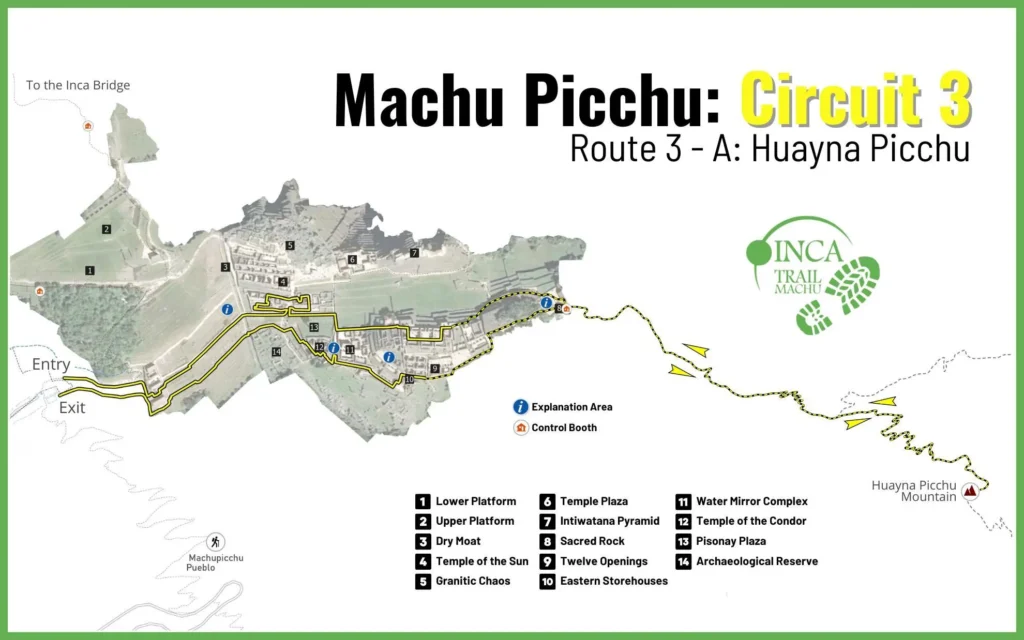
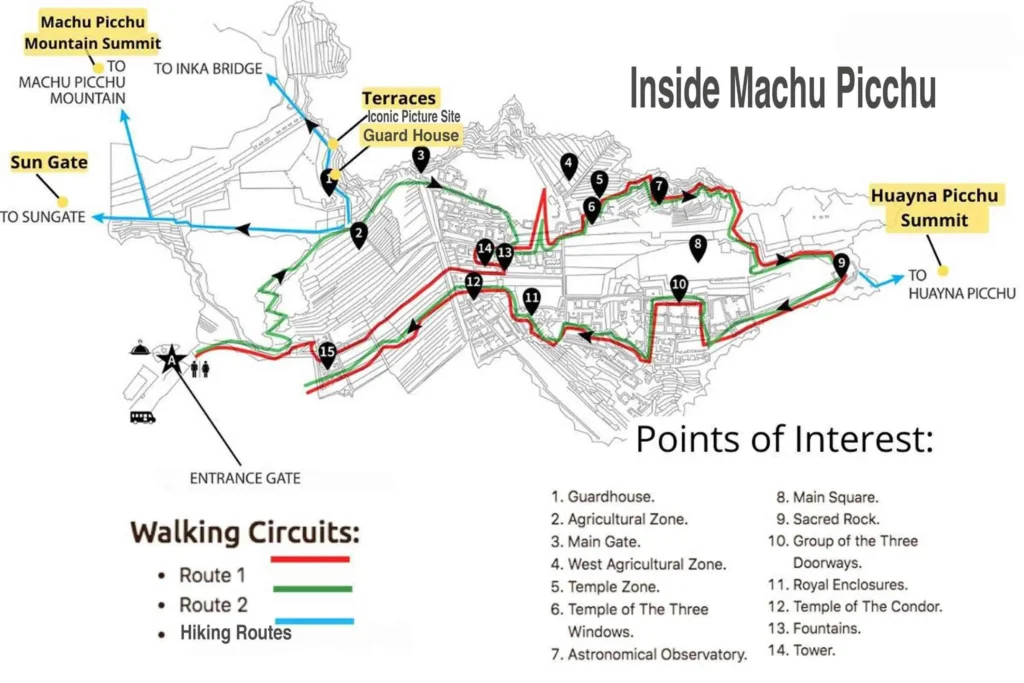
A Huayna Picchu hike map is useful because the mountain route is part of the larger Machu Picchu visitor system.
The official map for Circuit 3 / Route 3-A shows the route through the archaeological complex and identifies key areas and control points. The official route document also indicates a maximum visitor stay of six hours for Circuit 3, Route 3-A.
Understanding the Huayna Picchu Route
The route begins within the Machu Picchu sanctuary and proceeds toward the mountain.
A simplified route concept is:
Machu Picchu → Huayna Picchu trail entrance → steep mountain ascent → summit area → descent → archaeological circuit
The actual route should always be followed according to current visitor controls and signage rather than relying exclusively on an old map found online.
Why an Updated Map Matters
Machu Picchu’s visitor routes have changed over time. Since June 1, 2024, the sanctuary has operated under a revised system of three circuits containing ten routes. Huayna Picchu is currently Route 3-A within Circuit 3.
Consequently, older articles may refer to the mountain as part of a different circuit number.
When researching the hike, travelers should pay attention to the current route designation, not only older names.
Huayna Picchu Hike Permit
The Huayna Picchu hike permit is essentially controlled through the official entrance ticket assigned to the mountain route.
Travelers should not assume that buying a general Machu Picchu entrance automatically gives them permission to climb Huayna Picchu.
The official visitor system currently identifies the mountain as:
Circuit 3 – Machupicchu Realeza
Route 3-A – Ruta Montaña Waynapicchu.
The route has controlled capacity, meaning visitors need an appropriate ticket for the date and route they want.
Is a Separate Permit Required?
For ordinary visitors, the important requirement is obtaining the appropriate Machu Picchu ticket for Route 3-A, rather than obtaining an unrelated hiking permit separately.
Tour operators may handle ticket purchasing as part of a package, but travelers should still verify exactly what route and ticket are included.
Huayna Picchu Hike Tickets
Huayna Picchu hike tickets are among the most important parts of planning the experience.
The current official system lists Circuit 3, Route 3-A: Ruta Montaña Waynapicchu as the Huayna Picchu mountain route.
Because access is controlled, travelers who specifically want Huayna Picchu should plan their ticket before traveling to Machu Picchu.
What Does the Ticket Include?
The route ticket provides access according to the established visitor circuit and time conditions. It should not be confused with a general admission that permits visitors to freely move between all Machu Picchu routes.
The current system separates:
- Circuit 1 panoramic routes.
- Circuit 2 classic Machu Picchu routes.
- Circuit 3 Royalty routes.
Huayna Picchu belongs to Circuit 3.
Why Buy Early?
Availability can be limited, particularly during busy travel periods.
Travelers who arrive in Machu Picchu without the correct route may not be able to simply add Huayna Picchu at the entrance.
The Peruvian authorities have also continued updating the ticket-sale system. In September 2026, the Ministry of Culture announced changes replacing the previous three-hour reservation mechanism with direct purchase and confirmed payment, giving users a maximum of 15 minutes to complete a purchase once tickets are held for checkout.
Because ticket procedures can change, visitors should verify the current official purchasing conditions when booking.
Machu Picchu Huayna Picchu Hike
The Machu Picchu Huayna Picchu hike is especially interesting because the mountain and archaeological city are physically connected by the same historic landscape.
From the lower archaeological complex, Huayna Picchu appears enormous. As hikers climb, Machu Picchu gradually becomes smaller below them.
The perspective changes continuously.
At lower elevations, visitors see the mountain towering above. Higher on the trail, the relationship reverses: Machu Picchu becomes a compact archaeological complex surrounded by mountains and forest.
This changing perspective is one of the most memorable elements of the hike.
What Can You See From Huayna Picchu?
Depending on weather and visibility, hikers can see:
- Machu Picchu.
- Machu Picchu Mountain.
- Urubamba River.
- Surrounding Andes.
- Cloud forest.
- Agricultural terraces.
- Mountain ridges.
- Parts of the archaeological sanctuary.
Huayna Picchu as a Photography Experience
Photographers often appreciate the hike because it produces perspectives that are very different from the classic Machu Picchu viewpoint.
From elevated sections of the mountain, the geometry of the terraces, mountains, river, and archaeological structures becomes much more apparent.
Weather can dramatically influence the result.
A clear morning may provide distant mountain views, while clouds and mist can surround the mountain and create a more atmospheric landscape.
Huayna Machu Picchu Hike: Understanding the Name
Travelers may encounter the phrase Huayna Machu Picchu hike in searches, travel discussions, or informal descriptions.
The more precise name for the mountain is Huayna Picchu, also written Waynapicchu. Machu Picchu is the archaeological sanctuary, while Huayna Picchu is the mountain immediately behind it in the classic landscape.
Therefore:
- Machu Picchu = archaeological Inca city.
- Huayna Picchu / Waynapicchu = mountain above the sanctuary.
- Machu Picchu Mountain / Montaña Machupicchu = separate, higher mountain on the opposite side of the archaeological complex.
Understanding these names is particularly important when purchasing tickets because the two mountain routes are different.
Huayna Picchu vs Machu Picchu Mountain
Many visitors consider Huayna Picchu versus Machu Picchu Mountain before buying their tickets.
The mountains provide distinctly different experiences.
| Feature | Huayna Picchu | Machu Picchu Mountain |
|---|---|---|
| Current route | Circuit 3, Route 3-A | Circuit 1, Route 1-A |
| Approximate route distance | 2.4 km | Longer overall panoramic route |
| Summit elevation | Approximately 2,700 m | Approximately 3,082 m |
| Trail character | Steep, compact and adventurous | Longer sustained ascent |
| Main attraction | Close perspectives of Machu Picchu and dramatic trail | Broad panoramic mountain views |
| Physical character | Steep stairs | Longer uphill climb |
| Archaeological context | Circuit 3 | Circuit 1 |
| Ideal for | Adventurous hikers | Panoramic landscape enthusiasts |
The official visitor system confirms that the two mountains belong to different circuits and routes.
Which Mountain Is Higher?
Machu Picchu Mountain is higher.
Huayna Picchu reaches roughly 2,700 meters, while Machu Picchu Mountain rises to approximately 3,082 meters.
However, higher elevation does not automatically mean a harder hike. Trail steepness and route characteristics are equally important.
Which Has Steeper Stairs?
Huayna Picchu is particularly known for its steep stair sections, including the area popularly called the Stairs of Death.
Machu Picchu Mountain generally provides a different experience, with a longer sustained climb and broader panoramic perspective.
Huayna Picchu Hike Safety
Safety should be taken seriously because the mountain route contains steep terrain.
Visitors should stay on the established path and obey current regulations.
Basic Safety Recommendations
- Wear shoes with good traction.
- Walk slowly on steep sections.
- Use handrails or cables where available.
- Avoid running.
- Keep both hands available when necessary.
- Be cautious on wet stones.
- Follow one-way or directional controls.
- Do not cross barriers.
- Take breaks when necessary.
- Carry water.
- Protect yourself from strong sunlight.
- Follow instructions from staff.
The authorities’ 2026 maintenance work specifically included improvements to stairways and safety infrastructure along Route 3-A.
Huayna Picchu Hike Death: Understanding the Search Term
The phrase Huayna Picchu hike death appears frequently in internet searches because of the mountain’s steep terrain and the dramatic “Stairs of Death” nickname.
It is important, however, to distinguish between the existence of risks on a steep mountain trail and the idea that fatalities are a normal part of the experience.
Huayna Picchu is not an ordinary flat sightseeing path. Slips, falls, and other accidents can occur on steep mountain trails, particularly when visitors ignore safety controls or encounter difficult weather conditions. At the same time, the existence of historical accidents does not mean that a person who follows the designated route will normally face a life-threatening situation.
The authorities have continued maintenance and safety interventions. In 2026, Route 3-A underwent specialized conservation work, including improvements to stairs, retaining walls, drainage, and cable handrails in steeper sections before reopening on July 1.
How to Reduce Risk
The best approach is straightforward:
- Do not rush.
- Do not attempt dangerous photographs.
- Do not climb beyond barriers.
- Do not use unofficial shortcuts.
- Pay attention to wet or slippery stones.
- Follow staff instructions.
- Respect the route’s access conditions.
A cautious hiking style is far more appropriate than treating Huayna Picchu as an extreme-sports challenge.
Huayna Picchu Hike Worth It
Is the Huayna Picchu hike worth it?
For travelers who enjoy hiking, dramatic mountain landscapes, and panoramic viewpoints, the route can provide an experience very different from simply visiting the archaeological complex.
The hike is particularly attractive because the mountain itself forms such an important part of the iconic Machu Picchu landscape.
Reasons to Hike Huayna Picchu
The experience may be especially appealing if you want:
- A challenging short hike.
- Dramatic mountain scenery.
- A different view of Machu Picchu.
- Ancient Inca stairs.
- Photography opportunities.
- A memorable physical adventure.
- A mountain experience without a multi-day trek.
Reasons to Skip Huayna Picchu
It may not be the right choice if you:
- Dislike steep stairs.
- Have limited mobility.
- Are uncomfortable with exposed mountain paths.
- Have little tolerance for strenuous hiking.
- Want to spend most of your time examining the archaeological structures.
- Are already exhausted after a multi-day trek.
Skipping the mountain does not diminish the significance of a Machu Picchu visit. The standard circuits provide their own archaeological and scenic experiences.
Best Way to Prepare for Huayna Picchu
Preparation does not require specialized mountaineering training.
Instead, focus on endurance, stairs, balance, and acclimatization.
Physical Preparation
Before your trip, consider:
- Walking regularly.
- Climbing stairs.
- Hiking uphill.
- Performing leg-strength exercises.
- Practicing longer walks.
- Getting accustomed to carrying a light daypack.
Even several weeks of consistent walking can make a difference for someone who is normally sedentary.
Acclimatization
If you are traveling from low altitude, spending several days in Cusco or another high-altitude destination before the hike may allow your body time to adjust.
Remember that being physically fit does not guarantee that altitude will have no effect.
What to Bring for the Huayna Picchu Hike
The route does not require a large trekking backpack.
A lightweight daypack is usually sufficient.
Recommended Items
- Water.
- Comfortable hiking shoes.
- Lightweight rain jacket.
- Sunscreen.
- Sunglasses.
- Hat.
- Small camera or phone.
- Personal medication.
- Lightweight layers.
- Insect repellent.
Avoid carrying unnecessary weight because every additional kilogram becomes noticeable on steep stairs.
Best Time to Hike Huayna Picchu
Huayna Picchu can be experienced under different weather conditions, but the quality of the mountain views depends heavily on visibility.
Clear weather can reveal the surrounding Andes and provide excellent photographic conditions.
Cloud and mist can obscure distant views but can also create a dramatic atmosphere around the mountain.
Dry Weather
The drier season can offer better chances of clear skies, although mountain weather is unpredictable.
Wet Weather
Rain makes the stairs and stone surfaces more slippery and therefore requires additional caution.
If rain is forecast, travelers should be prepared with appropriate footwear and rain protection.
Huayna Picchu Hike Frequently Asked Questions
How long is Huayna Picchu hike?
The official Route 3-A is approximately 2.4 kilometers. The actual time required varies according to pace, rest stops, photographs, weather, and trail conditions.
How long does Huayna Picchu hike take?
Many travelers should allow approximately 2 to 3 hours for the mountain experience, including climbing, enjoying viewpoints, and descending. The complete circuit visit can take longer.
How hard is Huayna Picchu hike?
It is a physically demanding short mountain hike. The principal challenge is the steep ascent and large number of stairs rather than the total distance.
Are the Huayna Picchu Stairs of Death really dangerous?
They are steep and require caution, but the dramatic nickname should not be interpreted as meaning that death is an inevitable or normal consequence of hiking the mountain. Visitors should follow the established route and safety instructions.
Do I need a Huayna Picchu permit?
You need the appropriate ticket that provides access to Circuit 3, Route 3-A: Ruta Montaña Waynapicchu.
Can I buy a Huayna Picchu ticket at the entrance?
Availability is controlled, so travelers should not rely on being able to purchase a mountain ticket after arriving. Advance planning is recommended, particularly during busy periods.
Is Huayna Picchu higher than Machu Picchu?
No. Huayna Picchu is lower than Machu Picchu Mountain. Machu Picchu Mountain rises to approximately 3,082 meters, while Huayna Picchu is approximately 2,700 meters above sea level.
Is Huayna Picchu worth it?
For travelers who enjoy steep hiking, mountain scenery, and panoramic views, it can be an excellent addition to a Machu Picchu visit. Travelers who prefer a relaxed archaeological experience may prefer a standard circuit.
Final Thoughts on the Huayna Picchu Hike
The Huayna Picchu hike combines history, mountain scenery, physical challenge, and one of the most recognizable landscapes in South America. The route is short compared with a multi-day Andean trek, but its steep stairs and elevation make it a genuine mountain hike rather than a simple sightseeing walk.
The official route is currently Circuit 3, Route 3-A: Ruta Montaña Waynapicchu, and the Peruvian Ministry of Culture identifies the route at approximately 2.4 kilometers.
The Huayna Picchu hike difficulty is largely determined by the steep ascent. The famous Stairs of Death are among the most dramatic portions of the trail, but the nickname should not obscure the fact that this is a managed visitor route. Recent maintenance work has included improvements to stairs, drainage, retaining structures, and safety infrastructure.
For travelers asking how long does Huayna Picchu hike take, approximately two to three hours is a useful planning range for the mountain portion, although individual times vary. The relatively short Huayna Picchu hike distance should not be interpreted as meaning that the route is easy.
The most important consideration is the ticket. Visitors specifically wanting to climb Huayna Picchu should select the appropriate Circuit 3, Route 3-A ticket rather than assuming that every Machu Picchu entrance provides access to the mountain.
Ultimately, the Huayna Picchu hike worth it question depends on the type of Machu Picchu experience you want. If you enjoy steep stairs, mountain viewpoints, photography, and adventure, the climb can transform a visit to Machu Picchu into a much more active experience. If your priority is leisurely exploration of the archaeological site, the mountain may be less suitable.
Either way, understanding the distance, elevation, ticket requirements, hiking time, and trail difficulty beforehand allows you to choose the Machu Picchu experience that best matches your abilities and interests.