The Machu Picchu Mountain hike is one of the most spectacular ways to experience the landscape surrounding the Inca citadel. Rising to approximately 3,082 meters (10,111 feet) above sea level, Machu Picchu Mountain stands considerably higher than the archaeological site itself and provides expansive views over the ruins, Huayna Picchu, the Urubamba River valley, and the surrounding Andes.
Unlike a multi-day trek such as the Inca Trail or Salkantay Trek, this is a hiking route inside the Machu Picchu sanctuary that can be added to a visit to the archaeological site through the appropriate ticket and route. The trail is relatively short in distance but involves continuous uphill walking, numerous stone steps, altitude, and a substantial elevation gain.
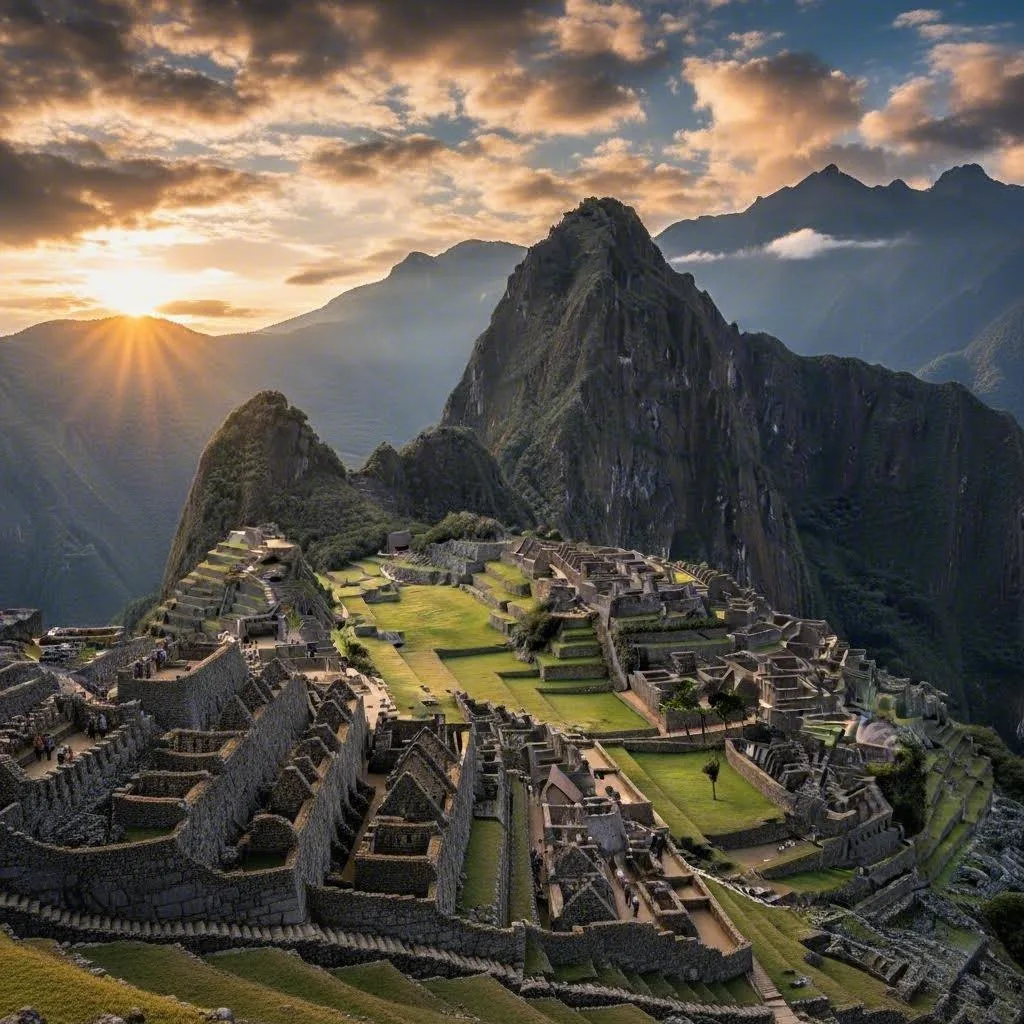
For travelers deciding between Machu Picchu Mountain and Huayna Picchu, the choice largely depends on the type of experience desired. Machu Picchu Mountain is higher and generally offers broader panoramic views, while Huayna Picchu is lower but known for a steeper and more adventurous trail.
This guide explains the Machu Picchu Mountain hike difficulty, distance, elevation gain, hiking time, ticket requirements, views, and the differences between the two famous mountains.
What Is the Machu Picchu Mountain Hike?
The Machu Picchu Mountain hike is the ascent from the upper area of the Machu Picchu archaeological sanctuary toward the summit of Machu Picchu Mountain, also known as Montaña Machupicchu.
The mountain rises behind and above the archaeological complex, providing a high viewpoint from which visitors can see the Inca city from a different perspective. The route is characterized by stone steps and a steadily ascending trail rather than a technical climbing route.
The current official visitor system places the mountain hike under Circuit 1, Route 1-A: Ruta Montaña Machupicchu, the panoramic circuit. This route is distinct from the route for Huayna Picchu, which is Circuit 3, Route 3-A: Ruta Montaña Waynapicchu.
Why Hike Machu Picchu Mountain?
The main reasons travelers choose this hike include:
- Panoramic views of Machu Picchu.
- Views of Huayna Picchu from above.
- A higher summit than Huayna Picchu.
- Views of the surrounding Andes.
- A physical hiking challenge without committing to a multi-day trek.
- Opportunities for photography.
- A different perspective of the Urubamba River valley.
- The experience of climbing one of the mountains that forms the landscape around the sanctuary.
The attraction is therefore as much about the landscape and viewpoint as it is about the physical ascent.
Machu Picchu Mountain Hike Elevation
The Machu Picchu Mountain hike elevation is one of the first things travelers should understand before deciding whether to climb.
The summit of Machu Picchu Mountain is approximately 3,082 meters (10,111 feet) above sea level. By comparison, the main archaeological site is around 2,430–2,453 meters above sea level, depending on the reference point used. Official tourism material identifies Machu Picchu at approximately 2,453 meters and Machu Picchu Mountain at 3,082 meters.
This means that the hike involves a significant vertical ascent even though the walking distance is relatively short.
Machu Picchu Mountain Hike Elevation Gain
The Machu Picchu Mountain hike elevation gain is commonly described as roughly 600 meters or somewhat less, depending on exactly where the elevation measurement begins and how the route is measured. Some trekking references describe the mountain route itself as gaining approximately 300 meters vertically from its lower trail section, while the broader difference between the archaeological site and summit is more than 600 meters.
This distinction matters because “elevation gain” can refer to either the total difference between the Machu Picchu complex and the summit or the climbing gain recorded along a particular GPS route.
For practical purposes, visitors should think of the hike as a substantial uphill climb at altitude, not as a flat two-kilometer walk.
Why Elevation Matters
Altitude can make the climb feel considerably harder than its distance suggests. A traveler accustomed to hiking at sea level may find the repeated steps tiring even if the route appears short on a map.
The physical challenge comes from the combination of:
- High altitude.
- Continuous ascent.
- Stone stairs.
- Warm or humid conditions.
- Exposure to the sun.
- Uneven surfaces.
- The need to descend after reaching the summit.
For this reason, the Machu Picchu Mountain hike should be approached as a genuine mountain hike rather than simply another viewpoint inside the archaeological site.
Machu Picchu Mountain Hike Distance
The Machu Picchu Mountain hike distance varies slightly according to how the route is measured and which sections of the official circuit are included.
The mountain trail itself is commonly described as approximately 2 kilometers, while current route information for the complete Route 1-A experience can result in a longer total distance because the official route incorporates sections of the panoramic circuit.
This explains why visitors may encounter different distances online.
Machu Picchu Mountain Hike Length
The Machu Picchu Mountain hike length is short compared with multi-day treks in the Cusco region. However, distance alone does not accurately communicate the difficulty.
A two-kilometer climb can be much more demanding than several kilometers of level walking because a large portion of the route consists of uphill stairs.
The trail should therefore be evaluated using three measurements:
- Distance: relatively short.
- Elevation gain: substantial.
- Time: generally several hours for the mountain experience, including ascent and descent.
The current official Route 1-A route is listed at approximately 3.8 km round trip when the full route is considered.
Machu Picchu Mountain Hike Difficulty
The Machu Picchu Mountain hike difficulty is commonly described as moderate to moderately challenging, although the subjective difficulty varies considerably from one traveler to another.
The route is not technical mountaineering. Visitors do not need climbing equipment, ropes, or specialized mountaineering skills. The principal challenge is sustained uphill walking on stone steps.
For a reasonably active traveler who is acclimatized to altitude, the hike can be manageable. For someone unused to stairs or high-altitude walking, it can feel strenuous.
How Hard Is Machu Picchu Mountain Hike?
How hard is Machu Picchu Mountain hike? The answer depends on fitness, altitude experience, weather, pace, and individual tolerance for climbing.
The mountain is not necessarily difficult because of dangerous terrain. Instead, it is demanding because the trail climbs continuously toward the summit.
The following factors can make it harder:
- Walking at more than 3,000 meters above sea level.
- Long sequences of stairs.
- Strong sun.
- Humidity.
- Rain.
- Starting the hike after already walking through Machu Picchu.
- Hiking too quickly.
- Insufficient water.
- Lack of acclimatization.
Is Machu Picchu Mountain Suitable for Beginners?
People with limited hiking experience can potentially complete the hike if they are comfortable with prolonged stair climbing and have adequately acclimatized.
However, “beginner-friendly” should not be confused with “easy.”
Someone who rarely exercises may find the climb difficult, while an experienced hiker may consider it moderate.
A slow and steady pace is usually more practical than trying to reach the summit quickly.
Who Should Prepare More Carefully?
Extra preparation is sensible for travelers who:
- Rarely walk uphill.
- Have little experience at altitude.
- Are uncomfortable with stairs.
- Are visiting Peru immediately after arriving from low altitude.
- Plan to combine the mountain hike with a demanding trek.
- Are traveling during hot or rainy conditions.
Machu Picchu Mountain Hike Time
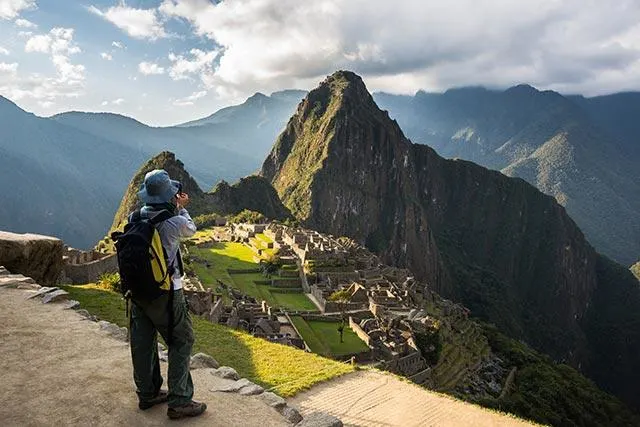
The Machu Picchu Mountain hike time depends on the individual’s pace and whether the measurement includes only the ascent or the complete mountain route.
Travel operators commonly estimate approximately 3 to 4 hours for the round-trip mountain experience, while some hikers may complete it faster and others may take longer.
The important point is that the summit climb should not be treated as a one-hour excursion.
How Long Is the Machu Picchu Mountain Hike?
How long is the Machu Picchu Mountain hike? For most visitors, allowing approximately 3 to 4 hours for the complete mountain experience is a practical planning range.
The exact time can vary according to:
- Walking speed.
- Number of breaks.
- Photography.
- Trail conditions.
- Weather.
- Crowding.
- Physical condition.
- Time spent at the summit.
Some visitors will move faster, while photographers and travelers who want to spend significant time enjoying the panorama may need longer.
Approximate Hiking Breakdown
A typical experience can be thought of as:
- Initial ascent through the lower section.
- Continuous uphill climbing.
- Short rest stops.
- Final approach to the summit.
- Time enjoying the viewpoint.
- Descent by the same general mountain route.
- Continued movement through the official visitor circuit.
The descent is easier aerobically but can place considerable pressure on the knees because of the numerous steps.
Machu Picchu Mountain View
The Machu Picchu Mountain view is the principal reason many travelers choose this route.
From the summit, visitors gain a much higher perspective over the archaeological sanctuary. Instead of seeing Machu Picchu primarily from the classic lower viewpoints, the mountain allows travelers to look down toward the Inca city and outward across the surrounding landscape.
The panorama can include:
- Machu Picchu archaeological complex.
- Huayna Picchu.
- Urubamba River.
- Deep Andean valleys.
- Surrounding mountains.
- Cloud-forest vegetation.
- The broader Vilcabamba mountain landscape.
Machu Picchu Mountain Hike View
The Machu Picchu Mountain hike view changes throughout the ascent.
At lower points, vegetation can partially obscure the surrounding landscape. As hikers gain elevation, the views gradually open up.
Near the summit, the perspective becomes much broader. The archaeological complex appears smaller below, while Huayna Picchu and the mountains surrounding Machu Picchu become important elements of the panorama.
This makes the hike particularly attractive to photographers.
Photography From Machu Picchu Mountain
The summit provides a very different composition from the familiar postcard viewpoint.
Instead of photographing Machu Picchu from approximately the same elevation as the terraces, the mountain allows photographers to capture the entire archaeological setting from a higher position.
Good photographic subjects include:
- Machu Picchu from above.
- Huayna Picchu.
- The winding Urubamba River.
- Mountain ridges.
- Cloud formations.
- The terraces and surrounding forest.
Weather can dramatically alter the appearance of the landscape. On a clear day, distant mountains may dominate the horizon. On cloudy days, mist can create a completely different atmosphere.
Machu Picchu Mountain vs Huayna Picchu
The question of Machu Picchu Mountain vs Huayna Picchu is one of the most common decisions travelers face when planning an additional mountain hike.
Both mountains offer spectacular experiences, but they are quite different.
Machu Picchu Mountain is the higher mountain and is generally associated with a longer, more sustained climb and expansive panoramic views. Huayna Picchu is lower but has a reputation for steeper sections, narrower paths, and a more adventurous character.
Huayna Picchu or Machu Picchu Mountain Hike?
So, Huayna Picchu or Machu Picchu Mountain hike?
The answer depends on what type of hike the traveler wants.
| Feature | Machu Picchu Mountain | Huayna Picchu |
|---|---|---|
| Approximate summit elevation | 3,082 m | Around 2,700 m |
| General character | Longer sustained ascent | Steeper and more adventurous |
| Main attraction | Broad panoramic views | Dramatic mountain and citadel perspectives |
| Relative height | Higher | Lower |
| Trail character | Numerous stairs and sustained climbing | Steeper sections and narrower areas |
| View perspective | Broad landscape panorama | Closer views of Machu Picchu and surrounding mountains |
| Route | Circuit 1, Route 1-A | Circuit 3, Route 3-A |
| Best suited to | Panoramic views and sustained hiking | Steeper, more adventurous hiking |
The current official circuit system identifies Machu Picchu Mountain as Route 1-A and Huayna Picchu as Route 3-A.
Machu Picchu Mountain for Panoramic Views
Machu Picchu Mountain is particularly attractive to travelers whose priority is seeing the entire archaeological setting from above.
Because the summit is higher, the landscape can feel more expansive.
Huayna Picchu for a More Adventurous Trail
Huayna Picchu is attractive to hikers who want a shorter but steeper experience with more dramatic trail sections.
The route also provides perspectives toward Machu Picchu that differ from those experienced on Machu Picchu Mountain.
Which Mountain Is Higher?
Machu Picchu Mountain is higher.
The summit is approximately 3,082 meters, while Huayna Picchu is approximately 2,693–2,720 meters, depending on the reference source and measurement point.
The difference in elevation does not automatically mean Machu Picchu Mountain is more difficult. Trail steepness, terrain, stairs, and route design all influence perceived difficulty.
Machu Picchu Mountain Hike Tickets
Machu Picchu Mountain hike tickets are separate from simply choosing a standard visit to the archaeological site. Visitors need the ticket corresponding to the mountain route.
Under the current circuit system, the mountain is accessed through Circuit 1, Route 1-A: Ruta Montaña Machupicchu.
The official Ministry of Culture ticket system handles online reservations for Machu Picchu, while availability is controlled according to the established capacity and route schedules.
What Ticket Should You Buy?
Travelers specifically wanting Machu Picchu Mountain should verify that their reservation corresponds to:
Circuit 1 – Panoramic
Route 1-A – Machupicchu Mountain
Do not assume that a general Machu Picchu entrance automatically includes the mountain hike.
The ticket type matters because different routes provide access to different areas.
Should You Reserve in Advance?
Yes, advance planning is important for travelers who specifically want to climb Machu Picchu Mountain.
The Peruvian Ministry of Culture began the 2026 advance ticket sales process in November 2025, including tickets for the Inca Trail and Machu Picchu.
Because mountain routes have controlled capacity, waiting until arrival can create a risk of finding the desired route unavailable.
Mountain Ticket Availability
Availability depends on the date, season, visitor capacity, and booking demand.
The official system currently organizes Machu Picchu into three principal circuits and ten routes, including the Machu Picchu Mountain and Huayna Picchu routes.
Travelers should therefore choose the desired mountain before finalizing their reservation rather than purchasing a generic ticket and expecting to add the hike later.
Planning Your Machu Picchu Mountain Hike
Good planning can make the experience considerably more enjoyable.
Before the Hike
Try to:
- Acclimatize in Cusco or the Sacred Valley.
- Sleep well before visiting Machu Picchu.
- Bring sufficient water.
- Wear shoes with good traction.
- Use sun protection.
- Carry rain protection.
- Bring a small backpack.
- Avoid carrying unnecessary weight.
- Allow enough time for the entire route.
What to Bring
A practical day-hike packing list includes:
- Comfortable hiking shoes.
- Lightweight rain jacket.
- Water bottle.
- Sunscreen.
- Sunglasses.
- Hat or cap.
- Insect repellent.
- Camera or smartphone.
- Small snacks where permitted.
- Personal medication.
- Lightweight clothing layers.
The weather around Machu Picchu can change quickly, so rain protection is useful even when the morning begins sunny.
Best Time for the Machu Picchu Mountain Hike
The mountain can be visited in different seasons, but weather can significantly affect the experience.
During clearer conditions, the mountain provides broad views toward the surrounding Andes. During periods of rain or cloud, visibility may be reduced, although mist can create an atmospheric landscape.
Dry-Season Conditions
The drier months can provide better chances of clear mountain views, although weather is never guaranteed.
Travelers should still prepare for changing conditions because mountain weather can shift rapidly.
Rainy-Season Conditions
Rain can make stone stairs slippery and may reduce visibility from the summit. However, the surrounding cloud forest can become especially lush and dramatic.
Regardless of season, travelers should be prepared for both sunshine and rain.
Safety on the Machu Picchu Mountain Hike
The trail should be treated with respect because it involves steep terrain and significant elevation.
Visitors should avoid rushing, especially on the ascent.
Hiking Safely
Important considerations include:
- Walk at a comfortable pace.
- Use the handrails where available.
- Watch your footing on wet stones.
- Drink water regularly.
- Protect yourself from strong sunlight.
- Follow the designated trail.
- Respect visitor restrictions.
- Do not climb outside permitted areas.
- Take extra care during the descent.
The most common challenge for visitors is not technical climbing but fatigue combined with stairs and altitude.
Altitude and Acclimatization
Machu Picchu itself is considerably lower than Cusco, but the summit of Machu Picchu Mountain rises above 3,000 meters.
Travelers arriving directly from low altitude should be aware that the physical effort can feel different.
Acclimatization in the Cusco region before undertaking strenuous hiking can make the experience more manageable.
Is Machu Picchu Mountain Hike Worth It?
The question is Machu Picchu Mountain hike worth it ultimately depends on what the traveler wants from a Machu Picchu visit.
For someone primarily interested in panoramic scenery, photography, and a physical challenge, the mountain adds an entirely different dimension to the visit.
The hike is particularly appealing because the summit provides a perspective that cannot be obtained from the standard viewpoints inside the archaeological complex.
Reasons to Add the Mountain Hike
Travelers may choose it because:
- The views are expansive.
- The summit is significantly higher than Machu Picchu.
- The hike provides physical activity.
- It offers different photography opportunities.
- Huayna Picchu can be viewed from a different perspective.
- The surrounding mountains become more prominent.
- It creates a more active Machu Picchu experience.
Reasons Some Travelers May Skip It
The hike may not be appropriate for everyone.
You may prefer a standard Machu Picchu route if:
- You dislike steep stairs.
- You have limited mobility.
- You want to spend more time exploring the archaeological sectors.
- You have already completed a demanding multi-day trek.
- You are uncomfortable with altitude.
- Your main priority is the archaeological site rather than the mountain landscape.
Choosing not to hike the mountain does not mean missing Machu Picchu. It simply creates a different type of visit.
Machu Picchu Mountain Hike vs Standard Machu Picchu Visit
A standard visit focuses more directly on the archaeological complex, while the mountain route adds a substantial physical component and a panoramic viewpoint.
| Experience | Standard visit | Machu Picchu Mountain |
|---|---|---|
| Archaeological exploration | Greater emphasis | More limited depending on route |
| Mountain climbing | Minimal | Significant |
| Panoramic views | Excellent | Extensive |
| Physical effort | Low to moderate | Moderate to challenging |
| Time required | Shorter | Several hours |
| Photography | Excellent | Especially strong for landscapes |
| Main attraction | Inca architecture | Mountain panorama |
Travelers who have enough time and energy may enjoy combining a mountain experience with a well-planned visit to Machu Picchu, provided their ticket route and schedule allow it.
Machu Picchu Mountain Hike: Frequently Asked Questions
How long is the Machu Picchu Mountain hike?
The complete mountain experience generally takes around 3 to 4 hours, although individual times vary. The full official Route 1-A circuit is longer than the mountain trail alone because it includes portions of the panoramic circuit.
What is the Machu Picchu Mountain hike distance?
The mountain trail is commonly described as approximately 2 kilometers, while the complete Route 1-A circuit is approximately 3.8 kilometers round trip according to current route information.
What is the elevation of Machu Picchu Mountain?
Machu Picchu Mountain reaches approximately 3,082 meters (10,111 feet) above sea level.
Is Machu Picchu Mountain harder than Huayna Picchu?
The two hikes are difficult in different ways. Machu Picchu Mountain involves a longer sustained ascent to a higher summit, while Huayna Picchu is known for steeper and narrower sections. Individual perceptions of difficulty vary.
Do I need a special ticket?
Yes. Visitors wanting to hike Machu Picchu Mountain need the appropriate route ticket. Under the current system, the mountain is Circuit 1, Route 1-A.
Can I hike Machu Picchu Mountain without visiting Machu Picchu?
The mountain route is integrated into the official Machu Picchu visitor circuit system. Travelers should therefore plan it as part of their Machu Picchu entrance rather than as an entirely separate attraction.
Is Machu Picchu Mountain worth visiting?
For travelers who enjoy hiking and want broad panoramic views over the archaeological complex and Andes, it can add a distinctive dimension to a Machu Picchu visit. Travelers who prioritize archaeological exploration or prefer less strenuous walking may prefer another route.
Final Thoughts on the Machu Picchu Mountain Hike
The Machu Picchu Mountain hike is a rewarding option for travelers who want to see the Inca sanctuary from a much higher perspective. At approximately 3,082 meters above sea level, the mountain provides a broad panorama of Machu Picchu, Huayna Picchu, the Urubamba River valley, and the surrounding Andes.
Although the Machu Picchu Mountain hike distance is relatively short, the combination of elevation, continuous stairs, and altitude makes the climb considerably more demanding than the distance suggests. Allowing approximately three to four hours for the overall mountain experience gives most travelers enough time to climb, rest, enjoy the summit, take photographs, and descend.
The choice between Machu Picchu Mountain vs Huayna Picchu comes down largely to the desired experience. Machu Picchu Mountain is higher and emphasizes expansive panoramic views and sustained uphill hiking. Huayna Picchu offers a lower but more compact and adventurous mountain experience.
For anyone considering how hard is Machu Picchu Mountain hike, preparation and pacing are more important than speed. Travelers who acclimatize properly, wear appropriate footwear, carry water, and approach the climb steadily can enjoy the route without turning the ascent into a race.
Most importantly, travelers should select the correct Machu Picchu Mountain hike tickets in advance and verify the official circuit and route assigned to their visit. The current official system identifies the mountain as Circuit 1, Route 1-A, while Huayna Picchu is accessed through Circuit 3, Route 3-A.