The Inca Trail is one of the world’s most iconic trekking routes, combining breathtaking mountain landscapes, cloud forests, archaeological sites, and the unforgettable arrival at Machu Picchu through the legendary Sun Gate. Every year, thousands of travelers choose hiking the Inca Trail to experience a journey that follows ancient stone paths built by the Inca civilization more than 500 years ago.
This complete guide covers everything you need to know about the Inca Trail Peru, including history, routes, maps, altitude, distances, permits, camping, tours, safety, and practical advice. Whether you are planning the Classic Inca Trail or the Short Inca Trail, this article will help you prepare for one of the greatest adventures in South America.
What Is the Inca Trail?
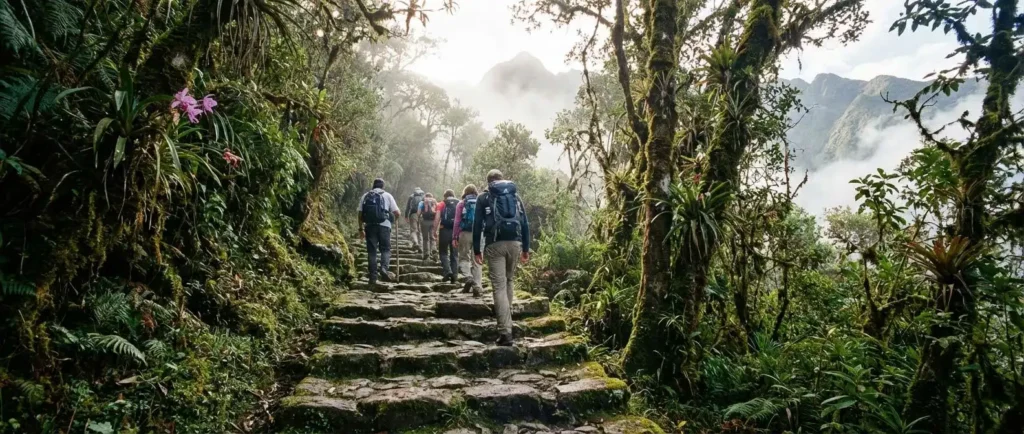
The Inca Trail is an ancient network of roads constructed by the Inca Empire across the Andes Mountains. The most famous section is the route connecting the Sacred Valley with Machu Picchu, passing through mountain passes, cloud forests, tunnels, and hidden archaeological sites.
Today, the term Inca Trail hike usually refers to the trekking route leading directly to Machu Picchu. Unlike visitors who arrive by train, hikers experience the gradual approach to the citadel, entering through the historic Inti Punku (Sun Gate).
The Importance of the Inca Trail in Peru
The Inca Trail Peru is more than a trekking route. It represents a combination of:
- Ancient engineering
- Sacred landscapes
- Inca culture
- Biodiversity
- Adventure tourism
The route was originally part of a larger road system extending over thousands of kilometers throughout South America.
Interesting Fact
Many sections of the stone trail are still original and have survived earthquakes, heavy rains, and centuries of use thanks to the exceptional engineering skills of the Incas.
Where Is the Inca Trail?
The Inca Trail to Machu Picchu is located in southern Peru, near the city of Cusco, the historic capital of the Inca Empire.
Most travelers begin their adventure in Cusco, traveling to the Sacred Valley before reaching the official trailhead.
Inca Trail from Cusco
The journey usually begins with transportation from Cusco to the starting point:
- Km 82 for the Classic Inca Trail
- Km 104 for the Short Inca Trail
The trail crosses:
- Andes Mountains
- Cloud forests
- Valleys
- Rivers
- Inca ruins
Distances from Cusco
- Cusco to Km 82: approximately 2–3 hours
- Cusco to Km 104: approximately 2 hours by train
Inca Trail History
The Inca Trail history dates back to the fifteenth century when the Inca Empire built an extensive network of roads called the Qhapaq Ñan.
These roads connected important cities, temples, agricultural areas, and ceremonial centers.
The Purpose of the Inca Trail
The roads were used by:
- Messengers
- Priests
- Soldiers
- Nobility
- Traders
The route to Machu Picchu likely served ceremonial and religious purposes.
Classic Inca Trail and Sacred Sites
The Classic Inca Trail passes several important archaeological sites:
Llactapata
An agricultural and administrative center.
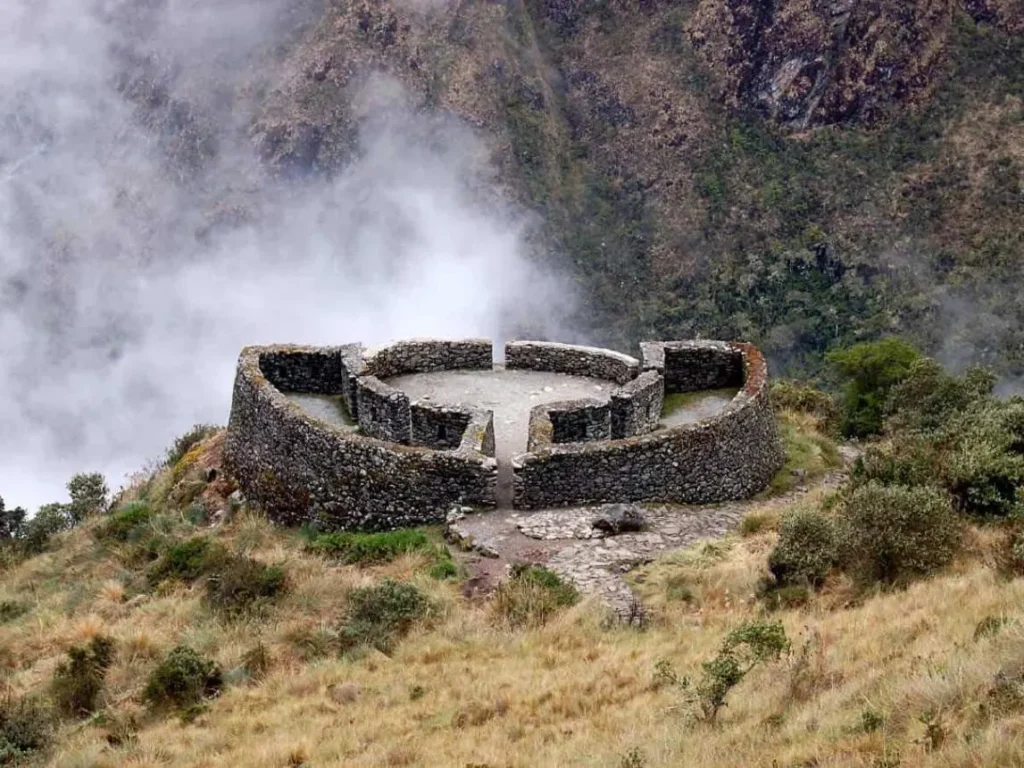
Runkurakay
A circular Inca structure located on the mountainside.
Sayacmarca
A hidden settlement built above steep cliffs.
Phuyupatamarca
Known as the “City Above the Clouds.”
Wiñay Wayna
One of the most beautiful Inca ruins before reaching Machu Picchu.
Interesting Historical Fact
Many archaeologists believe Machu Picchu may have been a royal estate, ceremonial center, or sacred retreat for Inca elites.
Inca Trail Map and Route
An Inca Trail map shows a route crossing mountains, valleys, forests, and archaeological sites.
Classic Inca Trail Route
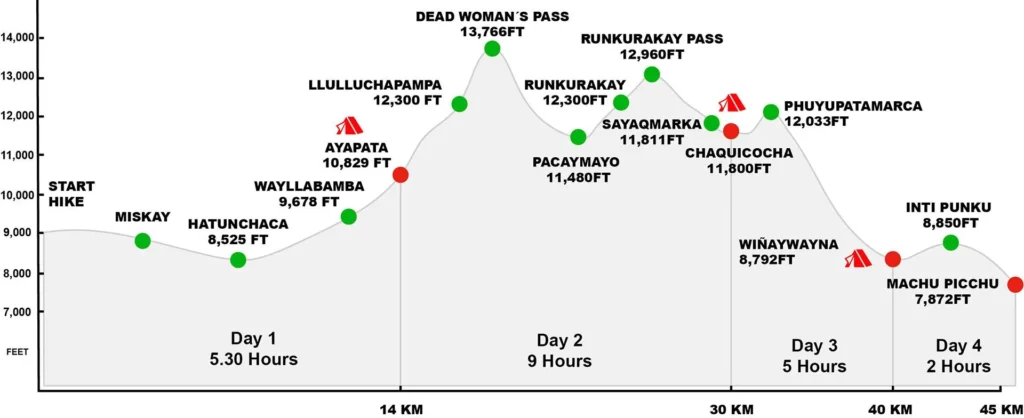
Day 1
- Km 82
- Llactapata
- First campsite
Distance:
Approximately 12 km (7.5 miles)
Day 2
The most difficult day.
Main points:
- Dead Woman’s Pass
- Highest elevation
Distance:
Approximately 16 km (10 miles)
Day 3
Cloud forest and archaeological sites.
Distance:
Approximately 10 km (6 miles)
Day 4
- Wiñay Wayna
- Sun Gate
- Machu Picchu
Distance:
Approximately 6 km (4 miles)
How Long Is the Inca Trail?
Many travelers ask: How long is the Inca Trail?
The answer depends on the route selected.
Classic Inca Trail Distance
- Approximately 42 km (26 miles)
- Usually completed in 4 days
Short Inca Trail Distance
- Approximately 10–12 km
- Usually completed in 1–2 days
Walking Time
Daily hiking:
- 5 to 9 hours
The longest day is usually Day 2.
Inca Trail Elevation and Altitude
The Inca Trail elevation is one of the most important factors for hikers.
Highest Point
Dead Woman’s Pass:
- 4,215 meters (13,828 feet)
- 2,430 meters (7,972 feet)
Machu Picchu Altitude
Cusco Altitude
- 3,399 meters (11,152 feet)
Altitude Considerations
Symptoms may include:
- Headaches
- Fatigue
- Shortness of breath
Acclimatization Tips
- Spend 2–3 days in Cusco
- Drink plenty of water
- Walk slowly
- Avoid heavy meals
Interesting Fact
Although Dead Woman’s Pass sounds intimidating, the mountain itself does not resemble a person. The name comes from the shape of nearby peaks.
Classic Inca Trail vs Short Inca Trail
Travelers often compare the Classic Inca Trail with the Short Inca Trail.
| Feature | Classic Trail | Short Trail |
|---|---|---|
| Duration | 4 Days | 1–2 Days |
| Distance | 42 km | 10–12 km |
| Camping | Yes | Usually No |
| Difficulty | Moderate to Challenging | Moderate |
| Archaeological Sites | Many | Fewer |
Who Should Choose the Classic Trail?
Ideal for:
- Adventure travelers
- Nature lovers
- History enthusiasts
Who Should Choose the Short Trail?
Ideal for:
- Limited time
- Families
- Moderate hikers
Inca Trail Tours
Booking an Inca Trail tour is mandatory because independent hiking is not permitted.
What Is Included in Inca Trail Tours?
Most tours include:
- Permits
- Guides
- Transportation
- Camping equipment
- Meals
- Porters
- Entrance to Machu Picchu
Choosing an Inca Trail Tour Company
Consider:
- Experience
- Small groups
- Guide quality
- Camping equipment
- Sustainability practices
Interesting Trend
Many travelers now prefer smaller groups for a more personal and environmentally responsible experience.
Planning an Inca Trail Hike
Good preparation is essential for a successful Inca Trail hike.
Permits
Permits are limited each year.
Important:
- Reserve several months in advance.
- High season permits sell quickly.
Guides
Certified guides are required.
They provide:
- Historical explanations
- Safety support
- Logistics
Transportation
Most tours include:
- Cusco transfers
- Train tickets
- Bus transportation
Camping and Accommodation
Campsites are regulated.
Facilities may include:
- Dining tents
- Portable toilets
- Sleeping areas.
What to Bring for the Inca Trail
Packing correctly makes a big difference.
Essential Items
Clothing
- Waterproof jacket
- Hiking pants
- Layers
- Hat
- Gloves
Footwear
- Hiking boots
- Comfortable socks
Equipment
- Backpack
- Headlamp
- Water bottle
- Walking poles
Personal Items
- Passport
- Sunscreen
- Insect repellent
- Personal medication
Inca Trail Safety and Hiking Challenges
The Inca Trail difficulty is moderate to challenging.
Main Challenges
Altitude
Thin air can affect physical performance.
Weather
Conditions can change quickly.
Possible weather:
- Sun
- Rain
- Wind
- Cold nights
Trail Conditions
Expect:
- Stone stairs
- Uneven paths
- Steep ascents
Hiking Tips
- Walk slowly
- Stay hydrated
- Use trekking poles
- Take breaks
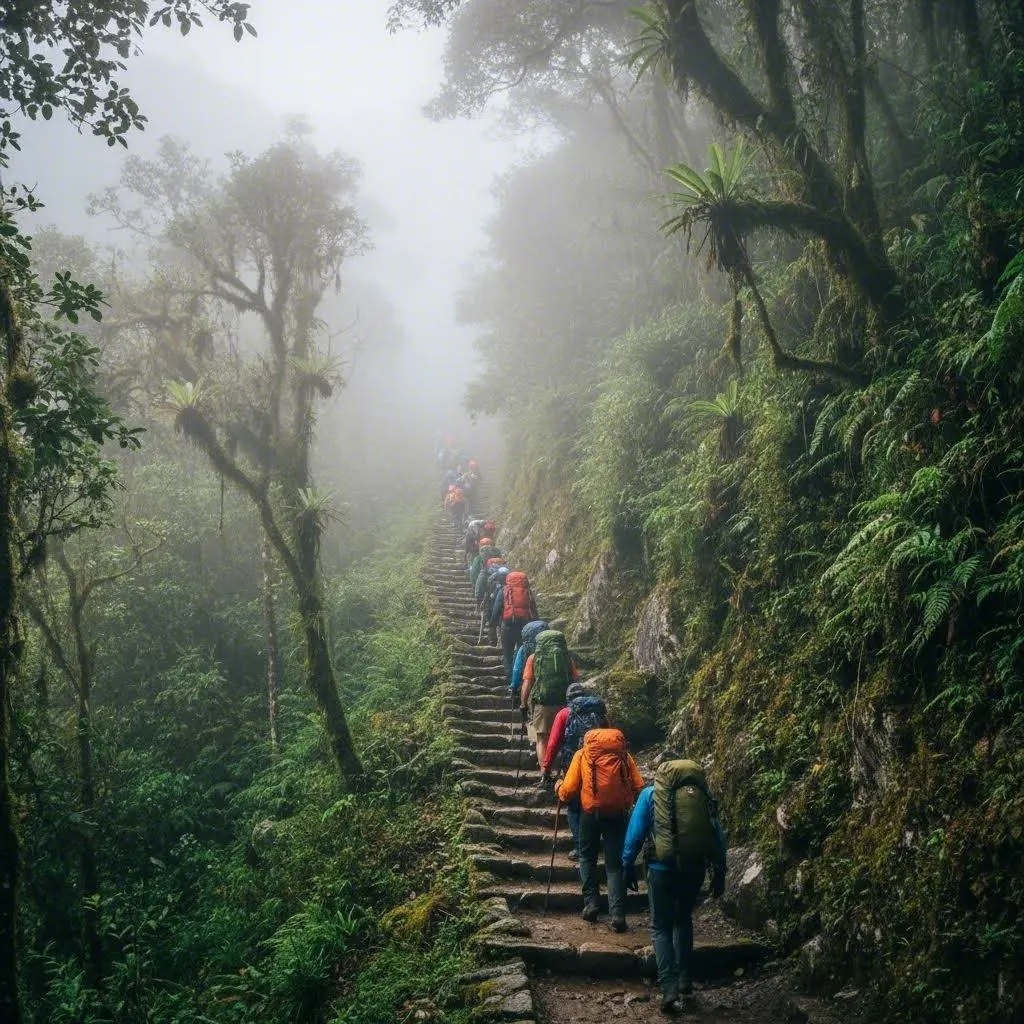
Wildlife Along the Inca Trail
The trail crosses diverse ecosystems.
Possible sightings:
- Hummingbirds
- Orchids
- Butterflies
- Spectacled bears
- Deer
Cloud Forest Biodiversity
The cloud forest contains:
- Hundreds of orchid species
- Rare birds
- Native plants
Interesting Fact
The orchid diversity along the trail is among the highest in the Andes.
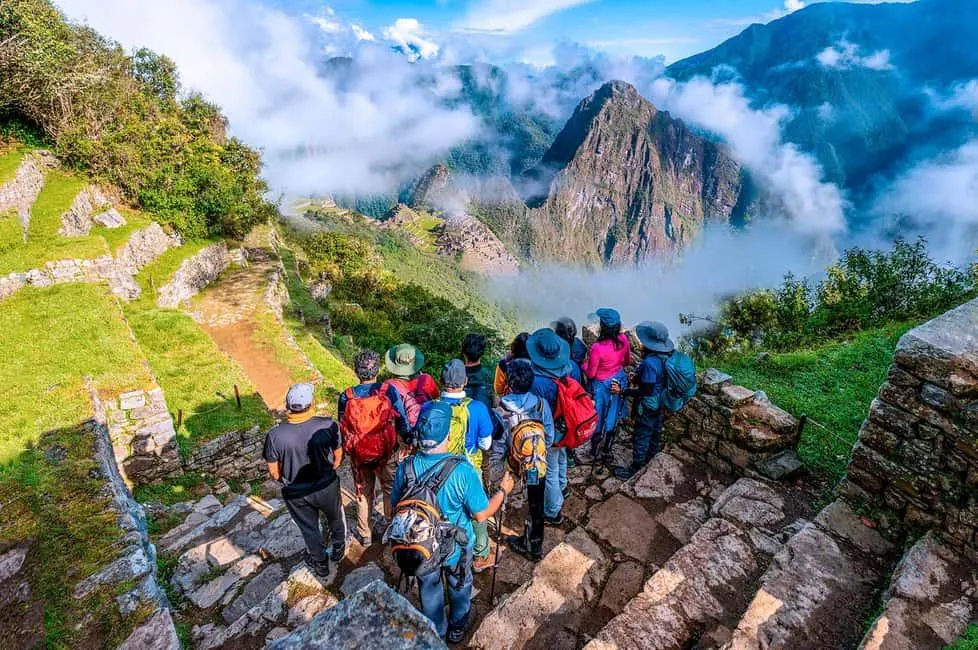
The Sun Gate Experience
One of the most unforgettable moments is reaching Inti Punku, the Sun Gate.
After several days of hiking, travelers get their first panoramic view of Machu Picchu.
For many people, this is the emotional highlight of the journey.
Unusual Facts About the Inca Trail
The Trail Is Part of a Giant Road Network
The Inca road system extended over thousands of kilometers.
Ancient Stone Engineering
Some original paths remain intact after centuries.
Hidden Archaeological Sites
Many ruins on the trail cannot be visited by train travelers.
Limited Daily Access
Visitor numbers are controlled to protect the trail.
Diverse Ecosystems
Hikers can pass through:
- Mountain landscapes
- Cloud forests
- Subtropical vegetation
All in a single journey.
Best Time to Hike the Inca Trail
The trail can be visited throughout much of the year.
Dry Season
Months:
- May
- June
- July
- August
- September
Advantages:
- Clear skies
- Better mountain views
Rainy Season
Months:
- November to March
Advantages:
- Greener landscapes
- Fewer visitors
Important Fact
The Inca Trail usually closes in February for maintenance and conservation work.
Why the Inca Trail Remains One of the World’s Greatest Treks
The Inca Trail to Machu Picchu is more than a hike. It is a journey through history, culture, nature, and ancient engineering. From the mountains above Cusco to the cloud forests surrounding Machu Picchu, every section of the trail offers unique landscapes and unforgettable experiences.
Whether choosing the Classic Inca Trail or the Short Inca Trail, travelers discover why this route continues to inspire adventurers from around the world. The combination of archaeology, natural beauty, and the final arrival at Machu Picchu makes the Inca Trail one of the most remarkable trekking experiences on Earth.