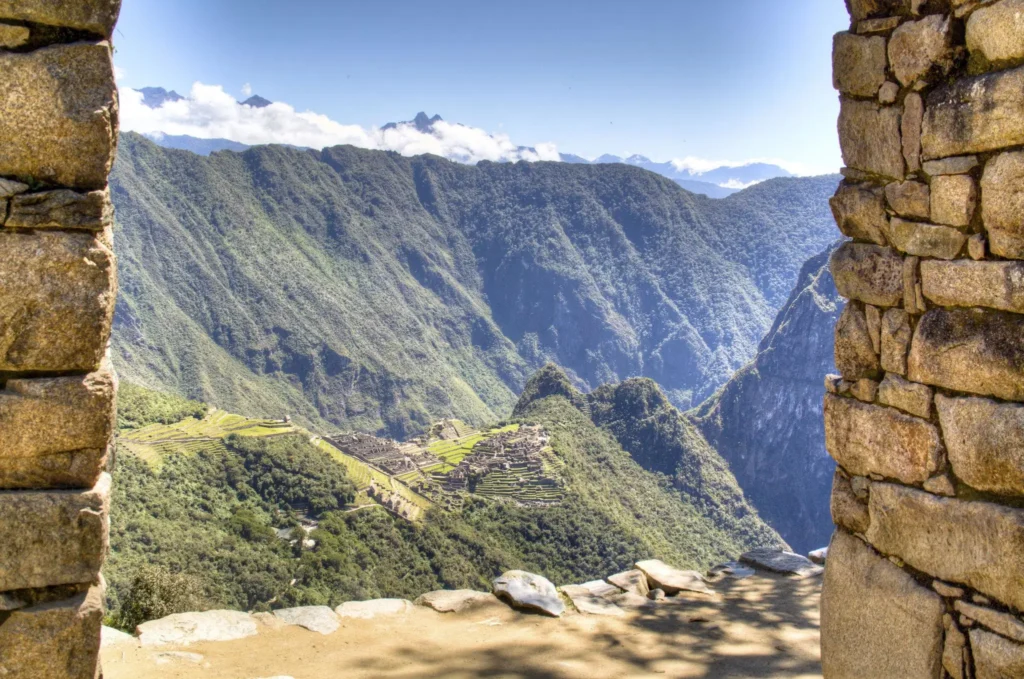
The Inca Trail to Machu Picchu is one of the most famous trekking routes in Peru, combining dramatic Andes landscapes, ancient stone pathways, cloud forest, high mountain passes, and archaeological sites before reaching Machu Picchu. For many travelers, the attraction is not simply arriving at the famous Inca citadel, but experiencing a historic route that gradually changes from the Sacred Valley landscape into high-altitude mountains and subtropical forest.
The classic trek covers roughly 43 km (26 miles) and is normally completed in four days, with the highest point reaching about 4,215 m (13,828 ft) at Warmiwañusqa, commonly called Dead Woman’s Pass. There are also shorter versions, including the Short Inca Trail or 2-Day Inca Trail, which begins farther along the route and avoids the highest mountain passes.
Because access to the Inca Trail is controlled through permits and daily capacity limits, planning is an important part of the experience. The Peruvian Ministry of Culture opened advance sales for the 2026 Inca Trail season in November 2025, emphasizing early reservations for visitors and operators.
What Is the Inca Trail to Machu Picchu?
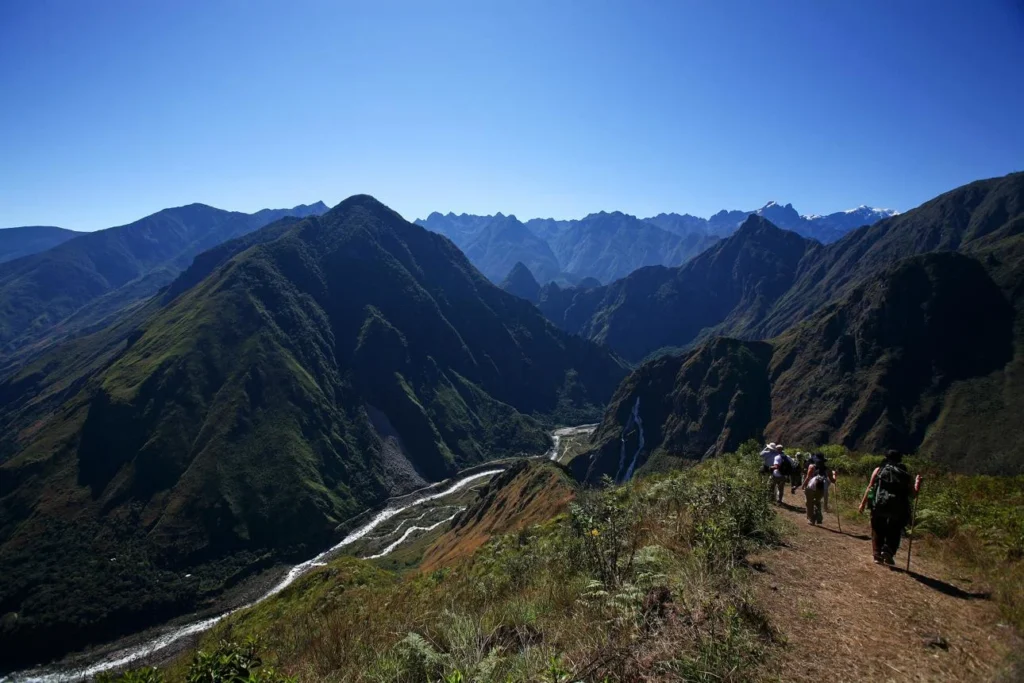
The Inca Trail to Machu Picchu is a network of ancient routes associated with the Inca road system that crosses the mountains surrounding Machu Picchu. The modern trekking experience generally refers to the authorized routes that approach the archaeological sanctuary from different starting points. The wider Inca road network extends for hundreds of kilometers and includes numerous archaeological monuments, while the best-known trekking itinerary begins at Km 82 and finishes at Machu Picchu.
The classic route is particularly interesting because the journey itself becomes part of the attraction. Instead of simply traveling to Machu Picchu by train and visiting the archaeological site, hikers pass through changing ecological zones and encounter several archaeological sites along the way. Patallacta, Runkurakay, Sayacmarca, Phuyupatamarca and Wiñay Wayna are among the important sites associated with the classic route.
Why Is the Inca Trail So Special?
Several characteristics distinguish the Inca Trail from an ordinary mountain hike:
- Ancient stone-paved sections
- High-altitude mountain passes
- Cloud-forest environments
- Inca archaeological complexes
- Dramatic changes in vegetation
- Camping in mountain landscapes
- Arrival at Machu Picchu through the Sun Gate on the classic route
- A controlled number of visitors
The combination of archaeology and hiking is what gives the route its particular character. You are not simply following a modern hiking trail; you are moving through a historic cultural landscape that remains carefully managed because of its archaeological and environmental sensitivity.
Inca Trail Distance and How Long It Takes
The classic Inca Trail distance is approximately 43 km (26 miles), although published measurements can vary slightly depending on whether the measurement finishes at the Sun Gate, Machu Picchu, or includes additional walking associated with the final visitor route.
The standard trek takes 4 days and 3 nights, although the actual hiking time varies according to the campsite, group speed, weather, altitude and trail conditions.
How Many Kilometers Do You Walk Each Day?
A typical four-day itinerary can be understood approximately as follows:
| Day | Approximate Distance | Main Character |
|---|---|---|
| Day 1 | 11–14 km | Gradual ascent and archaeological sites |
| Day 2 | 10–12 km | Major climb to Dead Woman’s Pass |
| Day 3 | 15–16 km | Long mountain day and cloud forest |
| Day 4 | Short final section | Sun Gate and Machu Picchu |
Exact distances vary between itineraries and campsites. The classic route’s approximately 43 km should therefore be treated as a practical planning figure rather than a measurement that every operator divides identically.
How Long Does the Inca Trail Take?
Most travelers choose the classic 4-day Inca Trail, but other options exist. A longer itinerary can distribute the same general route over more days, while the Short Inca Trail can be completed in approximately two days.
The important point is that distance alone does not determine difficulty. Ten kilometers at high altitude with thousands of stone steps can feel considerably harder than a longer walk on relatively flat terrain.
Inca Trail 4-Day Route
The Inca Trail 4-Day Route is the classic itinerary and the version most travelers associate with the term “Inca Trail.” It begins around Km 82, crosses high mountain terrain and eventually reaches Machu Picchu through the Sun Gate.
The route passes through several distinct landscapes, including agricultural valleys, high puna environments, mountain passes and humid cloud forest.
Day 1: Km 82 to Wayllabamba
The first day normally begins at Km 82, also known as Piscacucho. The trail starts relatively gently compared with the following days, making this section a useful introduction to the terrain.
The route follows the valley before gradually climbing toward Wayllabamba. Along the way, trekkers encounter mountain scenery and archaeological remains, including Patallacta. Depending on the itinerary and campsite, the first day generally involves several hours of walking.
Highlights of Day 1
- Km 82 trailhead
- Urubamba River surroundings
- Patallacta archaeological site
- Agricultural landscapes
- Initial mountain ascent
- First night of camping
The first day can feel deceptively easy. Saving energy is important because the major elevation challenge comes on Day 2.
Day 2: Wayllabamba to Pacaymayo
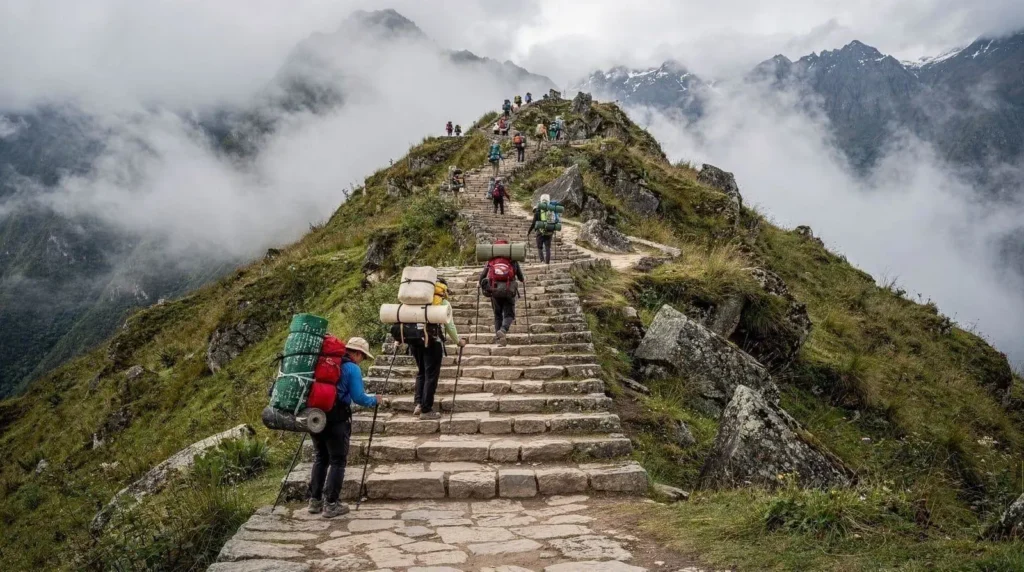
For many hikers, Day 2 is the hardest day of the Inca Trail. The route climbs steeply from the valley toward Warmiwañusqa, better known as Dead Woman’s Pass.
The pass reaches approximately 4,215 m (13,828 ft), making it the highest point of the classic trek. Current trekking information also places Warmiwañusqa at 4,215 m.
Dead Woman’s Pass
Dead Woman’s Pass is one of the defining landmarks of the Inca Trail. The challenge comes less from technical climbing and more from the combination of sustained uphill walking, altitude and stone steps.
Once trekkers reach the pass, the route descends toward the Pacaymayo Valley. The descent can be demanding on the knees and legs, particularly after the long ascent.
Why Day 2 Feels So Difficult
Several factors combine:
- High altitude
- Long uphill sections
- Stone steps
- Reduced oxygen availability
- Cold or windy conditions
- Accumulated fatigue
Proper acclimatization is therefore much more important than simply being able to walk long distances at low altitude.
Day 3: Pacaymayo to Wiñay Wayna
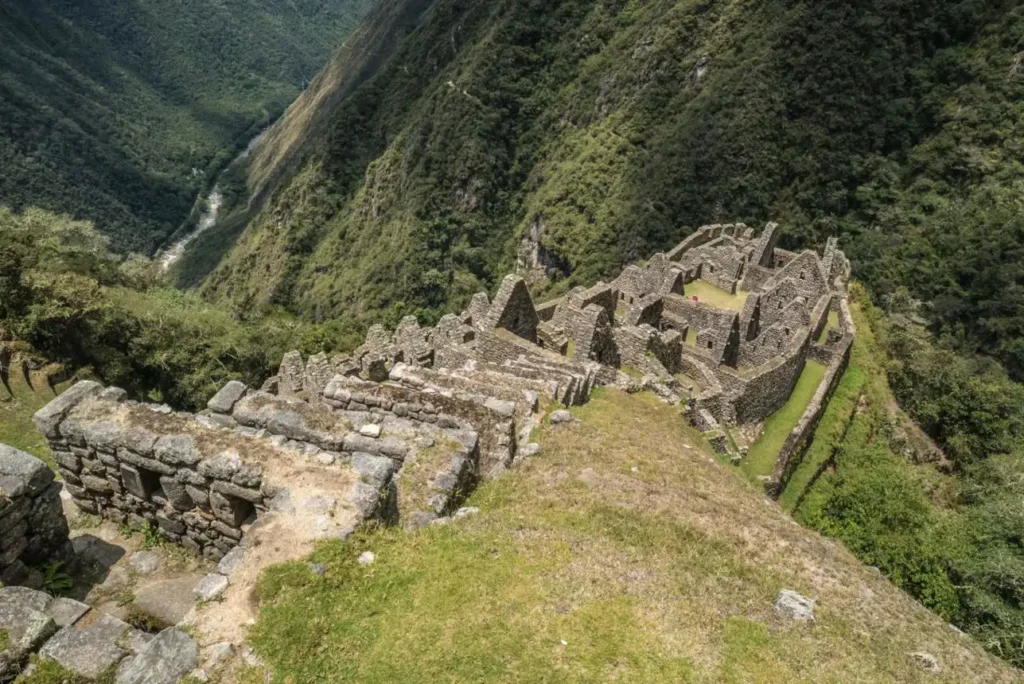
Day 3 is often the longest day in terms of distance. The trail crosses additional mountain passes before gradually entering more humid vegetation and cloud forest.
Important archaeological sites encountered along or near this section include Runkurakay, Sayacmarca, Phuyupatamarca and Wiñay Wayna.
The scenery also changes significantly. High-altitude grasslands give way to greener vegetation, misty mountains and increasingly subtropical environments.
Archaeological Highlights
Runkurakay
Runkurakay is a distinctive archaeological structure situated along the trail. Its circular or curved architectural elements and elevated location make it one of the memorable ruins encountered during the trek.
Sayacmarca
Sayacmarca is dramatically positioned on a mountain ridge. Access involves stone steps, and its location provides an excellent example of how Inca settlements were integrated into the surrounding terrain.
Phuyupatamarca
Often associated with clouds and high mountain scenery, Phuyupatamarca is another impressive archaeological complex along the route.
Wiñay Wayna
Wiñay Wayna is one of the most spectacular archaeological sites on the trail. Terraces and stone structures are integrated into the steep mountainside, creating a dramatic transition toward the final approach to Machu Picchu.
The archaeological complex is positioned on a steep hillside above the Urubamba River and includes terraces, structures and stairways integrated into the mountain landscape.
Short Inca Trail and 2-Day Inca Trail
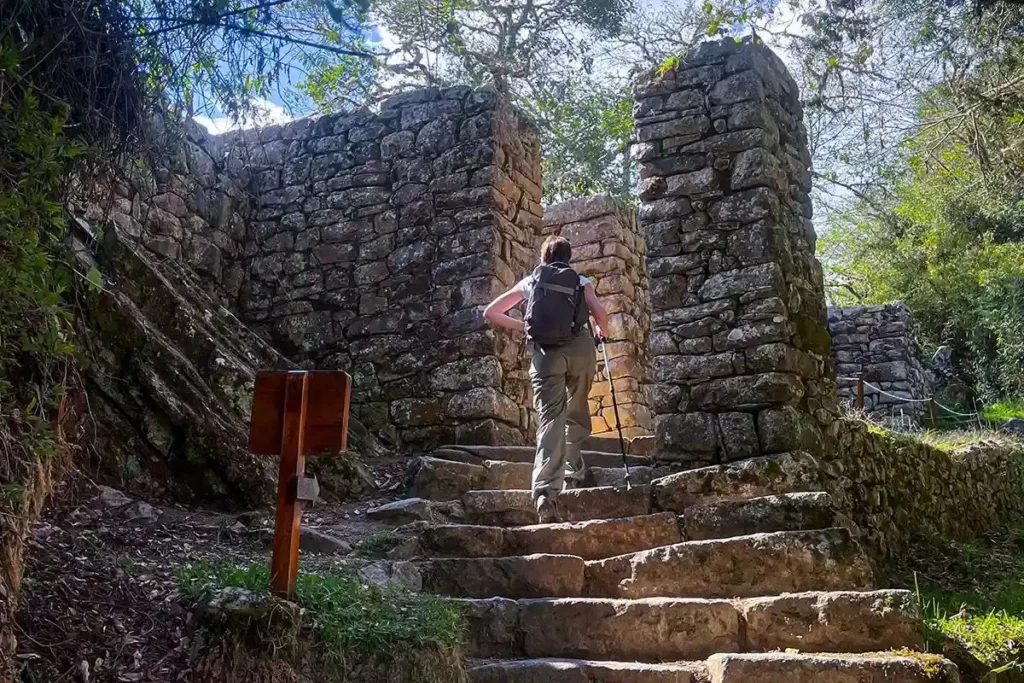
The Short Inca Trail, commonly called the 2-Day Inca Trail, provides an alternative for travelers who want to experience part of the historic Inca Trail without completing the full four-day mountain trek.
Instead of starting at Km 82, the short route begins farther along the railway corridor, commonly around Km 104. Because it joins the trail closer to Machu Picchu, it avoids the major high-altitude passes of the classic route.
Who Should Consider the 2-Day Inca Trail?
The shorter itinerary can be attractive to travelers who:
- Have limited time
- Prefer not to camp for several nights
- Want to avoid the highest passes
- Still want to hike on an Inca Trail section
- Prefer a shorter physical challenge
- Want to combine trekking with a Machu Picchu visit
The Short Inca Trail is not simply a reduced version of the four-day route. It provides a different experience because it focuses on the final section of the approach to Machu Picchu.
4-Day vs. 2-Day Inca Trail
| Feature | 4-Day Classic | 2-Day Short |
|---|---|---|
| Starting point | Km 82 | Around Km 104 |
| Duration | 4 days | 2 days |
| High passes | Yes | No |
| Camping | Yes | Usually no multi-night camping |
| Difficulty | Moderate to challenging | Moderate |
| Archaeological sites | Numerous | Several important sites |
| Arrival through historic approach | Yes | Yes |
The choice depends largely on the type of experience you want rather than simply which trek is “better.”
Inca Trail Elevation and Elevation Gain
Altitude is one of the most important factors to understand before hiking the Inca Trail to Machu Picchu.
The highest point of the classic route is 4,215 m (13,828 ft) at Dead Woman’s Pass. The route repeatedly climbs and descends rather than following a continuously rising path.
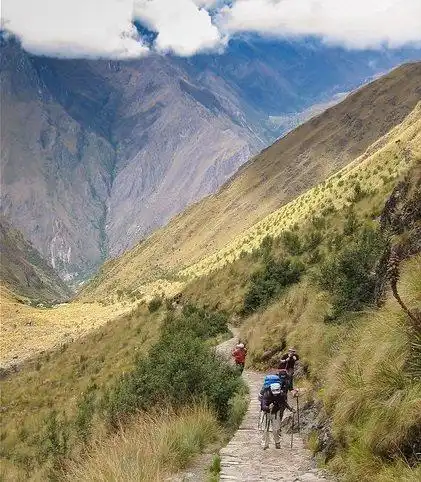
Main Elevation Points
Approximate elevations include:
- Km 82: around 2,700 m
- Wayllabamba: around 3,000 m
- Dead Woman’s Pass: 4,215 m
- Runkurakay: approximately 4,000 m
- Phuyupatamarca: approximately 3,650 m
- Machu Picchu: approximately 2,400 m
The total cumulative elevation gain is commonly estimated at around 2,000–2,400 m, depending on how the route is measured. Route documents can give somewhat different daily measurements because campsites and itinerary divisions vary.
Why Elevation Gain Matters
A trekker might see that the route is only about 43 km and assume it is relatively short. However, the constant elevation changes make it considerably more demanding than the distance suggests.
The trail includes:
- Long staircases
- Steep uphill sections
- High mountain passes
- Descents after major climbs
- Uneven stone surfaces
- Repeated elevation changes
This is why training should focus on strength, endurance and climbing, rather than only walking on flat ground.
How Hard Is the Inca Trail to Machu Picchu?
The Inca Trail difficulty is generally described as moderate to challenging, although the experience varies significantly from one traveler to another.
The route does not normally require technical mountaineering skills. The challenge comes primarily from altitude, long hiking days, uneven terrain, steep steps and cumulative fatigue.
The Most Difficult Parts
The biggest physical challenges are generally:
- Dead Woman’s Pass
- Long stone staircases
- High-altitude walking
- Day 3’s long distance
- Descents after steep climbs
- Carrying a personal backpack
A person who regularly hikes mountains may find the route manageable, while someone accustomed only to city walking may find it significantly harder.
Is the Inca Trail Suitable for Beginners?
Beginners can complete the trek if they prepare appropriately, but being a beginner does not mean being unprepared. A first-time trekker should build walking endurance before arriving in Peru and allow sufficient time for acclimatization.
The most useful preparation is consistent rather than extreme. Regular uphill walking, stair training, long weekend hikes and leg-strength exercises can make a substantial difference.
Inca Trail Map and Route
An Inca Trail map is useful because the route can be difficult to understand from distance figures alone. The classic trail begins around Km 82 and moves through valleys, mountain passes, archaeological sites and cloud forest before approaching Machu Picchu.
A simplified route looks like this:
Km 82 → Patallacta → Wayllabamba → Dead Woman’s Pass → Pacaymayo → Runkurakay → Sayacmarca → Phuyupatamarca → Wiñay Wayna → Sun Gate → Machu Picchu
The route’s geography explains why the trek feels so varied. You are constantly moving between different elevations and ecosystems.
Understanding the Route Before You Go
Study the route in four ways:
- Distance: How many kilometers are walked each day?
- Elevation: Where are the major climbs?
- Campsites: Where will you sleep?
- Archaeology: Which sites appear along the way?
Understanding these four elements makes it easier to anticipate the physical and cultural experience.
Inca Trail Permit and Booking
An Inca Trail permit is required. Unlike an ordinary hiking trail where you can arrive and begin walking, access is controlled because the route passes through a protected archaeological and natural environment.
The Peruvian Ministry of Culture manages the access system and establishes reservation procedures and capacity. For 2026, advance reservations opened in November 2025.
The Inca Trail also closes during February for annual maintenance, according to current access information.
How Far in Advance Should You Book?
There is no universal number of months that guarantees availability because demand varies by date and season. However, travelers who have fixed dates should plan as early as possible, especially for popular travel periods.
A practical planning sequence is:
- Choose your approximate travel month.
- Decide between the 4-day and 2-day routes.
- Check official availability.
- Select an authorized operator.
- Provide passport information accurately.
- Confirm your reservation and payment.
- Arrange accommodation and transportation around your trekking dates.
Do not assume that changing agencies will create new permit spaces. The available permits are controlled through the official system rather than being created independently by individual operators.
Inca Trail Cost
The Inca Trail cost varies according to the itinerary, operator, group size, season, inclusions and service level.
A complete trekking package can include considerably more than the basic trail access. Travelers should examine exactly what is included before comparing prices.
What Can Be Included?
Typical packages may include:
- Inca Trail permit
- Machu Picchu entrance associated with the trek
- Professional trekking guide
- Porters
- Camping equipment
- Meals
- Transportation to Km 82
- Return transportation
- Camping fees
- Emergency support
- Hotel accommodation before or after the trek, depending on the package
Why Are Prices Different?
Two tours can have noticeably different prices because they may offer different:
- Group sizes
- Porter services
- Food quality
- Camping equipment
- Hotel categories
- Transportation arrangements
- Guide-to-client ratios
- Private versus shared services
For this reason, the cheapest advertised Inca Trail price should not automatically be treated as the true final cost. Compare the complete list of inclusions.
Inca Trail Tours and Private Tours
Inca Trail tours range from shared group experiences to private trekking arrangements.
A group trek generally places travelers with other participants who have similar dates. A private Inca Trail tour is organized around a specific party and can provide more flexibility in walking rhythm, stops and overall experience.
Group Inca Trail Tours
Group tours are often appropriate for travelers who:
- Want to meet other hikers
- Prefer a structured itinerary
- Want a potentially lower package cost
- Are comfortable following a group schedule
Private Inca Trail Tours
A private tour can be useful for:
- Families
- Couples
- Friends traveling together
- Photographers
- Travelers with specific pacing preferences
- People celebrating a special occasion
The main advantage of a private arrangement is flexibility within the permitted route and itinerary. However, all travelers remain subject to the same official access regulations and conservation rules.
Inca Trail vs. Salkantay Trek
The Inca Trail vs. Salkantay Trek comparison is one of the most common decisions for travelers planning a trek to Machu Picchu.
The two routes provide very different experiences.
| Feature | Inca Trail | Salkantay Trek |
|---|---|---|
| Main attraction | Historic Inca road + archaeology | High mountains + diverse landscapes |
| Classic route | 4 days | Several itinerary options |
| Permits | Required | Different access arrangements |
| High point | 4,215 m | Higher on many itineraries |
| Archaeological sites | Numerous | Fewer on the standard route |
| Machu Picchu access | Classic route through Sun Gate | Usually approaches Machu Picchu from another direction |
| Availability | Limited | Generally more flexible |
The Salkantay route is known for spectacular mountain scenery and the presence of Salkantay Mountain, while the Inca Trail emphasizes the historic road, archaeological sites and the traditional approach to Machu Picchu.
Neither trek is simply a replacement for the other. They offer different landscapes, logistics and cultural experiences.
How to Prepare for the Inca Trail
Preparation should begin several weeks or months before the trek, depending on your existing fitness level.
The goal is not to become an elite athlete. Instead, build the ability to walk for several consecutive days while climbing and descending.
Cardiovascular Training
Useful activities include:
- Hiking
- Brisk walking
- Stair climbing
- Incline treadmill walking
- Cycling
- Running, if already part of your routine
Gradually increase duration rather than suddenly adding very long training sessions.
Strength Training
Focus particularly on:
- Quadriceps
- Hamstrings
- Glutes
- Calves
- Core
- Lower back
Squats, lunges, step-ups and controlled stair exercises are especially useful because of the large number of steps on the trail.
Acclimatization
Fitness does not eliminate the effects of altitude. Spending several days in Cusco or another high-altitude location before the trek can give your body time to adapt.
Altitude affects people differently, so avoid treating acclimatization as a guarantee that you will have no symptoms.
What to Pack for the Inca Trail
Packing for the Inca Trail requires balancing comfort, weather changes and backpack weight.
Essential Clothing
- Moisture-wicking hiking shirts
- Hiking pants
- Warm mid-layer
- Waterproof jacket
- Lightweight thermal layers
- Hiking socks
- Warm sleeping clothes
- Sun hat
- Warm hat or beanie
- Comfortable hiking boots
Personal Essentials
- Passport
- Water bottle or hydration system
- Sunscreen
- Sunglasses
- Insect repellent
- Personal medications
- Small first-aid supplies
- Headlamp
- Toiletries
- Hand sanitizer
- Personal snacks
Useful Hiking Equipment
- Trekking poles
- Small daypack
- Rain cover
- Dry bags
- Headlamp
- Reusable water bottle
- Battery pack
- Lightweight towel
What Not to Overpack
Every unnecessary item becomes extra weight during four days of hiking. Avoid taking multiple pairs of heavy shoes, excessive clothing or large toiletries.
A smart strategy is to separate what you need during the trek from what you can leave at your hotel in Cusco.
Best Time to Hike the Inca Trail
The Inca Trail experiences distinct wet and drier periods. Conditions can change quickly in the mountains, however, so no month guarantees perfect weather.
The rainy season generally extends from around November through March, while April through October is typically considered the drier period.
Dry Season
Advantages can include:
- More stable weather
- Better hiking conditions
- Clearer mountain views
- Less rain on many days
Potential disadvantages include:
- Higher demand
- More travelers
- Colder nights at altitude
Wet Season
Rain can produce:
- Muddy sections
- Slippery stone steps
- Cloudier views
- Wetter camping conditions
However, the mountains and cloud forest can also look exceptionally green during wetter periods.
Inca Trail Wildlife and Nature
Although archaeology is the main attraction, the Inca Trail also passes through several ecological zones.
As the trail climbs and descends, vegetation changes from high-altitude grasslands to humid cloud forest. The combination of elevation and vegetation creates opportunities to observe birds, insects and other Andean wildlife.
Travelers may encounter:
- Hummingbirds
- Andean birds
- Butterflies
- Orchids
- Bromeliads
- Ferns
- Dense cloud-forest vegetation
Wildlife sightings are never guaranteed, so the best approach is to walk quietly, observe carefully and avoid feeding or approaching animals.
Frequently Asked Questions About the Inca Trail
How long is the Inca Trail to Machu Picchu?
The classic Inca Trail is approximately 43 km (26 miles) and is normally completed in four days. Exact measurements can vary depending on the endpoint and itinerary.
How many days does the Inca Trail take?
The classic itinerary takes four days and three nights. The Short Inca Trail can be completed in approximately two days.
What is the highest point of the Inca Trail?
The highest point is Dead Woman’s Pass at approximately 4,215 m (13,828 ft).
Is the Inca Trail difficult?
It is generally considered a moderate-to-challenging trek. The greatest challenges are altitude, steep steps, long hiking days and accumulated fatigue.
Do I need a permit for the Inca Trail?
Yes. Access is regulated and permits are limited. Advance planning is strongly recommended.
Can I hike the Inca Trail without a tour?
Access to the regulated Inca Trail requires an authorized operator and guide arrangements rather than independent walk-in hiking.
When is the Inca Trail closed?
The Inca Trail closes every February for maintenance and conservation work.
Is the 2-Day Inca Trail easier than the 4-Day Inca Trail?
Generally, the 2-Day route avoids the highest mountain passes and covers a much shorter section, making it physically less demanding for many travelers. However, it still includes stairs and elevation changes.
What is the hardest day of the Inca Trail?
For many hikers, Day 2 is the hardest because it includes the ascent to Dead Woman’s Pass at 4,215 m.
Can beginners hike the Inca Trail?
Yes, beginners can complete it with appropriate preparation and acclimatization. Previous mountain-hiking experience is helpful but not necessarily required.
Is Salkantay harder than the Inca Trail?
The answer depends on the itinerary and the individual. Salkantay routes can reach higher elevations and involve different terrain, while the Inca Trail combines altitude with extensive stone steps and archaeological terrain.
What should I pack for the Inca Trail?
Prioritize lightweight hiking clothing, waterproof layers, warm layers, comfortable boots, hydration equipment, sun protection, personal medication, toiletries and essential trekking equipment.
How far ahead should I book the Inca Trail?
Travelers with fixed dates should book as early as practical because daily capacity is limited. The Peruvian Ministry of Culture has specifically encouraged early reservations to improve planning and manage demand.
Final Thoughts on the Inca Trail to Machu Picchu
The Inca Trail to Machu Picchu is much more than a 43-kilometer hike. It is a multi-day journey through changing elevations, ecosystems and archaeological landscapes, culminating in one of the world’s most recognizable ancient sites.
The classic 4-Day Inca Trail offers the fullest version of the experience, including high mountain passes and the traditional approach through the Sun Gate. The Short Inca Trail provides a shorter alternative for travelers who want an Inca Trail experience without the demanding high-altitude sections.
Successful preparation comes down to several fundamentals: reserve early, understand the elevation profile, train for stairs and consecutive hiking days, allow time to acclimatize, pack intelligently and respect the archaeological and natural environment.
Most importantly, the route should be approached as both a physical trek and a cultural journey. The ancient stones, mountain landscapes, archaeological sites and cloud forests are interconnected parts of the experience—and protecting that environment helps ensure that the Inca Trail remains available for future generations.