This guide groups Machu Picchu facts and history into clear topics, with sections for travelers, students, and younger readers. You will also find ten essential facts, five architectural highlights, a short Spanish-language explanation, and a collection of 100 facts about Machu Picchu for quick reference.
What Is Machu Picchu? Essential Facts and Location
A Remarkable Inca Settlement in Peru
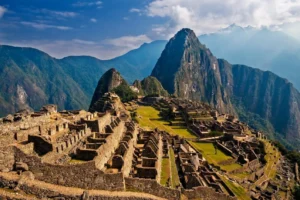
Machu Picchu is a fifteenth-century Inca archaeological site overlooking the Urubamba River valley in southeastern Peru. Often described as an Inca citadel, it contains residences, ceremonial buildings, terraces, stairways, and open plazas. Many scholars interpret it primarily as a royal estate associated with the emperor Pachacuti, although its ceremonial and administrative functions also mattered. It was not the capital of the Inca Empire; that distinction belonged to Cusco.
Where Is Machu Picchu in South America?
For anyone researching Peru Machu Picchu facts or South America Machu Picchu facts, its location is fundamental. The settlement stands in the Andes, approximately 80 kilometers northwest of Cusco in a straight line. Its elevation is around 2,430 meters, or 7,970 feet, above sea level. The surrounding landscape lies between high Andean environments and the Amazon basin, creating a humid mountain setting with steep slopes, dense vegetation, and exceptional biodiversity.
What Does the Name Mean?
Machu Picchu is commonly translated from Quechua as “old mountain” or “old peak.” Quechua was widely used across the Inca Empire and remains spoken today. The name also identifies a mountain beside the archaeological site, while the prominent peak behind the ruins in many photographs is Huayna Picchu. Researchers have debated the settlement’s original name, so the familiar modern name should not be treated as an unquestionable identification of what its Inca residents called it.
Machu Picchu Facts and History: Construction, Occupation, and Rediscovery
When Was Machu Picchu Built?
The traditional answer to “when was Machu Picchu built?” is around 1450, during the reign of Pachacuti. However, radiocarbon research published in 2021 suggests that occupation began by approximately 1420 and continued until around 1530. These findings indicate that the site’s chronology may be earlier than accounts based mainly on colonial-era historical sources suggested. Construction probably happened in stages rather than as a single project completed in one year.
Who Built Machu Picchu, and Why?
Inca builders created Machu Picchu using knowledge accumulated across generations of Andean engineering. Its construction required quarrying, stone shaping, terrace building, and careful planning around difficult terrain. The royal-estate interpretation connects the settlement with Pachacuti and his household, but religious activity, farming, and estate management also shaped daily life. Archaeological and biological evidence suggests that residents included people from different parts of the empire, rather than one isolated local community.
Understanding the Inca Empire
The Inca Empire, known as Tawantinsuyu, expanded across large parts of western South America during the fifteenth and early sixteenth centuries. Its rulers coordinated labor, agriculture, storage, and transportation through extensive administrative systems. Roads linked settlements across mountains and deserts, while knotted-string devices called khipus recorded information. These broader Inca Machu Picchu facts explain why a remote-looking mountaintop settlement could nevertheless be connected to a powerful regional network.
Why Was Machu Picchu Abandoned?
Machu Picchu fell out of regular use during the sixteenth century, around the period of Spanish conquest and the collapse of Inca political authority. Its abandonment cannot be reduced confidently to one documented event. Disrupted support networks, political upheaval, and population decline may all have contributed. There is no strong evidence that Spanish forces systematically destroyed the settlement. Its surviving buildings instead reflect centuries of exposure, vegetation growth, archaeological investigation, and conservation.
When Was Machu Picchu Discovered?
Hiram Bingham reached Machu Picchu on July 24, 1911, during an expedition in Peru. His publications and subsequent investigations brought the site widespread international attention. However, saying that he “discovered” an entirely unknown city is misleading: local people already knew the ruins, and farming families lived in the area. Local resident Melchor Arteaga helped guide Bingham there. The most accurate description is that Bingham helped introduce Machu Picchu to a global audience.
Why the “Lost City of the Incas” Label Is Misleading
The popular nickname makes an engaging headline, but Machu Picchu was not forgotten by everyone. Bingham was also searching for Vilcabamba, the final stronghold of Inca resistance, which was a different settlement. Distinguishing these places helps separate archaeological history from adventure storytelling. Machu Picchu’s importance does not depend on being completely “lost”; its architecture and landscape are remarkable without that romanticized claim.
5 Interesting Facts About Machu Picchu: Architecture and Engineering
1. Its Finest Stone Walls Use Precisely Fitted Blocks
One of the most interesting Machu Picchu facts concerns its masonry. In important buildings, shaped stone blocks fit closely together without mortar between their visible joints. Other structures use less finely finished stonework, so the entire settlement was not built in one uniform style. The quality of particular walls helps reveal differences in function and status, with exceptional craftsmanship often associated with significant ceremonial spaces.
2. Drainage Was as Important as Beautiful Buildings
Machu Picchu receives substantial rainfall, making water control essential. Builders created drains, channels, permeable terrace fills, and carefully graded surfaces to move water through the settlement. Much of this engineering is less visible than the temples, yet it helped protect the site against erosion and waterlogging. The ruins demonstrate that successful mountain architecture depends on understanding soil, slopes, and rainfall—not simply stacking stones.
3. Terraces Supported Farming and Stabilized Slopes
The stepped terraces are among Machu Picchu’s defining features. They created usable ground on steep hillsides, supported cultivation, and contributed to slope stability and drainage. Agricultural areas also separated and framed different parts of the settlement. However, visitors should not assume that local terraces supplied every resident’s needs. The estate probably relied partly on food and other resources brought through wider regional networks.
4. Buildings Were Designed for a Seismic Landscape
The Andes are earthquake-prone, and Inca construction shows considerable adaptation to that setting. Close-fitting masonry, inward-sloping walls, and trapezoidal openings contributed to structural resilience. These characteristics should not be simplified into a claim that every building was earthquake-proof. Nevertheless, the survival of substantial original fabric highlights the effectiveness of construction traditions developed through long experience in demanding mountain environments.
5. Mountains and Natural Rock Shaped the Design
Machu Picchu’s builders worked with the landscape rather than treating it as an empty construction platform. Natural outcrops became architectural features, and buildings followed the opportunities and constraints of the ridge. Mountains held spiritual significance in Andean traditions, helping explain the relationship between sacred spaces and surrounding peaks. These cool Machu Picchu facts reveal a settlement where engineering, landscape, and religious meaning were closely connected.
Temple of the Sun Machu Picchu Facts and Other Sacred Spaces
The Temple of the Sun
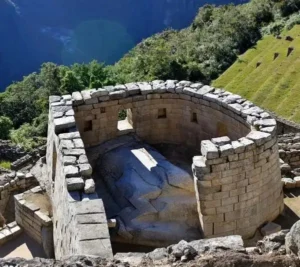
The Temple of the Sun is recognizable for its curved, finely constructed wall built around a natural rock formation. Its windows and orientation have prompted research into solar observations, including associations with the June solstice. Access to the interior is restricted for conservation. Although ceremonial interpretations are well supported, the precise details of every ritual remain uncertain because archaeology cannot recover a complete account of how the building was used.
The Chamber Beneath the Temple
A chamber beneath the Temple of the Sun is traditionally called the Royal Tomb. Its carefully worked stone and relationship with the temple suggest ceremonial importance. However, the name is an interpretation, not proof that a royal burial was discovered there. This distinction matters when learning Machu Picchu facts: familiar tourist labels sometimes express early archaeological theories rather than conclusions established beyond doubt.
The Intihuatana and Temple of the Three Windows
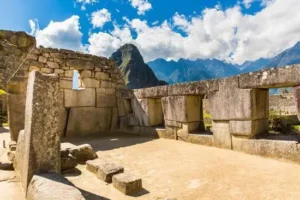
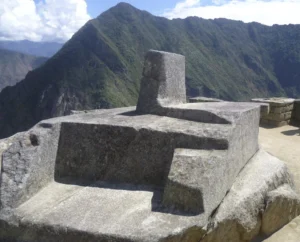
The Intihuatana is a carved stone monument whose name is often translated as “hitching post of the sun.” It is associated with solar and ceremonial interpretations, although calling it simply a clock overlooks uncertainty about its functions. The Temple of the Three Windows is another prominent ceremonial structure, notable for its large stone openings. Both illustrate the importance of monumental stonework while reminding visitors that exact symbolic meanings remain debated.
Historic Sanctuary of Machu Picchu Facts: Wildlife and Conservation
A UNESCO World Heritage Site
The Historic Sanctuary of Machu Picchu entered UNESCO’s World Heritage List in 1983. It is recognized for both cultural and natural significance, making it a mixed World Heritage property. The protected area covers approximately 32,592 hectares and includes much more than the famous ruins. Mountains, forests, archaeological remains, and connected ecosystems all contribute to its outstanding value and require coordinated protection.
Cloud Forests, Orchids, and Andean Wildlife
The sanctuary contains varied habitats across a substantial elevation range. Its forests support orchids, bromeliads, diverse birds, and mammals such as the Andean bear, also called the spectacled bear. Wildlife sightings are never guaranteed, and the animals should not be approached or fed. Llamas seen around the archaeological site are domesticated animals, not evidence that the sanctuary’s wild fauna consists mainly of familiar tourist favorites.
Why Responsible Tourism Matters
Heavy visitor demand places pressure on narrow paths, historic surfaces, and surrounding infrastructure. Conservation therefore involves designated routes, controlled access, monitoring, and ongoing maintenance. Visitors can help by following their assigned circuit, keeping off walls, leaving plants undisturbed, and taking rubbish away. Protecting Machu Picchu means conserving both the archaeological settlement and the living mountain environment that surrounds it.
10 Facts About Machu Picchu: A Quick Overview
These ten facts about Machu Picchu summarize the most useful information for a first introduction. They cover location, chronology, architecture, and heritage status without relying on exaggerated claims about mystery or discovery. Use them as a revision checklist, a starting point for a school presentation, or a compact refresher before exploring the detailed topics above.
- Machu Picchu is an Inca archaeological site in Peru.
- It stands approximately 2,430 meters above sea level.
- Evidence suggests occupation began by around 1420.
- It is commonly associated with Emperor Pachacuti.
- Cusco, not Machu Picchu, was the Inca capital.
- Local people knew the site before Bingham’s 1911 visit.
- Its terraces helped manage steep slopes and rainfall.
- Some prestigious buildings have mortarless, closely fitted masonry.
- The sanctuary received UNESCO World Heritage status in 1983.
- Its protected landscape includes forests and diverse wildlife.
Machu Picchu Facts for Kids, KS2, and Students
Machu Picchu Facts for Kids
Imagine building homes, staircases, and gardens high on a mountain without modern trucks or cranes. That is part of what makes Machu Picchu so exciting. Inca builders used stone, practical tools, and organized teamwork to create the settlement. Their terraces look like giant steps, while channels carried water where it was needed. The people who lived there belonged to a much larger empire connected by roads and messengers.
Machu Picchu Facts KS2: Classroom Learning
For Key Stage 2 pupils, Machu Picchu links geography, history, and science. Children can locate Peru on a map, identify the Andes, and compare mountain conditions with their own surroundings. A useful classroom activity is designing a hillside settlement with homes, growing areas, and drainage. This encourages pupils to think about real problems Inca builders faced rather than memorizing dates alone.
Questions for Discussion
- Why might builders use terraces on steep slopes?
- How could heavy rain damage a mountain settlement?
- Why is “discovered in 1911” an incomplete description?
- What can buildings tell us about people without explaining everything?
Machu Picchu Facts for Students: Evaluating Evidence
Older students should distinguish physical evidence from interpretation. A surviving water channel demonstrates water management, while identifying a building’s exact ceremonial purpose usually requires additional argument. Comparing radiocarbon dates, excavation findings, and colonial accounts shows how historical knowledge develops. Strong research also distinguishes Machu Picchu-specific evidence from general information about the Inca Empire, avoiding the assumption that every Inca custom is documented at this particular site.
Machu Picchu Facts in Spanish
Machu Picchu es un sitio arqueológico inca situado en la región de Cusco, en Perú. Se encuentra a unos 2.430 metros sobre el nivel del mar. Su construcción se relaciona tradicionalmente con el gobernante Pachacútec, aunque las investigaciones científicas siguen precisando su cronología. Hiram Bingham llegó en 1911, pero la población local ya conocía el lugar. El Santuario Histórico de Machu Picchu fue inscrito en la Lista del Patrimonio Mundial de la UNESCO en 1983 por su importancia cultural y natural.
100 Facts About Machu Picchu: Organized Reference List
This collection of 100 facts about Machu Picchu groups key information by theme. Some points summarize earlier explanations; others add context for revision and research. Approximate dates and interpretive labels remain qualified because responsible history should distinguish what is established from what is still being investigated.
Location, Names, and Landscape
Understanding the setting explains many features of the settlement. Elevation, steep terrain, and rainfall shaped construction, while the surrounding mountains contributed to its cultural significance.
- Machu Picchu is in southeastern Peru.
- It belongs to the Cusco region.
- Peru is on South America’s western side.
- The site occupies an Andean ridge.
- The Urubamba River flows below it.
- Its elevation is approximately 2,430 meters.
- Cusco stands higher than Machu Picchu.
- Huayna Picchu overlooks the ruins.
- Machu Picchu also names a neighboring mountain.
- The name comes from Quechua.
- “Old mountain” is a common translation.
- The original settlement name remains debated.
- The surrounding slopes are steep.
- Cloud forest occurs in the sanctuary.
- The region receives substantial seasonal rainfall.
- Mountain weather can change quickly.
- The landscape connects Andean and Amazonian environments.
- The site lies northwest of Cusco.
- Aguas Calientes is the nearby gateway town.
- Aguas Calientes is also called Machupicchu Pueblo.
History and Archaeological Research
Machu Picchu’s timeline combines archaeological dating with historical interpretation. Its international fame began in the twentieth century, but that modern story should not erase earlier local knowledge.
- Machu Picchu was built under Inca rule.
- Its development belongs to the fifteenth century.
- Around 1450 is the traditional construction date.
- Research suggests occupation by approximately 1420.
- Pachacuti is commonly associated with the estate.
- Construction likely occurred in multiple stages.
- The settlement contained residential areas.
- It also contained ceremonial spaces.
- Royal-estate interpretations are widely accepted.
- Its precise functions remain research topics.
- Residents included people with diverse geographic origins.
- Cusco was the Inca imperial capital.
- The settlement declined during the sixteenth century.
- Its abandonment lacks one conclusively documented cause.
- Bingham arrived on July 24, 1911.
- Local inhabitants already knew the ruins.
- Melchor Arteaga helped guide Bingham.
- Bingham’s work generated international attention.
- Machu Picchu is not Vilcabamba.
- Archaeological research continues to refine its history.
Architecture, Farming, and Engineering
The surviving structures demonstrate practical responses to a difficult environment. Prestigious masonry attracts attention, but terraces, foundations, and drainage were equally important to the settlement’s success.
- Builders used locally available stone.
- Granite forms much of the masonry.
- Important buildings contain finely dressed blocks.
- Some masonry joints contain no mortar.
- Other walls use rougher construction.
- Trapezoidal doorways appear throughout Inca architecture.
- Many walls slope slightly inward.
- Stone stairways connect different levels.
- Terraces create usable hillside surfaces.
- Some terraces supported crop cultivation.
- Terraces also contributed to slope stability.
- Drainage layers helped manage excess water.
- Channels carried water through the settlement.
- A spring supplied its principal water system.
- Fountains distributed water along planned routes.
- Plazas provided open communal space.
- Natural rock was incorporated into buildings.
- Original thatched roofs generally have not survived.
- The settlement probably received supplies from outside.
- Its engineering reflects adaptation to mountain conditions.
Temples, Culture, and Daily Life
Buildings and artifacts provide evidence of ceremonial and domestic activity, but they do not reveal every detail. Some familiar structure names are modern interpretations rather than confirmed Inca designations.
- The Temple of the Sun has curved masonry.
- It incorporates a natural rock outcrop.
- Its windows have attracted solar-alignment research.
- Its interior is protected through restricted access.
- The “Royal Tomb” label is interpretive.
- A royal burial there is not established.
- The Intihuatana is a carved stone monument.
- Its name refers to “hitching” the sun.
- Its exact functions remain debated.
- The Temple of the Three Windows survives.
- Mountains held importance in Andean religious traditions.
- Inca religion included reverence for the sun.
- Quechua remains spoken in the Andes.
- The empire was known as Tawantinsuyu.
- Khipus recorded information using knotted strings.
- Road networks linked distant Inca territories.
- Organized labor supported major building projects.
- Pottery helps archaeologists investigate everyday activity.
- Human remains provide evidence about past populations.
- Not every room’s purpose is securely identified.
Nature, Heritage, and Modern Visits
Machu Picchu’s protection extends beyond individual monuments. Conservation considers habitats, visitor movement, historic trails, and the long-term survival of a landscape valued around the world.
- The sanctuary is a UNESCO World Heritage property.
- It was inscribed in 1983.
- UNESCO recognizes cultural and natural significance.
- The property covers approximately 32,592 hectares.
- Its boundaries extend beyond the main ruins.
- Protected habitats vary with elevation.
- Orchids grow within the sanctuary.
- Bromeliads also occur in its forests.
- The sanctuary supports diverse birdlife.
- Andean bears inhabit the wider protected landscape.
- Wildlife sightings cannot be guaranteed.
- Llamas at the site are domesticated animals.
- Wild animals should never be fed.
- Visitor routes help manage pressure on ruins.
- Entry arrangements can change over time.
- Some mountain hikes require specific tickets.
- The classic Inca Trail requires advance planning.
- Visitors should not climb archaeological walls.
- Heavy rain can affect regional travel.
- Responsible tourism supports long-term heritage protection.
Visiting Machu Picchu: Turning Facts Into Understanding
Check Current Rules Before Booking
Tickets, circuits, entry times, and mountain-hike permissions are managed separately in ways that can change. Consult Peru’s official cultural authorities or authorized booking channels before arranging transport. Do not assume that every ticket includes every viewpoint or ceremonial area. Allow time for acclimatization when traveling through higher destinations such as Cusco, and remember that lower elevation does not eliminate altitude-related discomfort for every visitor.
Look Beyond the Famous Photograph
The most rewarding visit connects the panorama with its smaller details: a drainage outlet, a carefully shaped doorway, or a terrace supporting the hillside. Together, these features reveal skilled planning rather than an inexplicable mystery. Understanding Machu Picchu means appreciating the ingenuity of its builders, acknowledging the limits of present knowledge, and respecting the Peruvian communities and institutions responsible for its future.