The Short Inca Trail is a rewarding way to reach Machu Picchu on foot without committing to the full four-day trek. Following original Inca pathways through cloud forest, the route combines mountain scenery, archaeological sites, and an approach through Inti Punku, the Sun Gate. Most travelers choose a two-day package that pairs one substantial hiking day with an overnight stay in Aguas Calientes and a scheduled Machu Picchu visit the following morning.
This guide explains the route, distance, elevation gain, physical demands, and differences between one-day and two-day tours. It also covers permits, packing, weather, and how to compare operators. Machu Picchu entry circuits, ticket conditions, and transport schedules can change, so confirm the exact arrangements with your authorized tour operator before booking.
Short Inca Trail Overview: What to Expect
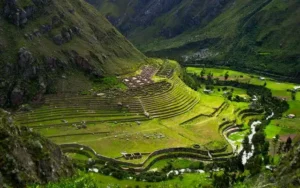
What Is the Short Inca Trail?
The Short Inca Trail is a regulated hiking route that usually begins at the railway access point known as Km 104, beside the Urubamba River. From there, hikers climb past Chachabamba, continue through cloud forest to Wiñay Wayna, and join the final section of the traditional Inca Trail toward the Sun Gate. Unlike the Classic Inca Trail, this itinerary generally avoids camping and multiple mountain passes, making it appealing to travelers with limited time who still want an authentic trail experience.
Why Choose the Short Inca Trail to Machu Picchu?
The appeal of the Short Inca Trail to Machu Picchu lies in the journey itself. Rather than arriving entirely by train and bus, you experience historic stone stairways, changing vegetation, and archaeological complexes before seeing Machu Picchu from above. It is particularly suitable for active travelers who enjoy walking but prefer a hotel overnight. However, “short” describes the itinerary’s duration, not an easy stroll: the main hiking day includes sustained climbing and many uneven steps.
Short Inca Trail at a Glance
These figures are useful planning estimates, not guaranteed measurements. Operators may calculate distance and ascent differently depending on where tracking begins and ends, the permitted route, and whether walking around archaeological sites is included. Ask your operator for the statistics of the specific itinerary you are purchasing.
- Usual starting point: Km 104 on the railway toward Machu Picchu.
- Typical hiking distance: Approximately 10–13 kilometers, or 6–8 miles.
- Typical hiking duration: Around 6–8 hours, including guided stops.
- Starting elevation: Approximately 2,100 meters above sea level.
- Highest main landmark: Inti Punku, approximately 2,720 meters.
- Common format: One hiking day within a two-day tour.
- Accommodation: Usually a hotel in Aguas Calientes.
- Access: Advance permits and an authorized guided arrangement are required.
Short Inca Trail Map, Route, and Archaeological Sites
Short Inca Trail Map: Understanding the Route
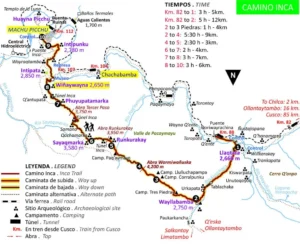
A Short Inca Trail map shows a route climbing away from the Urubamba River toward elevated terraces and cloud-forest slopes before approaching Machu Picchu through the Sun Gate. It is not a circular hike, and it does not begin in Aguas Calientes. The simplified route below explains the sequence of major landmarks; it is not a navigation map. Your guide manages trail access, timing, and the authorized route through the protected area.
Typical route: Cusco or the Sacred Valley → Ollantaytambo railway station → train to Km 104 → Chachabamba → Wiñay Wayna → Inti Punku → designated Machu Picchu arrival route → bus to Aguas Calientes.
Km 104 and Chachabamba
The hike begins after the train journey to Km 104, where your group disembarks at the designated access point and completes entry formalities. Nearby Chachabamba introduces the archaeological character of the walk, with stone structures in a greener, warmer environment than Cusco. This opening section also establishes the day’s rhythm: guided interpretation followed by a gradual but demanding climb. Keep your passport accessible rather than buried at the bottom of your pack.
The Climb to Wiñay Wayna
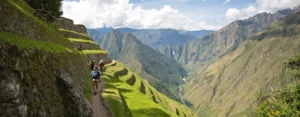
From the lower valley, the path climbs through changing vegetation toward Wiñay Wayna. This is usually the most sustained uphill portion, combining exposed stretches, shaded forest, and stone steps. Wiñay Wayna is a major highlight, with agricultural terraces and buildings set against steep mountain slopes. Its elevation is commonly given as approximately 2,650 meters. Allow energy for exploring the site itself, where additional stairs can make the effort feel greater than the trail distance suggests.
Inti Punku: The Sun Gate Approach
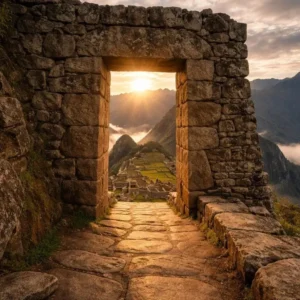
Beyond Wiñay Wayna, the trail continues toward Inti Punku, or the Sun Gate, at approximately 2,720 meters. The approach includes more uneven stonework and a final climb before the view opens toward Machu Picchu. Clear weather can provide a memorable panorama, but clouds sometimes obscure it completely or reveal it gradually. Because short-trail groups generally arrive later in the day, this is not normally a sunrise experience.
Descending Toward Machu Picchu
After Inti Punku, hikers descend toward the Machu Picchu sanctuary on the authorized arrival route. This approach is distinct from a full guided visit through the archaeological city. Depending on current regulations and ticket arrangements, your first-day access may focus on designated viewpoints and onward exit. Confirm the precise access included rather than assuming that an Inca Trail permit provides unrestricted exploration of every terrace, building, or photographic location.
How Long Is the Short Inca Trail?
Short Inca Trail Distance and Walking Time
How long is the Short Inca Trail? Most standard itineraries involve approximately 10–13 kilometers of hiking and take around 6–8 hours with breaks. The range reflects differences in measurement, group pace, archaeological stops, and authorized access near Machu Picchu. Fit walkers should still plan for a full trail day rather than treating the route as a quick distance challenge. Steps, humidity, and frequent sightseeing make progress slower than on a flat recreational path.
Total Travel Time Versus Time on the Trail
Your day begins well before the hiking starts. Transfers from Cusco or a Sacred Valley hotel, railway check-in, the train journey, and permit checks all add time. After the walk, you must account for the authorized exit, bus queues, hotel check-in, or onward trains. A one-day itinerary can therefore become a very long travel day, while a two-day format separates the hike from the main Machu Picchu visit and return journey.
Short Inca Trail Difficulty and Elevation Gain
Short Inca Trail Difficulty: Is It Hard?
The Short Inca Trail difficulty is generally best described as moderate for reasonably fit hikers, although some travelers find it strenuous. The challenge comes from sustained uphill walking, irregular stone stairs, heat, humidity, and the length of the day. There is no technical climbing on the standard route, but sure footing matters. Someone comfortable walking several hours on rolling terrain may manage well; someone accustomed only to short, flat walks should prepare more deliberately.
Short Inca Trail Elevation Gain
The Short Inca Trail elevation gain is often estimated at approximately 600–800 meters of cumulative ascent, although published figures vary and some route recordings fall outside that range. Starting around 2,100 meters and reaching roughly 2,720 meters gives a net difference of about 620 meters. Cumulative ascent is different: it includes climbing regained after descents. Ask whether an operator’s figure represents total ascent or simply the difference between the starting and highest elevations.
Altitude and Acclimatization
The route is lower than Cusco, which sits at roughly 3,400 meters, and much lower than the Classic Inca Trail’s highest pass. Nevertheless, altitude may still affect comfort and performance, particularly after a rapid arrival from sea level. Allow time to adjust before strenuous activity, eat normally, and maintain hydration. Headache, nausea, or unusual fatigue deserve attention; tell your guide if symptoms develop. Travelers with relevant medical conditions should seek individualized advice before booking.
Stone Steps, Descents, and Exposure
Many hikers find the stairs more demanding than the altitude. Step heights vary, wet stones can become slippery, and repeated descents place pressure on knees. Some sections have steep slopes beside the path, which can trouble travelers uncomfortable with heights. Walk at a controlled pace and follow your guide’s instructions. If you depend on trekking poles, confirm current rules for the trail and archaeological areas before traveling, including any protective-tip or accessibility requirements.
How to Train for the Short Inca Trail Hike
Prepare for the Short Inca Trail hike with regular walks that gradually increase in duration and climbing. Hills, stairs, and uneven paths are more useful than distance alone. Practice carrying the daypack you intend to use, and include basic leg-strength and balance exercises. The goal is steady endurance rather than speed. If possible, complete several longer walks before departure so that footwear, pacing, and snack preferences are already familiar.
- Build toward several hours of continuous walking at a comfortable pace.
- Include uphill and downhill sessions rather than training only on flat ground.
- Break in footwear and test socks before departure.
- Reduce training intensity immediately before the trip so you arrive rested.
Short Inca Trail 2 Days: The Standard Itinerary
Why Choose a 2 Day Short Inca Trail Tour?
The Short Inca Trail 2 days itinerary usually offers the most balanced experience. You spend the first day hiking, sleep in Aguas Calientes, and visit Machu Picchu on a reserved circuit the next day. A 2 day Short Inca Trail package does not normally mean two full days of trekking. Instead, it separates the physically demanding approach from the more focused archaeological visit, reducing the pressure of catching a return train immediately after the hike.
Day 1: Train to Km 104 and Hike to Machu Picchu
The first day starts with an early transfer or meeting point, followed by the train to Km 104. After entry checks, your guide leads the walk through Chachabamba and toward Wiñay Wayna. Lunch arrangements vary: some tours provide a packed meal, while others specify different arrangements. The afternoon usually includes the Sun Gate approach and descent along the authorized arrival route before the bus journey to Aguas Calientes.
Day 1 Evening: Overnight in Aguas Calientes
After the hike, a hotel stay provides time to shower, eat, and recover. Check whether dinner is included and whether the hotel has practical arrangements for early breakfast and luggage storage. Your guide should explain the following day’s entry time, meeting point, and bus procedures. Avoid assuming you can enter Machu Picchu at any convenient hour: the second day is organized around the ticket and circuit reserved for your group.
Day 2: Guided Machu Picchu Visit and Return
The second day generally involves taking a bus to Machu Picchu and following the designated sightseeing circuit with your guide. Access to individual sectors depends on the booked ticket and current visitor regulations. After the visit, travelers return to Aguas Calientes for the train and onward transfer. Additional hikes, such as Huayna Picchu or Machu Picchu Mountain, require separate consideration, suitable availability, and a realistic schedule; they should never be assumed to be included.
Short Inca Trail 1 Day: Benefits and Limitations
How a One-Day Short Inca Trail Works
A Short Inca Trail 1 day itinerary compresses the hike and return transport into the same day. It generally involves an early start, the Km 104 trail, the Sun Gate approach, and a late return toward the Sacred Valley or Cusco. Availability depends on authorized access and workable transport connections. Although attractive to travelers with limited time, this format offers less room for delays, slower walking, or extended sightseeing.
Does the One-Day Tour Include a Full Machu Picchu Visit?
Not necessarily. Some products emphasize the trail and panoramic arrival rather than a comprehensive visit through the archaeological city. Others may describe additional access, but you should request the exact ticket, circuit, entry time, and expected guided duration in writing. The crucial distinction is between reaching Machu Picchu on the trail and touring its principal archaeological sectors. These are related experiences, but they are not interchangeable.
One Day or Two Days: Which Should You Choose?
Choose two days if Machu Picchu is a major trip priority, you prefer a less compressed schedule, or you want to separate hiking from sightseeing. Consider one day only when time is limited and you understand the access and transport trade-offs. Both formats can include the same demanding core hike, so choosing one day does not reduce the physical effort. It mainly removes the overnight stay and changes how the surrounding logistics are organized.
Booking a Short Inca Trail Tour to Machu Picchu
Permits, Passport Details, and Authorized Operators
A Short Inca Trail tour to Machu Picchu requires regulated trail access arranged through an authorized operator; this is not a route to undertake independently with an ordinary Machu Picchu entrance ticket. Provide your passport details accurately and ask what happens if you renew your passport before travel. Availability is limited, and desirable dates can sell out. Reserve once your travel dates are firm rather than relying on last-minute spaces.
What a Short Inca Trail Tour Should Include
Compare each Short Inca Trail tour by its written inclusions rather than its headline price. Packages can differ substantially in train service, transfer arrangements, hotel category, meal provision, guiding, and Machu Picchu access. A lower price may represent fewer included services rather than better value. Ask for a day-by-day itinerary that identifies each ticket and transport segment, especially if your trip starts in the Sacred Valley but ends in Cusco.
- Trail permit and authorized guide.
- Train service with the appropriate Km 104 access arrangement.
- Transfers before and after the railway journey.
- Meals, drinking-water arrangements, and dietary accommodations.
- Bus tickets between Machu Picchu and Aguas Calientes.
- Hotel category and room arrangements for two-day tours.
- Exact Machu Picchu admission and guided circuit, where included.
- Emergency procedures and communication arrangements.
Understanding Tour Prices and Booking Conditions
Prices vary with group size, private versus shared guiding, train category, accommodation, and season. Request a current itemized quote rather than relying on an old advertised rate. Check cancellation conditions carefully because permits, rail tickets, and entrance reservations may have restrictive change policies. Travel insurance should cover the hiking activity and elevations involved, as well as relevant disruption risks. Ask the operator how missed trains, trail closures, or illness are handled.
Best Time to Hike the Short Inca Trail
Dry Season and Wet Season Conditions
The broadly drier period, usually from May through September, is popular for hiking around Machu Picchu. However, cloud forest weather remains changeable, and rain is possible throughout the year. Wetter months can bring greener scenery but also muddier or slipperier conditions and less predictable views. April and October may offer appealing transitional conditions, although neither guarantees sunshine. Choose dates according to your wider itinerary, tolerance for rain, and permit availability rather than promises of perfect weather.
February Closures and Schedule Disruptions
The Inca Trail network, including the standard short route, normally closes during February for maintenance. Machu Picchu itself generally operates separately, so visiting the archaeological site by train and bus may still be possible, subject to current conditions. Always verify official arrangements for your year of travel. Severe weather, maintenance, railway disruption, or other events can affect access outside February as well, making some flexibility in your Peru itinerary useful.
What to Pack for the Short Inca Trail
Daypack Essentials
Pack for a full day of walking in variable conditions while keeping the load manageable. You need reliable rain protection even during the drier season, along with sun protection for exposed sections. Your operator should explain water availability, meal arrangements, and luggage handling. Do not assume that untreated streams are safe drinking sources or that supplies will be available whenever needed. Keep travel documents protected from rain and easy to reach at checkpoints.
- Original passport matching the reservation details.
- Comfortable hiking shoes with dependable grip.
- Lightweight rain jacket and a waterproof pack liner.
- Breathable clothing and a warm layer.
- Sun hat, sunglasses, sunscreen, and insect repellent.
- Sufficient drinking water and convenient snacks.
- Personal medication and a small blister-care kit.
- Phone or camera, with modest backup power if needed.
Overnight Bags, Toilets, and Practical Comfort
For two-day trips, confirm whether you carry overnight belongings or whether separate luggage arrangements are available. Train baggage restrictions and hotel logistics vary, so bring only what your operator approves. Toilet access along the trail is limited; ask where facilities are located and carry appropriate personal supplies. Pack out litter, including wipes. A small change of clothing can improve the evening considerably, but heavy toiletries and unnecessary electronics add weight without improving the hike.
Frequently Asked Questions About the Short Inca Trail
Can Beginners Hike the Short Inca Trail?
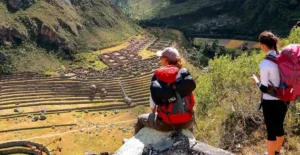
Yes, beginners with reasonable fitness and preparation can often complete it successfully. Previous multi-day trekking experience is not essential, but the ability to walk uphill for extended periods is important. Be honest with your operator about mobility limitations, knee problems, or concerns about heights. A private guide may allow more individualized pacing, although permit conditions, daylight, and transport schedules still impose practical limits on how slowly a group can travel.
How Does It Compare With the Classic Inca Trail?
The Classic Inca Trail involves several trekking days, camping, and substantially higher mountain passes. The short route focuses on the final approach, with Wiñay Wayna and the Sun Gate among its principal highlights. It offers less time immersed in remote mountain landscapes but requires a smaller time commitment and generally less sustained endurance. Choose according to the experience you want, rather than assuming the shorter option is merely an inferior version of the longer trek.
Is the Short Inca Trail Machu Picchu Experience Worth It?
The Short Inca Trail Machu Picchu experience is especially worthwhile if the approach matters as much as the destination. Walking through cloud forest and visiting archaeological sites creates context that a direct train-and-bus arrival cannot fully replicate. For travelers who dislike prolonged walking or have significant mobility constraints, a conventional visit may be more enjoyable. The best choice is the one that matches your interests and physical comfort, not the most demanding itinerary available.
Final Planning Advice
The Short Inca Trail combines a substantial day hike with one of the most memorable approaches to Machu Picchu. For most travelers, the two-day format provides the strongest balance of effort, recovery, and sightseeing. Prepare for stairs and changing weather, book through an authorized operator, and verify exactly which Machu Picchu access is included. With realistic expectations and clear logistics, this compact trek can become a highlight of a journey through Peru.