The classic Inca Trail distance is approximately 42–43 kilometers (26–27 miles), usually completed over four days. The shorter route covers approximately 10–12 kilometers (6–7.5 miles) of trekking and is commonly sold as a two-day experience that includes a separate Machu Picchu visit. Exact measurements vary with campsites, permitted access routes, and whether walking inside the archaeological site is included.
However, mileage alone does not explain how demanding this trek can feel. High altitude, steep stone stairs, long descents, and uneven surfaces make the Inca Trail more challenging than a similar distance on a low-elevation hiking route. Understanding the Inca Trail distance and elevation together is the best way to choose a suitable itinerary and prepare realistically.
This guide groups the main distance questions by route, daily stages, elevation, and trip planning. You will find a practical breakdown of the classic four-day trek, the short two-day option, and the factors that can change your actual walking distance.
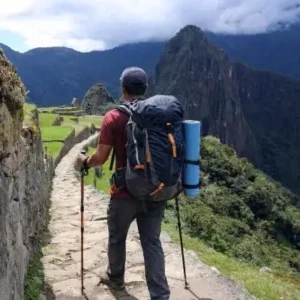
Inca Trail Distance at a Glance
Most searches for “Inca Trail distance” refer to the classic trek beginning near Kilometer 82 of the railway corridor in Peru’s Sacred Valley. Nevertheless, the name also appears in shorter itineraries and extended trekking packages. Before comparing tours, check the starting point, number of trekking days, campsite sequence, and included Machu Picchu visit.
| Route or itinerary | Approximate trekking distance | Typical schedule | Highest point |
|---|---|---|---|
| Classic Inca Trail | 42–43 km / 26–27 miles | 4 days, usually 3 nights camping | Dead Woman’s Pass: about 4,215 m / 13,829 ft |
| Classic route over 5 days | Broadly similar to the classic route | 5 days with different stage divisions | Dead Woman’s Pass: about 4,215 m / 13,829 ft |
| Short Inca Trail | About 10–12 km / 6–7.5 miles | Usually 1 main trekking day | Sun Gate area: about 2,720 m / 8,924 ft |
| Two-day Inca Trail package | About 10–12 km of trail, plus sightseeing walking | Trail hike followed by a Machu Picchu visit | Depends on included sightseeing and optional hikes |
Planning note: These are rounded route estimates, not guaranteed GPS totals. Your operator’s confirmed itinerary is the best reference for assigned campsites, daily distances, entry arrangements, and additional walking.
Classic Inca Trail Distance and Route Overview
Classic Inca Trail Distance: Where the Trek Starts and Ends
The classic Inca Trail distance is generally quoted as approximately 42–43 kilometers from the Kilometer 82 starting area to Machu Picchu. The route follows mountain paths, stone staircases, and sections of historic Inca road through valleys, high passes, and cloud forest. It is a point-to-point trek rather than a loop, so returning to the trailhead is not part of the standard hiking distance.
Along the way, trekkers encounter archaeological sites such as Llactapata, Runkurakay, Sayacmarca, Phuyupatamarca, and Wiñay Wayna, depending on the itinerary and access conditions. These stops help explain why walking time is longer than a simple mileage calculation suggests. Guides usually allow time for interpretation, photographs, meals, and breaks between the main trekking stages.
4 Day Inca Trail Distance: The Standard Trekking Schedule
The 4 day Inca Trail distance is essentially the classic route divided into four stages, not a separate trail. Most itineraries include three nights of camping and arrival at Machu Picchu on the fourth day. Distance is distributed unevenly: one day may involve the hardest climb, another the longest mileage, and the final morning a shorter approach followed by sightseeing.
This distinction matters when assessing difficulty. Dividing 43 kilometers by four produces a modest daily average, but that average hides the concentration of uphill work around the highest pass. A four-day itinerary also leaves less flexibility for extra rest than a slower schedule, making prior fitness and acclimatization particularly valuable.
Machu Picchu Inca Trail Distance: What the Total Includes
The phrase “Machu Picchu Inca Trail distance” usually means the trekking distance to the archaeological sanctuary, not the total distance traveled from Cusco. Transfers to the starting area, trains, and buses are separate. Likewise, walking around Machu Picchu, descending toward Aguas Calientes, or completing an additional mountain hike may not be included in an operator’s headline trail distance.
When comparing packages, ask whether the quoted total ends at the Sun Gate, the main archaeological area, or another meeting point. Small differences between published totals often reflect measurement choices rather than substantially different routes. The useful question is not which estimate is exact to the decimal, but what walking your itinerary actually requires.
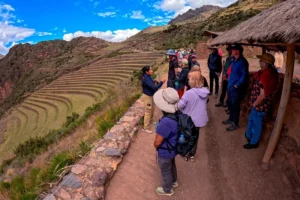
Inca Trail Distance per Day: Four-Day Breakdown
The Inca Trail distance per day depends on campsite allocation and the operator’s schedule. The example below uses a traditional stage pattern with overnight stops around Wayllabamba, Pacaymayo, and Wiñay Wayna. Some departures instead use camps such as Ayapata or Chaquicocha, shifting both mileage and climbing between days.
| Day | Illustrative stage | Approximate distance | Typical walking time | Main challenge |
|---|---|---|---|---|
| 1 | Kilometer 82 to Wayllabamba area | 12 km / 7.5 miles | 5–7 hours | Adjusting to altitude and sustained walking |
| 2 | Wayllabamba to Pacaymayo via Dead Woman’s Pass | 11 km / 6.8 miles | 6–8 hours | Highest pass and prolonged climbing |
| 3 | Pacaymayo to Wiñay Wayna area | 16 km / 9.9 miles | 7–9 hours | Long mileage, stairs, and major descent |
| 4 | Wiñay Wayna area to Machu Picchu | 4 km / 2.5 miles | About 2–3 hours before extended sightseeing | Early start and remaining stone steps |
These rounded figures total approximately 43 kilometers. Walking times are broad estimates and can increase with weather, crowding, group pace, archaeological stops, or a different campsite sequence.
Day 1: Kilometer 82 to the Wayllabamba Area
The first day commonly covers approximately 12 kilometers, beginning around 2,600–2,700 meters above sea level and finishing near 3,000 meters if camping around Wayllabamba. The opening sections introduce the valley landscape and provide time to establish a comfortable rhythm. Although often described as the easier day, it still includes uneven terrain, uphill stretches, and several hours on your feet.
A measured pace is more useful than trying to arrive first. Drink regularly, eat the provided meals and snacks, and make small equipment adjustments before discomfort becomes a problem. If your itinerary continues to a higher campsite, expect a more demanding finish than this example suggests.
Day 2: Dead Woman’s Pass and the Highest Elevation
The second day in this stage pattern covers approximately 11 kilometers and crosses Dead Woman’s Pass, or Warmiwañusca, at about 4,215 meters. Despite being shorter than day three, it is frequently the hardest day because of the sustained ascent and reduced oxygen availability. The climb involves numerous steps and can feel progressively slower as elevation increases.
Why This Shorter Stage Can Take Most of the Day
Starting near 3,000 meters means ascending roughly 1,200 vertical meters to the pass before descending toward Pacaymayo, around 3,600 meters. This is why daily distance alone can be misleading. Breaks, breathing rate, weather exposure, and the steep descent all influence the schedule. Maintain a pace that allows controlled breathing and tell your guide promptly about concerning symptoms.
Day 3: Pacaymayo to Wiñay Wayna
The third day commonly involves approximately 16 kilometers and is often the longest walking stage. The route climbs again toward the Runkurakay pass area, continues through archaeological landscapes, and eventually descends into greener cloud forest. Its combination of scenery, historic sites, and changing vegetation makes it a highlight, but the repeated climbs and descents require sustained effort.
The long descent deserves particular attention. Stone steps can be irregular, steep, or slippery, placing stress on knees and tired quadriceps. Use controlled steps rather than rushing downhill. Trekking poles can help with balance, provided they meet the operator’s and site authorities’ requirements, including appropriate protective tips where required.
Day 4: Wiñay Wayna to Machu Picchu
The final trekking stage is relatively short, often approximately 4 kilometers in this illustrative schedule. It follows the approach toward Intipunku, the Sun Gate, before continuing toward Machu Picchu. Short does not mean effortless: there are still stairs and narrow trail sections, and the early start can make tired legs feel heavier than expected.
Arrival arrangements, checkpoint opening times, and visitor routing affect the morning. Do not assume every trek includes a sunrise view from the Sun Gate. After reaching Machu Picchu, sightseeing adds further walking, standing, and stairs, so keep water, sun protection, and a light layer accessible.
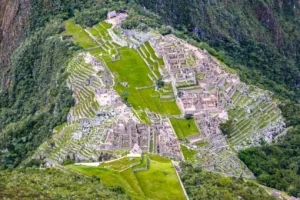
Why the Inca Trail Distance Each Day Changes Between Tours
The Inca Trail distance each day changes primarily because overnight camps are not identical across departures. Moving the first campsite farther uphill can shorten the next morning’s ascent. Staying at a different third-night location can substantially lengthen the final approach. Guides may also adjust pacing and stops in response to conditions within the permitted itinerary.
- Campsite assignments: These determine the length and elevation profile of each stage.
- Measurement methods: GPS devices and mapped routes may produce different totals.
- Included detours: Archaeological visits and campsite access add walking.
- Final-day arrangements: Sightseeing circuits and transfers affect total steps.
Inca Trail Distance and Elevation: Understanding the Difficulty
Key Elevations Along the Classic Route
Evaluating the Inca Trail distance and elevation together gives a more realistic picture of the trek. The starting point is already high enough for some travelers to notice altitude effects, while the highest pass rises well above 4,000 meters. Machu Picchu itself sits lower than several overnight camps, but reaching it requires crossing much higher terrain first.
- Kilometer 82 starting area: Approximately 2,600–2,700 meters.
- Wayllabamba area: Approximately 3,000 meters.
- Dead Woman’s Pass: Approximately 4,215 meters.
- Pacaymayo area: Approximately 3,600 meters.
- Runkurakay pass area: Approximately 3,970 meters.
- Phuyupatamarca area: Approximately 3,600–3,700 meters.
- Machu Picchu: Approximately 2,430 meters.
Inca Trail Distance and Elevation Gain: Cumulative Climbing
The Inca Trail distance and elevation gain cannot be calculated simply by subtracting the starting elevation from the highest point. Cumulative elevation gain adds together every uphill section, including climbs after substantial descents. Across the classic route, published estimates commonly fall roughly in the 2,000–3,000-meter range, although tracking methods, campsite locations, and included walking can produce different figures.
Elevation Gain Is Different From Maximum Altitude
Maximum altitude describes the highest elevation reached; elevation gain describes the total vertical climbing completed. Both matter for different reasons. Altitude affects oxygen availability and acclimatization, while cumulative ascent reflects muscular and cardiovascular workload. A route can finish lower than it begins and still involve substantial climbing, which is exactly why an elevation profile is more informative than endpoint elevations.
How Altitude Changes Hiking Speed and Comfort
At high elevation, a familiar walking pace may feel unexpectedly strenuous. Fitness helps with physical work but does not guarantee protection against altitude illness. Plan acclimatization time before departure, commonly at least two or three days in the region, while recognizing that some travelers need longer. A gradual itinerary and professional medical advice are especially important if you have relevant health conditions.
Headache accompanied by nausea, dizziness, or unusual fatigue should be reported to your guide. Do not continue ascending with worsening symptoms. Confusion, difficulty walking normally, or breathlessness at rest require urgent attention and descent. Avoid treating symptoms as merely a consequence of the day’s mileage.
Short Inca Trail Distance and the Two-Day Route
Short Inca Trail Distance: Kilometer 104 to Machu Picchu
The short Inca Trail distance is usually approximately 10–12 kilometers, beginning near Kilometer 104 and joining the final portion of the classic route. The hike commonly includes Chachabamba, the climb toward Wiñay Wayna, and the approach through the Sun Gate. It provides historic trail walking without the classic route’s highest passes or three-night camping schedule.
Despite its shorter length, this is a genuine mountain hike. Expect prolonged uphill walking, stone staircases, and potentially warm, humid conditions. The route generally starts around 2,100–2,200 meters and climbs toward the Sun Gate area at roughly 2,720 meters before descending toward Machu Picchu. Allow approximately six to eight hours, including breaks and visits.
2-Day Inca Trail Distance: What Happens on Each Day?
The 2-day Inca Trail distance usually refers to one substantial trekking day plus a second day visiting Machu Picchu. Most packages do not divide the 10–12-kilometer trail section into equal halves. Instead, hikers complete the short trail on day one, spend the night in Aguas Calientes, and return to the archaeological site for their booked visit on day two.
Day One: Trail Walking and the Sun Gate Approach
The first day contains most of the hiking effort. You travel to the designated starting point, pass the required checks, and climb toward Wiñay Wayna before continuing toward Machu Picchu. Access and sightseeing on arrival depend on the specific permit and ticket arrangements. Confirm these details rather than assuming the afternoon arrival includes a complete guided circuit.
Day Two: Machu Picchu Sightseeing and Additional Walking
The second day generally centers on the reserved Machu Picchu circuit. Walking distance varies according to that circuit, bus use, and any separately booked mountain hike. Huayna Picchu and Machu Picchu Mountain are additional activities with their own access requirements; neither is automatically included in the short trail’s headline distance. Check availability, timing, and physical demands before adding one.
Is the Short Inca Trail Easier?
The short route is generally less demanding overall because it involves fewer trekking kilometers, lower maximum elevation, and no classic high-pass crossing. However, its climbing is concentrated into a single day. It is a good option for travelers with limited time who can comfortably manage several hours of uphill hiking, but it should not be described as an easy stroll.
Choosing Between the Classic and Short Inca Trail
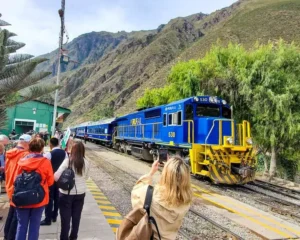
Choose the Classic Route for a Multi-Day Trek
The classic route suits travelers who want an immersive camping experience, varied ecosystems, high mountain passes, and several days of archaeological exploration. Its challenge comes from accumulated fatigue as much as individual stages. You should be comfortable hiking on consecutive days, sleeping in mountain conditions, and handling a schedule shaped by permits, campsites, and group pace.
Choose the Short Route for a More Compact Experience
The short route suits visitors who want to reach Machu Picchu on foot without committing to the entire classic trek. Hotel accommodation and a lower maximum altitude can make logistics more comfortable. Nevertheless, choose it based on your ability to complete the main hiking day, not simply because the package says “two days.” Most of the trail distance remains concentrated into one sustained effort.
How to Prepare for the Inca Trail Distance
Train for Consecutive Hiking Days and Stairs
Preparation should reflect the trail’s terrain rather than mileage alone. Build up through regular walks, hill sessions, and longer hikes, ideally starting several weeks or months before departure. Include back-to-back hiking days when practical so you learn how your legs recover overnight. Stair climbing is particularly relevant, but outdoor hikes also develop balance and confidence on uneven surfaces.
- Increase distance and climbing gradually rather than making sudden jumps.
- Practice with the daypack and footwear you intend to use.
- Include controlled downhill walking to prepare for long descents.
- Add strength exercises such as step-ups, squats, and calf raises.
- Leave room for recovery and adjust training around injuries or medical advice.
Pack for Comfort Without Carrying Unnecessary Weight
A heavy daypack makes every kilometer and staircase harder. Carry the essentials your operator specifies, including waterproof layers, insulation, sun protection, drinking water, snacks, personal medication, and documents. Confirm what porters transport and what must remain with you during the day. Break in footwear beforehand and address rubbing early rather than waiting for a blister to develop.
Match Your Pace to the Terrain and Weather
A steady, sustainable pace is usually more effective than alternating fast bursts with long recovery stops. Rain can make stone paving slippery, while sunshine increases heat exposure on open sections. Dry-season conditions do not guarantee a dry trek, and mountain weather can change quickly. Build flexibility into your expectations instead of treating a published walking time as a deadline.
Permits, Seasonal Closures, and Booking Details
Confirm the Route Before Booking Your Inca Trail Tour
Access to the regulated Inca Trail requires the appropriate permits and an authorized operator; this is not a standard independent backpacking route. Availability is limited, and popular departure dates can fill well ahead. The trail is normally closed during February for maintenance, but always verify current official arrangements, exceptional closures, and your operator’s cancellation terms before booking travel.
Request a written itinerary showing campsites, approximate daily distances, highest elevations, porter arrangements, and Machu Picchu admission details. Also ask whether quoted hiking times include breaks. These details make tour comparisons more meaningful than comparing price or total distance alone.
Frequently Asked Questions About Inca Trail Distance
How Many Miles Is the Inca Trail?
The classic Inca Trail is approximately 26–27 miles, or 42–43 kilometers. The short route is approximately 6–7.5 miles, or 10–12 kilometers. These figures describe the main trekking routes; sightseeing, campsite access, or optional walking can increase your personal total.
Which Day of the Classic Inca Trail Is Hardest?
In the traditional four-day schedule, day two is often considered hardest because it crosses Dead Woman’s Pass. Day three is commonly longer and includes demanding descents. Different campsite allocations can shift the difficulty, so review the elevation profile alongside the daily mileage.
Can Beginners Complete the Inca Trail?
Some beginners complete it successfully with preparation, acclimatization, and sensible pacing. Previous technical mountaineering experience is not normally necessary, but endurance and comfort on steep, uneven paths matter. First-time hikers should build experience through progressively longer walks before choosing the classic itinerary.
Final Takeaway: Distance Is Only Part of the Challenge
The classic Inca Trail covers approximately 42–43 kilometers over four days, while the short route involves approximately 10–12 kilometers of trekking. Choose between them by considering daily climbing, maximum altitude, recovery, and sightseeing plans—not mileage alone. A clear itinerary, appropriate training, and time to acclimatize will help you approach the journey to Machu Picchu with realistic expectations.