Machu Picchu is a 15th-century Inca archaeological site in southern Peru, famous for its precisely fitted stone buildings, agricultural terraces, and spectacular mountain setting. Built above the Urubamba River valley, it offers an exceptional view of Inca architecture, engineering, and relationships with the natural landscape. Although often called the “Lost City of the Incas,” it was never entirely unknown to local people. Today, this UNESCO World Heritage Site is one of South America’s most recognizable cultural landmarks.
This guide explains what Machu Picchu is, where it is located, when it was built, and why it became a modern wonder of the world. It also covers Machu Picchu’s elevation, history, mountains, visitor circuits, weather, photography, and travel connections. Similar questions are grouped together so you can understand the destination without navigating repetitive explanations.
What Is Machu Picchu, and Where Is It Located?
What Is Machu Picchu in Peru?
Machu Picchu is an Inca settlement containing ceremonial spaces, residential buildings, terraces, stairways, plazas, and water channels. Archaeologists generally interpret it as a royal estate associated with the Inca ruler Pachacuti, although its functions also included religious and agricultural activities. It was not the capital of the Inca Empire; that distinction belonged to Cusco. Instead, Machu Picchu appears to have been a carefully planned estate where elite residents, attendants, and specialists occupied a dramatic but highly engineered mountain landscape.
Machu Picchu: Which Country Is It In?
Machu Picchu is in Peru, a country on South America’s Pacific coast. More precisely, it lies in the Machupicchu District of Urubamba Province within the Cusco Region. Travelers searching “what country is Machu Picchu in” sometimes confuse its location with other Andean destinations in Bolivia or Ecuador. Although the Inca Empire once extended across parts of several present-day countries, this particular archaeological site is entirely within Peru and is protected under Peruvian heritage regulations.
What Is Machu Picchu in Cusco?
Machu Picchu belongs to the Cusco Region, but it is not located inside Cusco city. The archaeological site stands approximately 75 kilometers, or 47 miles, northwest of the city in a straight line; actual travel routes are considerably longer. Cusco serves as the main regional gateway, offering accommodation, tour services, and connections through the Sacred Valley. Understanding the difference between the city and the wider region helps travelers avoid assuming Machu Picchu is a short urban sightseeing excursion.
Machu Picchu vs. Machu Picchu Pueblo
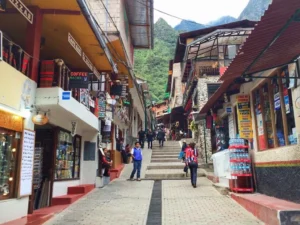
Machu Picchu Pueblo, commonly called Aguas Calientes, is the town below the archaeological site. It provides hotels, restaurants, railway services, and buses to the entrance. The town and the Inca settlement are separate places at different elevations. Most visitors arrive in the town by train, then travel uphill by bus or follow a steep pedestrian route. Booking accommodation in “Machu Picchu” therefore usually means staying in the town rather than beside the ancient buildings.
What Is Machu Picchu Famous For?
Exceptional Inca Architecture and Stonework
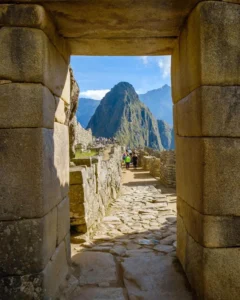
Machu Picchu is famous for stone architecture adapted to steep mountain terrain. Its finest buildings feature carefully shaped stones fitted together without mortar, while other structures use less elaborate masonry. Trapezoidal doorways, sloping walls, and thoughtful foundations demonstrate sophisticated construction knowledge. The best-known spaces include the Temple of the Sun, the Main Temple, and the Room of the Three Windows. Their appeal lies not only in appearance but also in how architecture responds to the surrounding rock, sunlight, and topography.
Agricultural Terraces and Water Engineering
The terraces surrounding Machu Picchu are among its most recognizable features. They created usable land, helped manage runoff, and stabilized sections of the steep slopes. Beneath the visible surfaces, layers of material assisted drainage in an environment with substantial rainfall. A spring-fed water system supplied a sequence of fountains, demonstrating careful planning beyond the site’s monumental buildings. These practical achievements explain why Machu Picchu is frequently studied as an example of landscape engineering rather than simply admired as an ancient ruin.
Mountain Scenery and Cultural Significance
Machu Picchu’s setting contributes enormously to its fame. Stone structures occupy a narrow ridge surrounded by forested peaks, with the Urubamba River winding far below. Clouds can reveal and conceal the landscape within minutes, creating the atmosphere seen in countless Machu Picchu photos. However, the site is more than a scenic backdrop. It represents Indigenous Andean knowledge, Inca political organization, and a cultural legacy that remains meaningful to communities in Peru today.
Machu Picchu History: Construction, Occupation, and Rediscovery
When Was Machu Picchu Built?
Machu Picchu is traditionally dated to around 1450, during the reign of Pachacuti, the ruler associated with a major expansion of the Inca state. However, radiocarbon research published in 2021 indicates activity at the site from approximately 1420 to 1530, suggesting its occupation began earlier than the conventional date implies. The most accurate summary is that Machu Picchu developed during the 15th century, while researchers continue refining the chronology through archaeological evidence rather than relying solely on later historical accounts.
What Age Is Machu Picchu?
Machu Picchu is approximately six centuries old. Using the traditional construction date of 1450, it is about 576 years old in 2026; evidence of occupation beginning around 1420 extends that timeline further. Because construction and occupation unfolded over time, the complex does not have a single securely documented birthday. For general travel writing, “a 15th-century Inca site” or “approximately 600 years old” communicates its age more accurately than presenting one exact figure as universally settled.
Why Was Machu Picchu Abandoned?
The settlement ceased functioning as an occupied Inca estate during the 16th century, amid the wider disruptions surrounding the Spanish conquest. Political collapse, changing systems of support, population displacement, and disease may all have contributed. The precise circumstances remain uncertain, and there is no strong evidence that Spanish forces directly destroyed the complex. Its abandonment should therefore be understood within the breakdown of the Inca world, rather than reduced to a dramatic but unsupported story of a single attack.
When Was Machu Picchu Discovered?
On July 24, 1911, American explorer Hiram Bingham reached Machu Picchu with local assistance and subsequently helped bring it to international attention. This date is commonly described as its “discovery,” but that wording overlooks local knowledge. People living in the area already knew the ruins existed, and some cultivated nearby terraces. Bingham’s contribution was primarily to international publicity and archaeological investigation, not the first human recognition of an entirely forgotten place.
Why the “Lost City of the Incas” Label Is Misleading
The famous nickname creates the impression that Machu Picchu disappeared from everyone’s memory. In reality, its relative obscurity to outsiders did not mean it was unknown locally. Bingham was also investigating places connected with Vilcabamba, the final stronghold of Inca resistance, which is a different site. Using the nickname with this context preserves its familiar appeal while recognizing Indigenous knowledge and avoiding confusion between Machu Picchu’s royal-estate interpretation and the history of the last Inca capital.
Why Is Machu Picchu a Wonder of the World?
Which Wonder of the World Is Machu Picchu?
Machu Picchu was selected as one of the New Seven Wonders of the World in 2007 through an international public-voting campaign organized by the New7Wonders initiative. It is not one of the Seven Wonders of the Ancient World, a much older list associated with the Mediterranean and Near East. The modern designation reflects its global popularity, remarkable architecture, and dramatic setting. It should not be confused with a UNESCO award, because the two recognitions come from separate organizations and processes.
UNESCO World Heritage Recognition
UNESCO inscribed the Historic Sanctuary of Machu Picchu on the World Heritage List in 1983. It is recognized for both cultural and natural significance, combining archaeological importance with exceptional mountain ecosystems. The protected landscape extends beyond the buildings into surrounding forests and habitats. This broader perspective explains why conservation involves more than repairing stonework: managing visitor pressure, protecting biodiversity, monitoring slopes, and preserving the relationship between the settlement and its environment are all essential.
Machu Picchu Elevation, Altitude, and Height
What Is Machu Picchu’s Elevation in Feet and Meters?
The archaeological site sits at approximately 2,430 meters, or 7,972 feet, above sea level. Questions such as “what is Machu Picchu altitude,” “what elevation is Machu Picchu,” and “what height is Machu Picchu” usually refer to this figure. Because the complex extends across uneven terrain, individual terraces and viewpoints differ in elevation. The commonly quoted number describes the site generally; it should not be confused with the higher summit elevation of Machu Picchu Mountain.
Is Machu Picchu Higher Than Cusco?
No. Cusco stands at approximately 3,400 meters, or 11,150 feet, making it considerably higher than Machu Picchu. This surprises visitors who associate the iconic mountain setting with the highest point of their itinerary. Some Sacred Valley towns are also lower than Cusco, although elevations vary. When planning acclimatization, consider the whole journey rather than the archaeological site alone: your arrival airport, overnight accommodation, mountain hikes, and any high passes may create greater altitude exposure.
Altitude Sickness and Sensible Acclimatization
Altitude illness is generally more likely at higher elevations, particularly following rapid ascent, but individual responses vary. Allow time to adjust before strenuous activity, eat normally, avoid excessive alcohol, and do not assume physical fitness prevents symptoms. Headache, nausea, or unusual fatigue after ascent deserve attention. Worsening symptoms, confusion, or breathlessness at rest require urgent medical assessment and descent when appropriate. Travelers with relevant health conditions should discuss their itinerary with a qualified clinician before departure.
- Plan a gentler first day after arriving in the Andes.
- Factor mountain trails and trekking passes into your altitude planning.
- Carry water, but remember that hydration alone does not prevent altitude illness.
- Tell your guide promptly if you feel unwell.
What Mountain Range Is Machu Picchu In?
The Andes and the Vilcabamba Mountain Landscape
Machu Picchu lies in the Andes Mountains, within the mountain landscape commonly associated with the Vilcabamba range. This area transitions between high Andean environments and humid forests toward the Amazon basin. The result is a greener, wetter setting than many travelers expect from photographs of Peru’s high-altitude plains. Steep valleys, exposed rock, dense vegetation, and fast-changing clouds are characteristic features, helping explain both the site’s visual drama and the engineering challenges faced by its builders.
What Mountain Is Machu Picchu On?
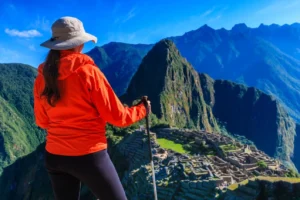
The archaeological complex occupies a ridge between the peaks known as Machu Picchu Mountain and Huayna Picchu. It does not sit on the summit of the sharply pointed mountain appearing behind the ruins in the classic photograph; that peak is Huayna Picchu. This distinction matters when purchasing tickets, because access to the archaeological circuit and access to a surrounding mountain trail are different visitor experiences. A ticket should be chosen according to its named route, not simply the destination’s general name.
What Is Machu Picchu Mountain?
Machu Picchu Mountain, often called Montaña Machu Picchu, rises to approximately 3,082 meters, or 10,112 feet. Its name is commonly translated from Quechua as “old mountain.” The mountain trail involves a sustained uphill climb with many steps and provides broad views over the surrounding landscape when conditions are clear. It is a separate undertaking from walking through the ruins, requiring the appropriate admission option, sufficient time, and realistic consideration of fitness and comfort on steep terrain.
Machu Picchu Mountain vs. Huayna Picchu
Huayna Picchu, also spelled Wayna Picchu, rises to roughly 2,693 meters, or 8,835 feet, and is the prominent peak behind the ruins in many famous images. Its trail is known for steep stairs and exposed sections. Machu Picchu Mountain is higher and generally involves a longer ascent, while Huayna Picchu offers a different perspective and trail character. Neither should be treated as an effortless add-on, and access rules, availability, and restrictions must be checked before booking.
Machu Picchu Circuits: Understanding Circuit 1 and Circuit 2
Machu Picchu uses designated visitor circuits to manage movement and protect fragile areas. Under the system introduced in June 2024, routes are grouped into three principal circuit families: panoramic, classic, and royal. Individual routes differ in viewpoints, archaeological access, additional hikes, and seasonal availability. Because arrangements can change, consult the official Peruvian Ministry of Culture ticket platform before purchase. Older blogs may describe circuit numbers that no longer correspond to the current route maps.
What Is Machu Picchu Circuit 1?
Circuit 1 is the panoramic circuit family, emphasizing elevated views rather than an extensive walk through the central archaeological sector. Its route options can include upper-terrace experiences or access associated with additional trails, depending on the exact ticket. It is particularly relevant for visitors prioritizing landscape photography. However, “Circuit 1” alone does not fully describe what you are buying: read the route name and map carefully to understand whether it includes a mountain hike, a shorter viewpoint visit, or another specific experience.
What Is Machu Picchu Circuit 2?
Circuit 2 is the classic circuit family, generally combining a recognizable overview of Machu Picchu with a more extensive visit through important built areas. For many first-time visitors, it offers a useful balance between scenery and archaeological exploration. Nevertheless, different Circuit 2 options can follow slightly different paths or viewpoints. Do not assume every terrace, temple, or photographic angle is included. Select the precise route that matches your priorities, and confirm current access rather than relying on the circuit’s reputation alone.
How to Choose the Right Machu Picchu Ticket
Begin by deciding whether your priority is the classic landscape view, closer exploration of the ruins, or a demanding mountain walk. Then compare official route maps, entry times, restrictions, and transport connections. Circuit 3, the royal circuit family, emphasizes lower sectors and includes certain additional-route options, so it may suit a different experience. Entry times and walking directions are controlled; plan on following your assigned route rather than moving freely between circuits or returning to earlier viewpoints.
- Photography priority: Check the exact elevated viewpoint included.
- Archaeology priority: Compare access through the built sectors.
- Hiking priority: Confirm that the named mountain trail is included.
- Limited stamina: Review stairs, gradients, and expected walking demands.
What Airport Do You Use for Machu Picchu?
Cusco Airport: The Main Regional Gateway
Machu Picchu has no airport at the archaeological site or in Machu Picchu Pueblo. The usual regional gateway is Alejandro Velasco Astete International Airport in Cusco, airport code CUZ. Many international visitors enter Peru through Lima and continue on a domestic flight to Cusco. Because transport infrastructure and flight schedules can change, verify the airport and ground connections shown on your actual booking. Arriving in Cusco still leaves a substantial onward journey to reach the ruins.
Getting from Cusco to Machu Picchu
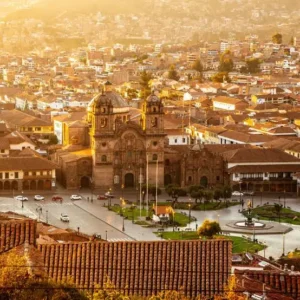
A common route combines road transport from Cusco to Ollantaytambo, a train to Machu Picchu Pueblo, and a bus uphill to the archaeological entrance. Some rail services operate from stations closer to Cusco, depending on the schedule and season. Trekking alternatives include the regulated Inca Trail and other regional itineraries, but permits and access arrangements differ. Coordinate your entrance ticket, train, accommodation, and return journey together rather than booking each element without checking whether the timings connect.
What Temperature Is Machu Picchu?
Typical Weather and Seasonal Temperatures
Machu Picchu has a relatively mild mountain climate influenced by its humid forest setting. Daytime temperatures commonly fall around 18–25°C, or 64–77°F, while nights and early mornings can be considerably cooler, often roughly 8–15°C, or 46–59°F. These are broad planning ranges, not a forecast. Sunshine, cloud, rain, and wind can change how conditions feel within a single visit. The site is generally warmer than Cusco, but damp clothing and shaded paths can still feel chilly.
Dry Season vs. Rainy Season
The relatively dry season generally runs from May through September, while wetter conditions are more common from November through March. April and October are transitional months rather than guaranteed-weather windows. Dry-season visits often offer better odds of clearer views but can coincide with heavy demand. Rainier months bring lush vegetation and atmospheric clouds, although visibility and trail conditions may be less predictable. Rain is possible throughout the year, so no month eliminates the need for preparation.
What to Wear and Bring
Choose comfortable footwear with dependable grip, lightweight layers, and a waterproof outer layer. Sun protection remains important even when clouds cover the mountains. Pack according to current entrance rules, particularly restrictions concerning bags, food, walking aids, and photographic equipment. Mountain routes require more preparation than a standard archaeological visit, but carrying unnecessary weight makes stairs harder. A compact, practical kit is usually preferable to treating a short visit like a fully equipped expedition.
Machu Picchu Photos: Viewpoints and Photography Tips
Where Are the Classic Machu Picchu Photos Taken?
The best-known composition shows the archaeological complex in the foreground with Huayna Picchu rising behind it. Elevated terraces provide versions of this perspective, but your exact viewpoint depends on the route purchased. Tickets do not necessarily provide access to every familiar photography location. If a particular image is central to your trip, compare current official circuit maps before booking. Remember that clouds may temporarily hide the mountains even when you have selected an appropriate viewpoint.
Best Light, Composition, and Responsible Photography
Early visits can bring soft light and drifting mist, but sunrise visibility is never guaranteed. Later periods may offer different lighting and clearer conditions, depending on the day. Combine wide landscapes with details such as stone joints, terraces, and water channels to tell a fuller visual story. Stay on designated paths, avoid blocking other visitors, and never climb walls for a better angle. Check equipment rules before bringing tripods, and do not assume recreational drone flights are permitted.
Planning a Meaningful Machu Picchu Visit
Machu Picchu is simultaneously an archaeological achievement, a protected natural landscape, and an important expression of Peru’s Indigenous heritage. Knowing its location, approximate 600-year history, 2,430-meter elevation, and ticket structure makes planning easier, but understanding its significance makes the visit richer. Choose a route that matches your interests, allow realistic travel time, and respect conservation rules. Whether you come for Inca history, mountain scenery, or photography, the most rewarding experience looks beyond the famous postcard view.